AI-induced job losses could spark job crisis but pave way for basic income, enamored investor claims
According to famed investor Carson Block, AI could give birth to the so-called “underclass,” people not working at all but still living relatively comfortably on a universal basic income. The problem is that for this to happen, we’d need a huge job crisis.

Image by Cybernews.

 Follow us
According to famed investor Carson Block, AI could give birth to the so-called “underclass,” people not working at all but still living relatively comfortably on a universal basic income. The problem is that for this to happen, we’d need a huge job crisis.
- Carson Block warns AI could displace 15% of American knowledge workers within years, triggering economic shock.
- He argues mass AI unemployment could eventually normalize shorter workweeks and universal basic income support.
- AI’s promised productivity gains are so far barely visible: surveys show higher workloads and unclear business returns.
Just like Michael Burry, another investor, Carson Block, who’s a pioneer in activist short-selling, thinks that the AI revolution is bubbly. But he sees a lot of upsides.
Yet, we’d have to live through a crisis. On an episode of the “Merryn Talks Money” podcast, Block said he thinks it’s “entirely conceivable” that within the next few years, the United States could see “roughly 15% of knowledge workers displaced from their jobs.”




Since there are about 100 million people working in knowledge sectors such as law, tech, and finance in the country, around 15 million jobs could be lost.
No investments, no returns
According to Block, a good example is litigation. Anthropic’s Claude and other chatbots are so effective in compiling information that they save “innumerable billable hours,” and people in the profession will lose their jobs for good.
AI replacing people will mean “those jobs are gone, and the number of chairs for humans is going to continue shrinking,” the investor said.
That’s just the beginning of the whole shebang. Next, people who have lost their jobs and are now struggling may stop investing and begin withdrawing money from their retirement accounts.

Check if your data was exposed
Find out if your email and related personal information have appeared in known data breaches.
And this could mean the S&P 500’s net inflows turn to net outflows, naturally pulling down stock prices. Since passive investing is now all the rage, the market would be significantly more fragile in the face of a downturn, Block thinks.
The future is indeed dark, isn’t it? Let’s also recall that Burry, the contrarian investor who correctly called the 2008 financial crisis, shocked many when he placed two huge bets against Nvidia and Palantir last November.
In a series of cryptic messages on his socials, Burry basically let it be known that he holds the US markets just as vulnerable as they were 18 years ago.
Now, where’s that AI magic?
However, Block is, surprisingly, optimistic: “The good news is I think most people will live reasonably comfortable lives.”






The investor envisions people belonging to the middle class as working two or three days a week and having enough disposable income to travel and have fun in other ways.
Block might have chosen a less insulting word, of course, but he also spoke about a so-called “underclass,” meaning people who will receive a universal basic income and won’t have to work at all.
This might sound bizarre, but Block, however insightful he is, is essentially choosing the words the AI executives have been using. Undoubtedly realizing they’re selling a social poison, they’re promoting an antidote just as magical.
As many friendly surveys are being arranged, they keep showing that so-called AI solutions don’t really increase productivity or bring businesses more money.
They all seem to say that since algorithms and robots are set to quickly eliminate millions of jobs while generating an extraordinary surge in wealth, only the distribution of a basic income, paid to everyone without conditions, can prevent society from collapsing.
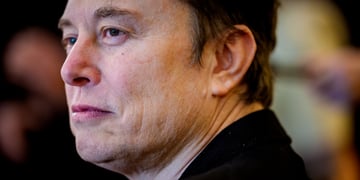
The world’s richest human, Elon Musk, has similarly said that government checks are the best way to deal with AI-driven job losses.
Have thoughts about this topic? Others do, too. Join them in the discussion.
The elephant in the room is the fact that, as many friendly surveys are being arranged, they keep showing that so-called AI solutions don’t really increase productivity or bring businesses more money.
Polls also show that the use of AI has actually increased most employees' workloads. In other words, that miraculous productivity boost is nowhere to be seen.
Unlock more exclusive Cybernews content on YouTube.