Screaming demon shrimp flowers fuel AI seed scams on eBay, Etsy and Amazon
Fraudsters are harvesting more than just money from aspirational gardeners.
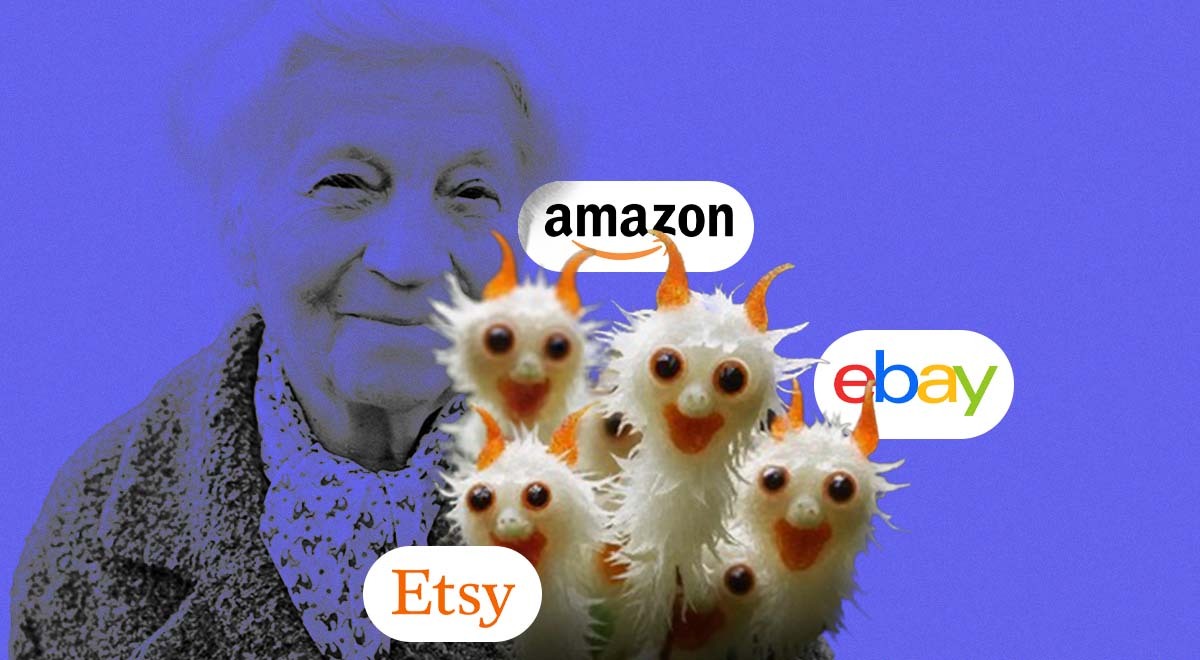
Image by Cybernews

 Follow us
- For very little cost AI lets scammers mass-produce fake seed listings on Amazon, eBay and Etsy, for impossible flowers featuring cat faces, purple sunflowers, blue roses and screaming shrimp heads.
- Seeds are the perfect scam vehicle – buyers don't know they've been duped until weeks later, after the return window closes, security experts and consumer champions warn.
- Every purchase can hand scammers your payment details and passwords for use in future fraud. Unverified foreign seeds can also pose a biosecurity risk if planted.
Key Takeaways by nexos.ai, reviewed by Cybernews staff.
AI slop is helping fraudsters revive a familiar online shopping scam, with fake flower and fruit seeds flooding marketplaces including Amazon, eBay and Etsy, leaving gardeners out of pocket and personal data exposed.
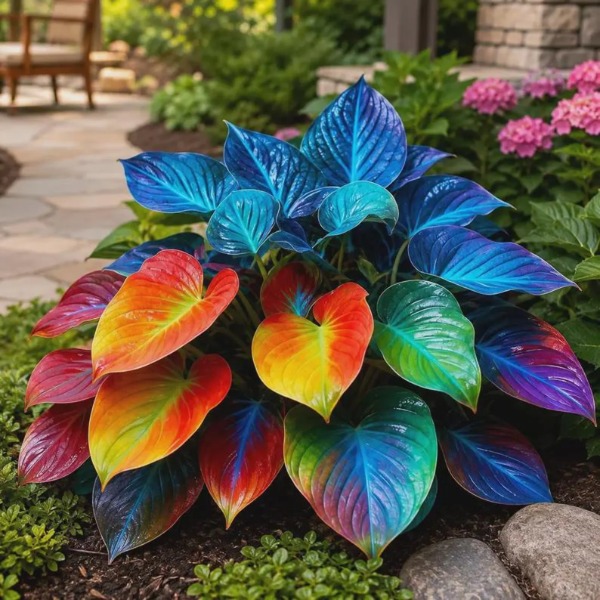
Listings often advertise impossible looking blooms, including giant purple teddy bear sunflowers, blue watermelons, rainbow roses and flowers shaped like cats, butterflies and even “screaming demon shrimps”.
Buyers often complain in reviews of receiving just ordinary seeds – or no seeds at all.
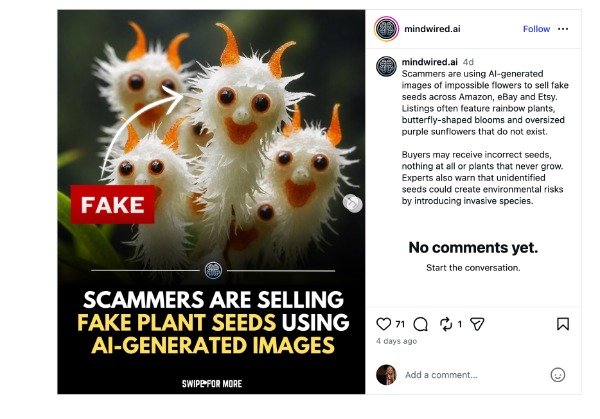






Security experts warn that the scam could expose shoppers’ payment details to scammers while also posing a biosecurity risk if unverified seeds from foreign sources are planted in gardens.
A rose by any other name…
While dodgy photoshopped pictures of blue sunflower crops or blue roses (that genetically do not exist) have been circulating on retail sites for years, generative AI has helped to scale the scam.
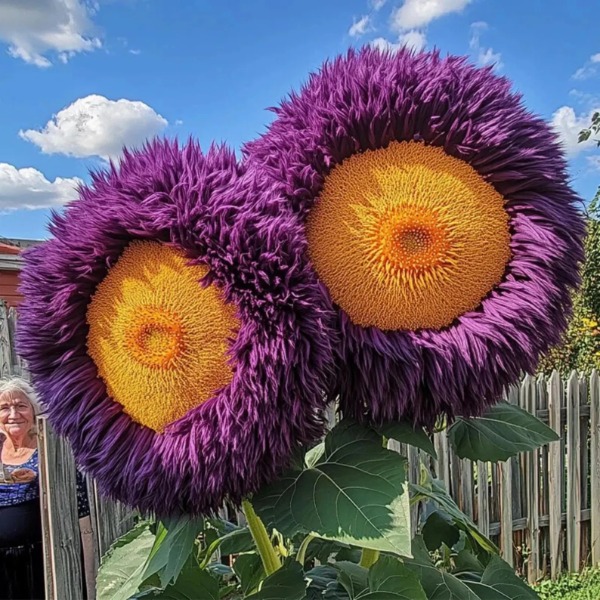
Fraudsters can now cultivate thousands of convincing images of plants that don’t exist, upload them across multiple marketplaces and quickly test which listings attract the most buyers.
On Ebay for instance, listings advertise a “Purple Enchanting Giant Teddy Bear Sunflower” alongside bizarre flowers resembling cat heads and screaming demon shrimps.
Other sellers offer mushroom “seeds” – despite mushrooms growing from spores rather than seeds.
A recent investigation by 404 Media found sellers using AI-generated images to advertise ordinary seeds.
The media outlet reported that reviewers frequently complained that they either received the wrong plant or nothing at all.
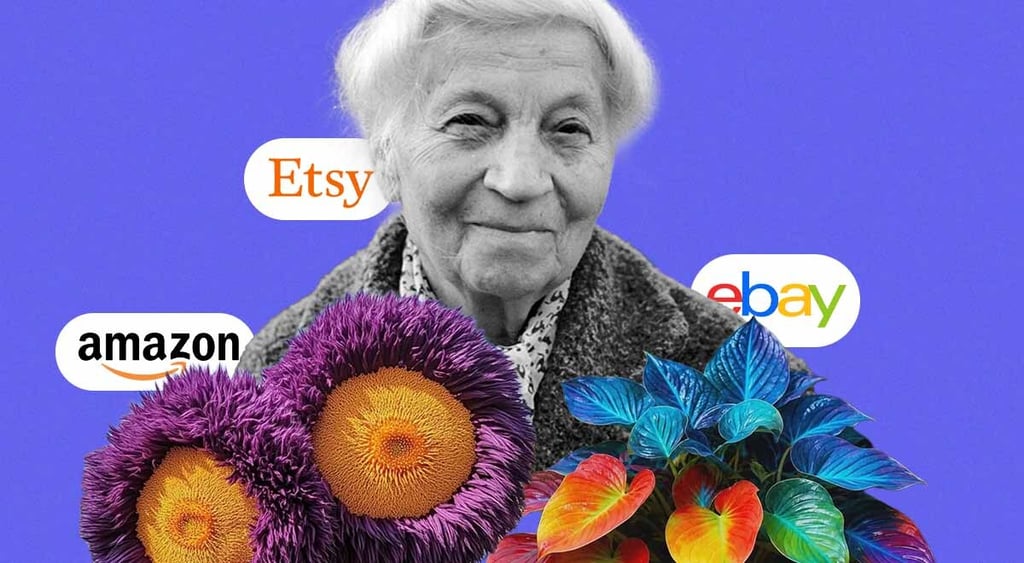
Red flags included a site that sold both seeds and fake Trump T-shirts; improbable flower images also tended to feature a [fake] senior woman standing next to the plant, perhaps to highlight scale.
Anna Collard, SVP content strategy & CISO advisor at security training firm KnowBe4, says generative AI has made the scam dramatically cheaper to run.
“One operator can generate thousands of unique “impossible flower” listings across Amazon, eBay and Etsy in an afternoon with no product, no photography, almost no cost, then test which fantasy sells best,” said Collard.
Poor harvest
Unlike fake electronics or counterfeit clothing, seed scams exploit the fact that buyers often won’t know they’ve been duped for weeks.
“Seeds are the ideal vehicle because the fraud has a built-in delay."Anna Collard, SVP content strategy & CISO advisor, KnowBe4
“By the time nothing germinates, weeks have passed, the return window has closed, and the seller has vanished. That verification gap isn’t a side effect; it’s the business model,” she adds.
And the scale of the scam suggests plenty of buyers are still falling for it.
One fake rose seed listing on eBay reportedly recorded more than 37,000 sales before it was removed.
And while some of the images featured on these pages feel obviously, almost comically AI, the scam relies on the fact that everyone has different knowledge gaps. Those that spot obvious fake flowers might not be able to do the same with (admittedly less Instagram-able) car parts, for instance.
To be sure, Muhammad Yahya Patel, vCISO and cybersecurity advisor for EMEA at Huntress suggests screenshotting the listing at the time of purchase, including the seller’s name and product description, “so you have evidence if the listing later disappears.”
“Check how long the seller has been active and whether their reviews are specific or suspiciously generic,” he adds, “ and if shoppers do use a marketplace, they should pay by credit card rather than debit card as it gives them stronger chargeback rights."
Bad seeds
Security experts say the scam may also be designed to collect valuable customer data. Every purchase can hand over names, addresses, email addresses and payment details to criminal operators who may use that information in future fraud campaigns.
“Once a scam listing is established and generating sales, it’s a natural next step for the same operator to route buyers through a fake or spoofed checkout page,” Anne Cutler, cybersecurity expert at Keeper Security cautions.
“In this instance a victim isn’t only losing a few pounds on fake seeds, they’re also handing over a login they’ve reused on email, banking or other retail accounts to someone with no legitimate reason to protect them.”Anne Cutler, cybersecurity expert, Keeper Security
Cutler advises consumers to treat any suspicious purchase as a signal to check whether that password appears anywhere else, and, if it does, to change it.



Stay updated with our latest stories and follow us on social media
Be the first to discover new stories, ideas, and updates from our team.
In a statement to 404 Media, eBay said that “trust is foundational” and that the online marketplace was accelerating efforts to remove fraudulent listings using AI-powered detection tools and compliance audits.
A more durable fix, according to Culter, is “continuous seller verification, not one-time content checks."
Biohazard risk
A less-considered but still plausible risk of receiving different seeds from those advertised is that they could unknowingly introduce unfamiliar or invasive plants into their gardens.

Authorities faced a similar problem in 2020 when thousands of unsolicited seed packets arrived at homes across the UK, Europe, Canada, New Zealand and the US.
Many packages were falsely labelled as jewellery or toys, promoting biosecurity investigations and warnings from authorities not to plant the ‘mystery’ seeds.
AI generated imagery could make similar scams more convincing.

Check if your data was exposed
Find out if your email and related personal information have appeared in known data breaches.
Collard recommends reverse-image searching plant photos, checking whether the variety is sold by reputable nurseries, reviewing the seller’s history across marketplaces and paying with a method that offers buyer protection.
“Treat an unknown seller like an unknown email attachment: cheap is never a reason to trust it.” she says.