AI tops Japan’s elite university exams, exposing cracks in test systems
ChatGPT has outscored top human candidates in the entrance exams of the University of Tokyo and Kyoto University.
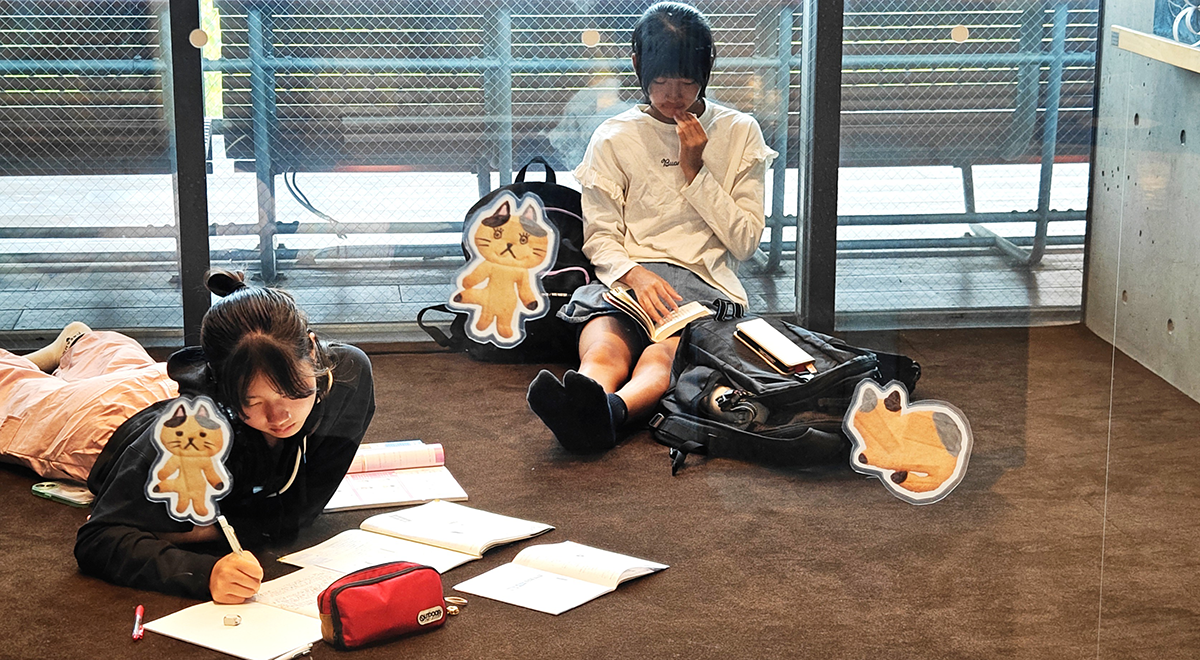
Library in Japan. NurPhoto/GettyImages

 Follow us
ChatGPT has pulled off something that would have seemed unlikely just two years ago. It has outscored top human candidates in the entrance exams of the University of Tokyo and Kyoto University, two of Japan’s most competitive institutions. While engineers might hail this as a technical milestone, it is also a moment that forces educators to confront what these exams actually measure.
According to testing by Tokyo-based startup LifePrompt, OpenAI's ChatGPT 5.2 Thinking model scored higher than the best-admitted students, even achieving a perfect score in mathematics.
The leap is even more striking when you look back. In 2024, an earlier version of ChatGPT failed to reach the minimum passing score across all tracks of the same exams. A year later, a newer model barely cleared the threshold. Now, it sits at the top of the leaderboard.
For Satoshi Kurihara, a professor at Keio University and the head of the Japanese Society for Artificial Intelligence, the outcome is less surprising than it is revealing. He asserts that humans and AI should not compete on the same playing field, arguing that AI excels at absorbing and processing vast amounts of existing data.












A system built for machines
Drawing a blunt comparison, he says that just as calculators can perform calculations faster and more accurately than humans, it is natural for AI to post high scores on exams designed around computation and recall.
Kurihara argues that this is the moment to rethink entrance exams that prioritize memorization and calculation, and to design systems that instead capture human strengths such as creativity, originality, and the ability to generate new ideas.
AI is already reshaping education around the world. Educators worry that GenAI runs the risk of rewriting the student-teacher equation, turning students into “passive consumers” and teachers into “supervisors.”
The Japan exam results show the next phase, where AI is no longer just assisting students but is rather outperforming them under the same evaluation criteria.
Yet the results also expose AI’s limits. ChatGPT scored strongly in math and structured subjects, but struggled with essay-style answers, managing far lower marks in areas that demand interpretation and nuance.
Kurihara hopes that this gap offers educators a moment to pause and ponder. If universities want to stay ahead of machines, they must test what machines still find difficult to achieve. Otherwise, exams could become benchmarks not of the student’s prowess, but of machine capability.
Unlock exclusive Cybernews content on YouTube