Why Arabic-language AI is the new frontier in the Middle East
Countries in the Arabic world are racing to build language models that reflect local dialects, culture, and religious values.

Image by Cybernews

 Follow us
Countries in the Arabic world are racing to build language models that reflect local dialects, culture, and religious values.
Arabic is spoken by over 450 million people and is the fourth most spoken language in the world. A handful of companies are developing compelling, goal-oriented models.
As is the case in Silicon Valley, China, India, and other countries, AI is seen as modern cultural infrastructure, especially when data centers, or even plans to build power stations, become tied to regional and national strategy.
Language and culture
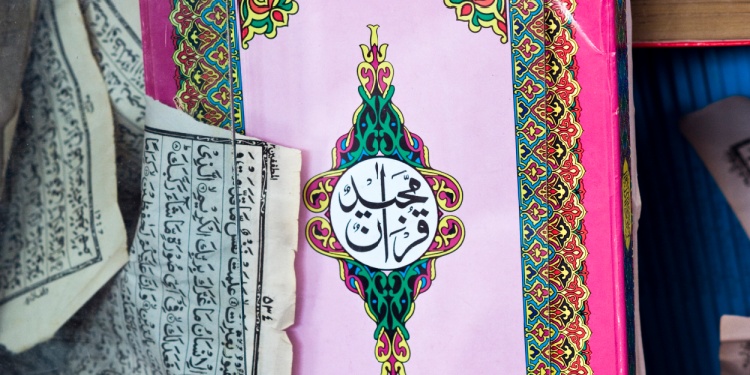
Arabic is rich in its complexity – the three-letter root system makes it hard for machines to process – and there is a vast array of dialects, from Maghrebi (used in Morocco) to Egyptian Arabic, Levantine (Syrian and Lebanese), and Khaleejy (used in the Gulf in countries like Saudi Arabia and Kuwait).




There’s also the modern means of communication, which is Arabizi, – many young Arabs mixing Latin letters and numbers with Arabic word bases – like “7abibi” for “habibi” which means “my dear.”
This could be challenging for models to adapt to, especially in an incredibly wide-reaching and linguistically diverse region.
Power, money, and geopolitics
The ideology behind digital independence can vary across regions.
The Western world, namely Silicon Valley, sees AI as being for everyone – even-handed and non-interventionist, apart from when it goes on a nasty rampage, as was the case with Grok and some far-right outbursts.
China, on the other hand, tends to position itself as a cheaper alternative, faster and practical, heavy on the research side, but also indoctrinated with collectivist beliefs.
Meanwhile, the Arab community has varying options available.
The UAE has Falcon, an open-source language model like ChatGPT, and it's free, almost like a gesture of goodwill.
While OpenAI in the US charges a steep $20 a month for its plus version, Falcon has a regional Arabic version and an energy-efficient edition, all free of charge.
This way, regions like Africa, Southeast Asia, and Latin America aren’t bound by a “choose USA or China” situation, as access is far-reaching.



Humain and Ziila
Saudi Arabia has a model named Humain. This chatbot is Arabic-first and heavily regulated.
Generally used for secure and domestic use in sectors like government, education, and business, saving the need for relying on models from the US.
More day-to-day is Intella’s Ziila, from Egypt – the company has raised $12.5 million to develop dialect-specific AI that understands its customers' speech, veering away from textbook Arabic, to be used in habitual activities like going to the supermarket.
Banks and telecom companies are using the bot frequently, and it's a market leader in speech recognition.
Different schools of law, or madhhabs exist within Islam, the two main branches being Shia and Sunni, although there are various forms of these within the denominations.
As some models focus on dialect, others on business sectors, and a few on religious virtue, all bases seem to be covered, but the Arabic world lacks a major world player like Google or OpenAI’s ChatGPT.