Baidu founder Robin Li wants AI to permeate “every cell” of Chinese economy
Baidu founder and chief executive Robin Li joins a cohort of Chinese tech leaders in their optimistic assessment of the impact artificial intelligence (AI) will have on the economy – in contrast to growing caution elsewhere.

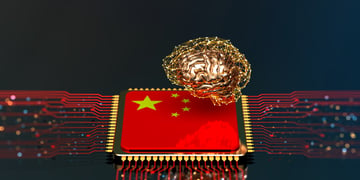
Image by Cybernews

 Follow us
Baidu founder and chief executive Robin Li joins a cohort of Chinese tech leaders in their optimistic assessment of the impact artificial intelligence (AI) will have on the economy – in contrast to growing caution elsewhere.
Li is the latest Chinese tech boss to strike an unambiguously upbeat tone about AI, which he says will drive the next stage of the country’s economic growth and its “new productive forces.”
In a commentary published by the state-run People’s Daily, he says that technologies such as digital workers, code agents, and autonomous driving have already shown “excellent” results.






Li describes AI as “a key force” behind what he sees as a new industrial revolution and urges Chinese industry to adapt and innovate in order to stay ahead.





“Businesses must seize the opportunity of this transformation and integrate AI in everything from decision-making to execution, from customer service to supply chain, so that AI permeates every cell of production, operations, and service,” he says.
This optimism aligns with the official position in Beijing, which aims to integrate AI across the manufacturing and service sectors as part of its efforts to revitalize China’s struggling economy.
What bubble?
Baidu, which is frequently described as China’s answer to Google and offers similar services – from AI models to autonomous driving systems – is set to benefit from this state push, which might at least partly explain its optimism.
Earlier this month, it announced new AI processors and supercomputing technologies to challenge Nvidia’s dominance in the sector.
In the People’s Daily commentary, Li stressed the importance of China becoming a self-sustainable tech power.
“Accelerating high-level technological self-reliance is crucial, and actively advancing new productive forces is essential,” he said.
When it comes to AI, China is increasingly in a race against itself – or so it would seem with companies like Alibaba, Tencent, and Xiaomi saying they have their eyes set on what’s next, specifically, the artificial general intelligence, or AGI.
This contrasts with the situation in the US, where both investors and tech leaders are increasingly vocal about a potential “AI bubble,” with Google’s Sundar Pichai the latest to warn in a BBC interview that there are “elements of irrationality” in the current AI investment boom.