California courts are secretly testing AI to help decide criminal cases, including racial bias appeal
California’s largest courts are testing an AI tool to help decide criminal cases, including racial bias appeals. The court’s own judges warn that AI will “dehumanize justice” and increase the frequency of AI hallucinating legal citations.

The Superior Court of California County of Los Angeles Compton Court. Frazer Harrison/Getty.

 Follow us
California’s largest courts are testing an AI tool to help decide criminal cases, including racial bias appeals. The court’s own judges warn that AI will “dehumanize justice” and increase the frequency of AI hallucinating legal citations.
The Los Angeles County Superior Court launched a pilot program back in February to see what the AI clerk was capable of.
Learned Hand was designed to help judges and court staff draft legal orders, summarize motions, and conduct legal research. The tool uses a combination of AI models from Anthropic, OpenAI, and Google to draft research memos to assist judges in their ruling.
The CalMatters story raises an interesting question: Should we allow AI to help the judicial system?
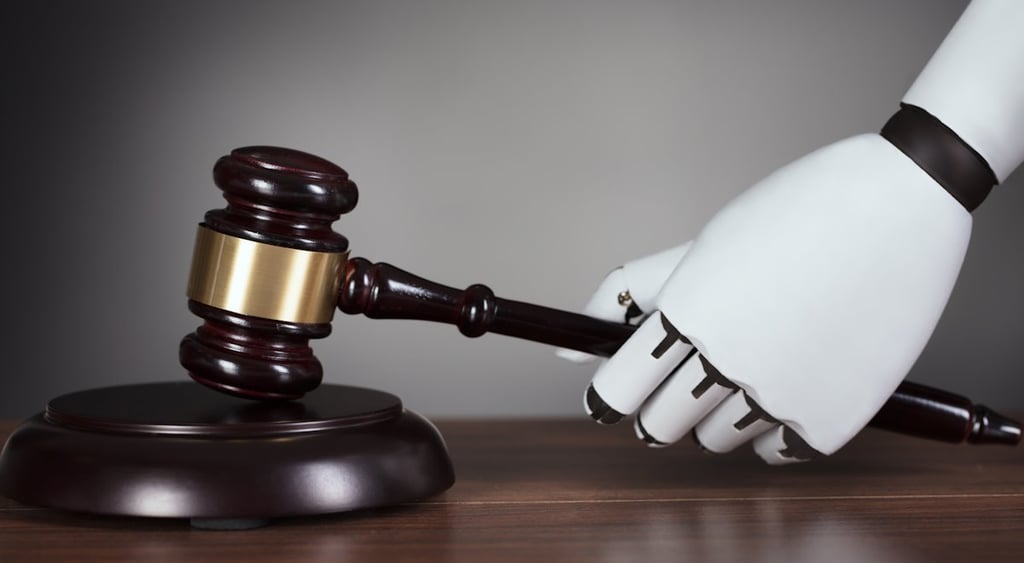






Supporters are cheering on any help they can get in times when caseloads are growing and staff shortages are increasing. AI could help to improve a court’s efficiency and reduce backlogs, Shlomo Klapper, Founder and CEO of Learning Hand, argues.
Opponents strongly object to using AI to facilitate the legal process. As they point out, AI is infamous for hallucinating facts, citing falsehoods, producing sycophantic texts, and making up legal citations. As a matter of fact, AI tools are already to blame for mistakes in real court cases.
In addition, judges, prosecutors, and public defenders are skeptical because AI tools lack human understanding and empathy. Or worse, they could reinforce racial or social biases if not properly trained.
“I think it is outrageous. AI cannot and never will be able to replace human judgment in evaluating complex social dynamics. Ultimately, that will erode the public’s confidence in the competence and fairness of the judiciary,” a judge of the Los Angeles County Superior Court told CalMatters on the condition of anonymity.






Another judge called the implementation of AI in court “an extremely perilous road” to go down, especially when it’s used to assist with California’s Racial Justice Act, a law that allows people to challenge a criminal conviction or sentence that they believe was based upon racial bias.
“Putting aside the inaccuracy, which will be a significant concern, it dehumanizes the whole process. It does not treat people as individuals with lived experiences. It essentially reimposes a one-size-fits-all style of justice,” the judge argued.
The Cybernews community is talking about this. Be a part of the conversation.
Public reactions on Reddit are largely mistrustful and startling, with many users questioning why courts would be allowed to rely on AI tools when lawyers themselves have been served penalties for submitting AI-generated legal work containing false information.
The court in Los Angeles is using Learned Hand in criminal, family, and probate cases. In Riverside County, the AI tool is being field tested by civil and probate attorneys.

Check if your data was exposed
Find out if your email and related personal information have appeared in known data breaches.
The tool will be reviewed every quarter to determine its future applications, David Slayton, Los Angeles County Superior Court Executive Officer, confirmed to CalMatters.
A Learned Hand spokesperson told the news outlet that the tool is evaluated “against the same substantive expectations applied to law clerks and research attorneys: accurate legal research, sound analysis, neutral and judge-ready writing, and reliable work product that supports judicial decision-making.”
Unlock more exclusive Cybernews content on YouTube.