Europe pivots to chiplets after Chips Act failure
Europe's ambitious plan to capture a fifth of global semiconductor production has fallen dramatically short. An April audit revealed the continent will reach barely half that target. Now policymakers are abandoning dreams of massive fabrication plants. Instead, they're pivoting to a completely different strategy centered on chiplets and advanced packaging.

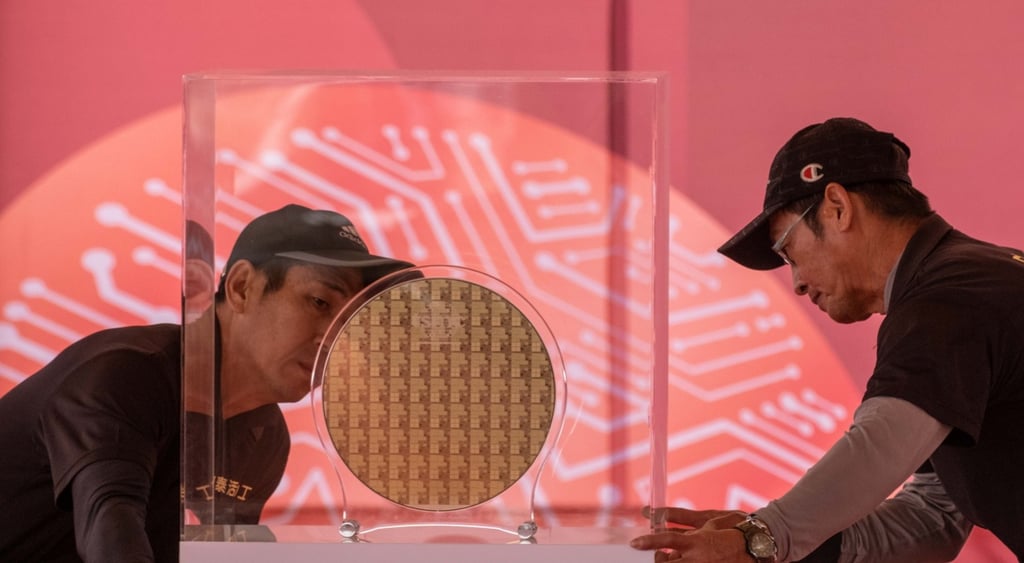
EU engineer hold a chiplet. Image by Cybernews.

 Follow us
Europe's ambitious plan to capture a fifth of global semiconductor production has fallen dramatically short. An April audit revealed the continent will reach barely half that target. Now policymakers are abandoning dreams of massive fabrication plants. Instead, they're pivoting to a completely different strategy centered on chiplets and advanced packaging.
- The EU's 2023 goal of 20% global semiconductor production will only reach about 10%, forcing a strategic pivot away from building massive fabrication plants.
- Japan launched Rapidus, a state-backed moonshot to jump directly to 2-nanometer manufacturing, securing cutting-edge logic chips for its industrial and automotive sectors amid geopolitical concerns.
- Positioning itself as geopolitically stable, Singapore secured major joint ventures to manufacture mature chips essential for cars and medical devices, with Taiwan likely offshoring production there.
Key Takeaways by nexos.ai, reviewed by Cybernews staff.
When Europe first passed the Chips Act in 2023, it had a goal of, if not quite self-sufficiency, something close to it.
The continent sought to ensure it accounted for a fifth of global semiconductor production. It has failed in that goal – an April audit of the scheme suggests that it’ll only limp over half that number.
So what should it do instead? Replicating Taiwan’s massive ecosystem is impossible because it is so far ahead. So instead, governments are being lobbied to implement targeted chokepoint strategies, securing specific, indispensable segments of the value chain to insulate themselves from potential supply shocks from mainland China and the Taiwan Strait.






But there are plenty of other tactical steps nations are taking to build leverage, avoid deep dependencies, and improve their sovereignty.
Japan’s moonshot to secure advanced AI processing
Japan has identified a catastrophic vulnerability: its world-leading industrial and automotive sectors can’t survive if a geopolitical crisis cuts off access to cutting-edge logic chips – and frustratingly for the country, that sort of crisis seems primed to occur on its doorstep with China’s eyes on Taiwan.
Rather than broadly subsidizing legacy tech, Tokyo is executing a highly specific, state-backed venture called Rapidus to jump straight to the 2-nanometer manufacturing node.
"This is Japan's moonshot to do a two-nanometer fab,” said Hian Goh, co-founder of Openspace Ventures, a Singapore-based venture capital firm.






“They reached out to Jim Keller at Tenstorrent, and they’ve promised to do a transfer of chip design capabilities to 200 Japanese engineers. That’s what Japan is doing to secure one strategic choke point.”
Singapore’s shift to geopolitically neutral “legacy nodes”
While Japan chases the sub-2nm cutting edge, other regions are terrified of relying on China or Taiwan for mature legacy chips that keep cars, medical devices, and automated factories running.
Singapore is positioning itself as the geopolitically stable alternative for these vital components, recently securing a multi-billion-dollar joint venture between Vanguard International Semiconductor (a TSMC subsidiary) and Europe's NXP. According to Goh, this is a calculated move by Taiwan to offshore critical global dependencies to a safer harbor.

“The Taiwanese will most likely empty their old fabs and take those bigger nodes to Singapore and make the chips for the European automotive industry,” he said.
So his advice to Europe in light of this was simple: “Find what you have as a leverage point and work around that.”
Europe’s pivot to chiplet assembly and component monopolies
Europe's initial strategy involved trying to lure massive fabrication plants to the continent, an effort that has largely failed. With the upcoming EU Chips Act II facing delays, European policymakers are shifting their tactical focus toward advanced packaging and chiplets rather than raw silicon manufacturing.
Chiplets act as modular pieces of silicon that can be manufactured anywhere in the world, but are stitched together in high-tech facilities to create a single, ultra-powerful processor. European Parliament member Eva Maydell said this was Europe’s primary mechanism for achieving strategic indispensability without needing to build end-to-end factories.

Check if your data was exposed
Find out if your email and related personal information have appeared in known data breaches.
“The first urgent choice is to invest in design,” she said, “and the second choice is advanced packaging and chiplets. The way I like to talk about chiplets, they are the Lego blocks. They might not always be produced in Europe, but at the end of the day, you can assemble them and become indispensable.”
Whether the Chips Act II actually makes a difference, Maydell was less certain, saying that lessons from the issues with the original legislation included the need for legislators to continue pushing for innovation after passing laws.
Unlock more exclusive Cybernews content on YouTube.