New firewall in California: Newsom signs bill to regulate AI titans
When you don’t succeed, try again. Almost exactly a year ago, California Governor Gavin Newsom vetoed a state bill aimed at preventing AI disasters. Now, after 12 months of negotiations, a new set of regulations on AI companies has finally been signed into law.

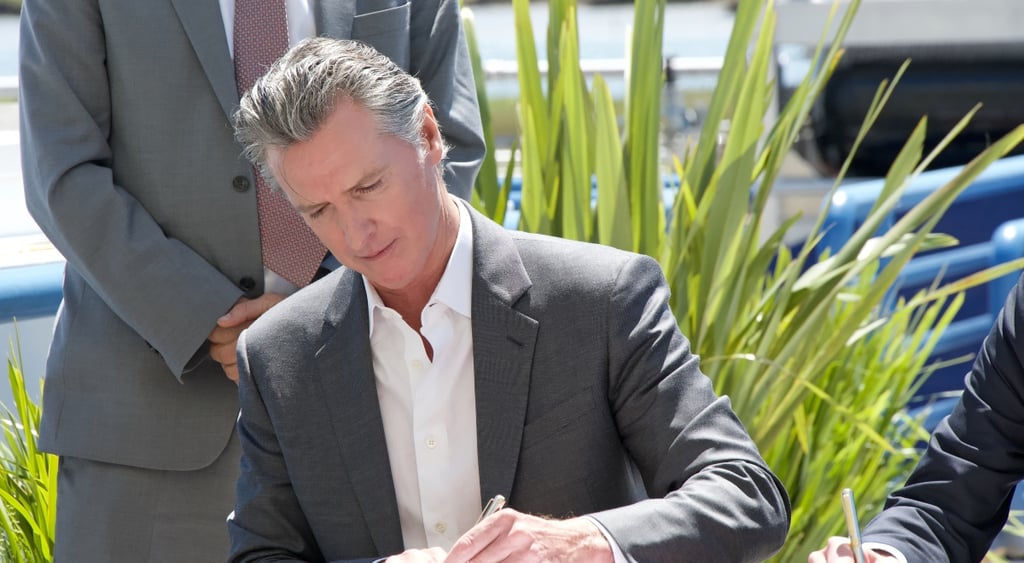
Image by Cybernews.

 Follow us
When you don’t succeed, try again. Almost exactly a year ago, California Governor Gavin Newsom vetoed a state bill aimed at preventing AI disasters. Now, after 12 months of negotiations, a new set of regulations on AI companies has finally been signed into law.
When Newsom vetoed SB 1047 in September 2024, some activists fumed, saying that the governor simply caved to pressure from influential big tech lobbyists and investors.
But others were hopeful that progress would still come. For instance, AI entrepreneur Melissa Ruzzi told Cybernews: “We cannot expect the first laws to be flawless and perfect – this will most likely be an iterative process.”
Indeed, it took a year, but the Transparency in Frontier Artificial Intelligence Act, otherwise known as SB 53, was signed into law Monday afternoon.












More modest financial penalties
It requires that ChatGPT developer OpenAI and other big players disclose how they plan to mitigate potential catastrophic risks from their cutting-edge AI models. The companies now need to fulfill transparency requirements and report AI-related safety incidents.
“California has proven that we can establish regulations to protect our communities while also ensuring that the growing AI industry continues to thrive. This legislation strikes that balance,” Newsom said in a press release.
The law is likely to have worldwide ramifications, as 32 of the world’s top 50 AI companies are based in the Golden State. Newsom said that SB 53 could be a model for the US to follow.

Even the author of the bill, Democratic state senator Scott Wiener, who also authored the vetoed SB 1047 bill, is happy and mentions “commonsense guardrails” in his statement.
He also told NBC News: “Whereas SB 1047 was more of a liability-focused bill, SB 53 is more focused on transparency.” But that’s actually the devilish – and crucial – detail.
SB 1047 would have required companies that spent more than $100 million on their AI models to hire third-party auditors annually to review risk assessments, and allowed the state to levy penalties in the hundreds of millions of dollars.
The new law only allows for fines of up to $1 million per violation. For the big tech companies, that’s simply peanuts – they would probably choose to keep paying these minuscule penalties rather than complying with regulations they don’t like.
Most AI companies have made clear their preference for federal legislation to avoid inconsistent, state-by-state regulations.
Only Anthropic has explicitly endorsed SB 53 among leading AI companies. Industry groups like the Chamber of Progress and the Consumer Technology Association oppose the new regulatory requirements.
“Although SB 53 may seem milder than SB 1047, its transparency mandates carry serious risks. A single misfiled report or overzealous disclosure can trigger injunctions, fines, or reputational harm even if the model never causes damage,” Chamber of Progress said.
Techies now want softer federal measures
Most AI companies have made clear their preference for federal legislation to avoid inconsistent, state-by-state regulations. Naturally, they’re hoping for softer measures from the business-friendly Donald Trump administration.
“The biggest danger of SB 53 is that it sets a precedent for states, rather than the federal government, to take the lead in governing the national AI market – creating a patchwork of 50 compliance regimes that startups don't have the resources to navigate,” said Collin McCune, head of government affairs at Silicon Valley venture capital firm Andreessen Horowitz.
Weeks ago, a bid by some Republicans in Congress to block states from regulating AI for 10 years, fiercely lobbied for by AI startups like OpenAI and Anduril, was voted down in the Senate by a large majority of 99-1.
However, on Monday morning, Republican Senator Josh Hawley and Richard Blumenthal, his Democratic colleague, proposed a federal bill that would require leading AI developers to “evaluate advanced AI systems and collect data on the likelihood of adverse AI incidents.”
Congress can't allow American jobs and national security to take a back seat to AI.
undefined Josh Hawley (@HawleyMO) September 29, 2025
I’m introducing legislation to ensure AI works for Americans, not the other way aroundhttps://t.co/10DnvYVUtS
As written, the federal bill would create an Advanced Artificial Intelligence Evaluation Program within the Energy Department. Participation in the evaluation program would be mandatory, much like SB 53’s mandatory transparency and reporting requirements.
A federal framework would replace the California law and others like it, such as those enacted recently in Colorado and New York.
Unlock more exclusive Cybernews content on YouTube.