AI doomsday called off? Nvidia’s Huang expects AI to get smarter, but not sentient
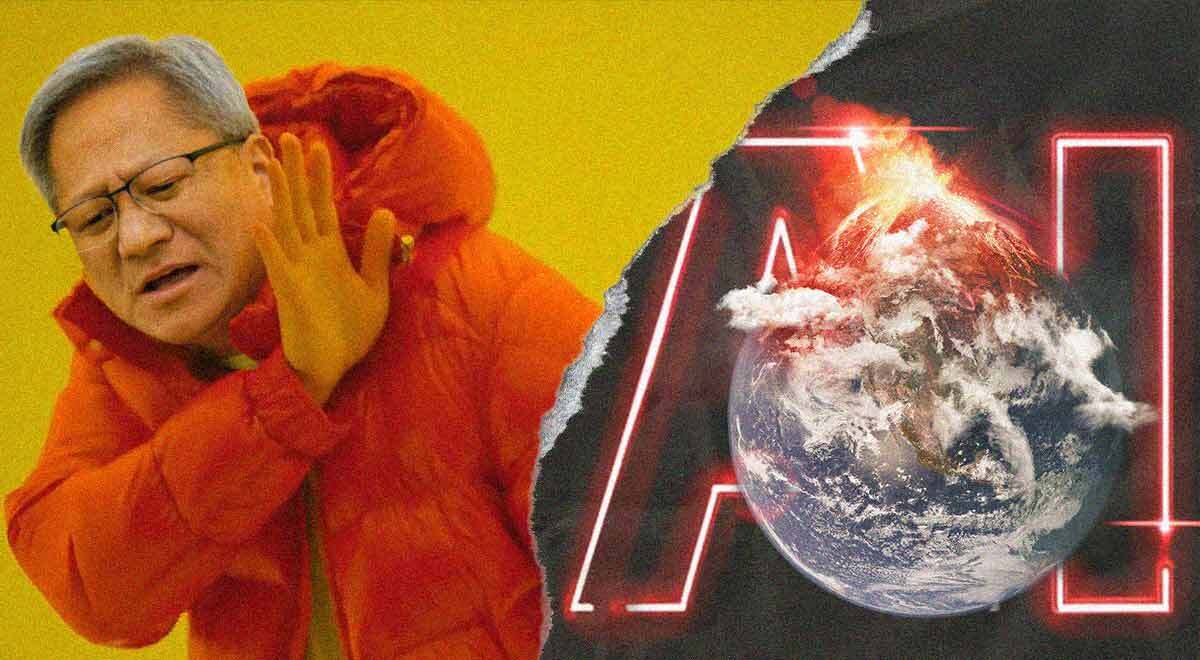
Nvidia CEO Jensen Huang doesn’t expect a sentient AI to show up one day, “all of a sudden,” causing a doomsday. He foresees a gradual and controlled advancement, yet admits that nobody knows what’s at the end of the AI race. Cybersecurity is a major challenge.

 Follow us
Nvidia CEO Jensen Huang doesn’t expect a sentient AI to show up one day, “all of a sudden,” causing a doomsday. He foresees a gradual and controlled advancement, yet admits that nobody knows what’s at the end of the AI race. Cybersecurity is a major challenge.
On the Joe Rogan Experience podcast, Huang stated that AI race is probably “the single most important” technological race, as AI can give superpowers in information, energy, and military.
When questioned about the “ultimate goal of AI” and the national security interest in achieving it first, Huang affirms that no one truly knows “what’s there”, but nevertheless, “we should” pursue it.
Huang dismisses the idea of a major AI threat suddenly emerging and causing a doomsday scenario. Many teams are developing different competing AI systems, and whenever a new AI threat comes, it’s “just a click ahead.”
“You have an AI, and it’s super smart, but my AI is super smart, too.”










Huang doesn’t expect AI to achieve consciousness because these systems, tailored for intelligence and knowledge, are essentially “a bunch of numbers” that recognize patterns, plan, and perform tasks.
“I believe it is possible to create a machine that imitates human intelligence and has the ability to understand information, understand instructions, break the problem down, solve problems, and perform tasks. I believe that completely,” Huang explained.
Nvidia’s CEO estimates that 90% of the world’s knowledge will be AI-generated in 2-3 years.
Historically, concerns about technological progress are not new, and they’re channeled into making technology safer. By comparing AI with cars, where increased power came with safety features like ABS and traction control, Huang argued that the next thousand-fold increase in AI capabilities will be channeled toward more reflection, research, and “thinking about the answer more deeply.”
“The best case scenario is that AI diffuses into everything that we do, and everything’s more efficient,” Huang told Rogan.
“I think it’s probably going to be much more gradual than we think. It won't be a moment. It won't be as if somebody arrived and nobody else has.”
Huang expects AI to simply keep improving “just like technology does.”
Major cybersecurity implications
Rogan highlighted the threat of war and potential AI misuse in military applications. Nvidia’s CEO assured that the best way to avoid war is “excessive military might.”
“I'm happy that our military is going to use AI technology for defense,” Huang said.
“I’m happy to see all these tech startups now channeling their technology capabilities towards defense and military applications.”
Cybersecurity, however, is a “super difficult challenge,” requiring cooperation between security companies to work together as one, “everybody against the threat.”
“Somebody is going to try to breach your security. You're going to have thousands of millions of AI agents protecting you from that threat. Your technology is going to get better. Their technology is going to get better,” Huang said.
“Right now, while we speak, we’re seeing cyberattacks all over the planet on just about every front door you can imagine.”
Unlock exclusive Cybernews content on YouTube.