Peppa Pig AI contract sparks fears over child actors signing away their voices
American multinational media company Hasbro is under fire for requiring child actors to agree to relinquish their voices to AI when signing up for future Peppa Pig shows.
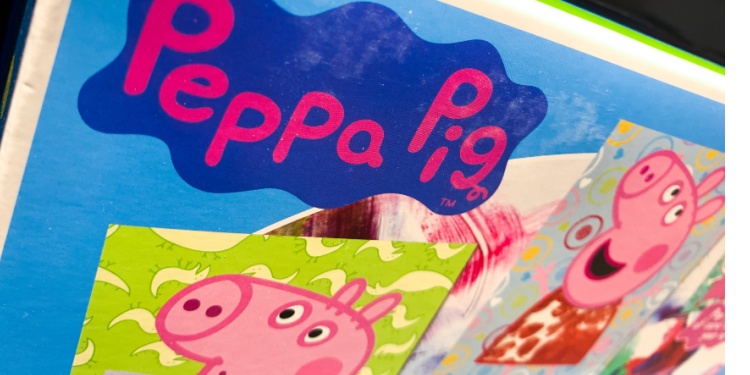
Peppa Pig. Nurphoto via Getty Images

 Follow us
American multinational media company Hasbro is under fire for requiring child actors to agree to relinquish their voices to AI when signing up for future Peppa Pig shows.
- Hasbro is facing criticism after reports that child actors on Peppa Pig are being asked to agree to AI voice clauses in their contracts.
- Legal experts argue AI voice rights should not last indefinitely and should be renegotiated once child performers reach adulthood.
- Critics warn that AI could allow studios to keep using a child's voice long after they have grown up, raising new questions about consent and identity.
Around 1000 opponents signed an open letter to various studios, and despite not mentioning Peppa Pig directly, it read: “Where the performer is a child, consent must be treated with the greatest of care.”
And, along with the letter's concern about the “take it or leave it” approach, opponents feel that the controversial move has largely slipped under the radar. In times gone by, a conversation would at least be had between parents and licensor. But as with the case of Peppa Pig, it seems to be a case of corporate overreach in broad daylight.
Alan Heimlich, president of Heimlich Law, argues that AI voice licensing differs fundamentally from traditional acting contracts:


A permanent synthetic voice right, as a matter of law, impacts upon the child's future commercial identity; whereas a parental approval of an ordinary performance would have no such impact.
Signing away your voice
Agreeing to a contract for a minor isn’t a new concept – it routinely happens with child actors.
The uncertainty lies in AI's potential to generate entirely new performances from the source material. The frequency at which it could do this and for how long are the obvious uncertainties.
"At a bare minimum, there should be some form of revocation or renegotiation when the child reaches adulthood," Heimlich says.
He argues any agreement should clearly define "the duration of use, the ability to reuse, train, or develop additional models based upon the original model."
Without such limits, the plundering of the voice could theoretically spill into adulthood. And, at which point a child is old enough to make their own decisions is another matter altogether.
Being your own competition
Perhaps the most unsettling possibility is a child eventually coming up against their AI self when looking to secure voice acting gigs.
And the problem could become even more complex as the voice changes during adolescence. Peppa Pig may eternally remain the same age at 4 years old, but in the real world, people don’t.
The cloned voice “may continue to earn money long after the real person has undergone changes in their own identity,” explains Heimlich.
As AI technology for voice recordings continues to improve, we could face a situation where the fog between original human content and synthetic copies becomes thicker.
With a child's voice being a huge part of their identity, perhaps the open letter can raise awareness of the matter, because, after all, "consent cannot be viewed simply as a single signature," argues Heimlich.
Cybernews has reached out to Hasbro for comment.





