Perplexity makes Comet browser free to everyone
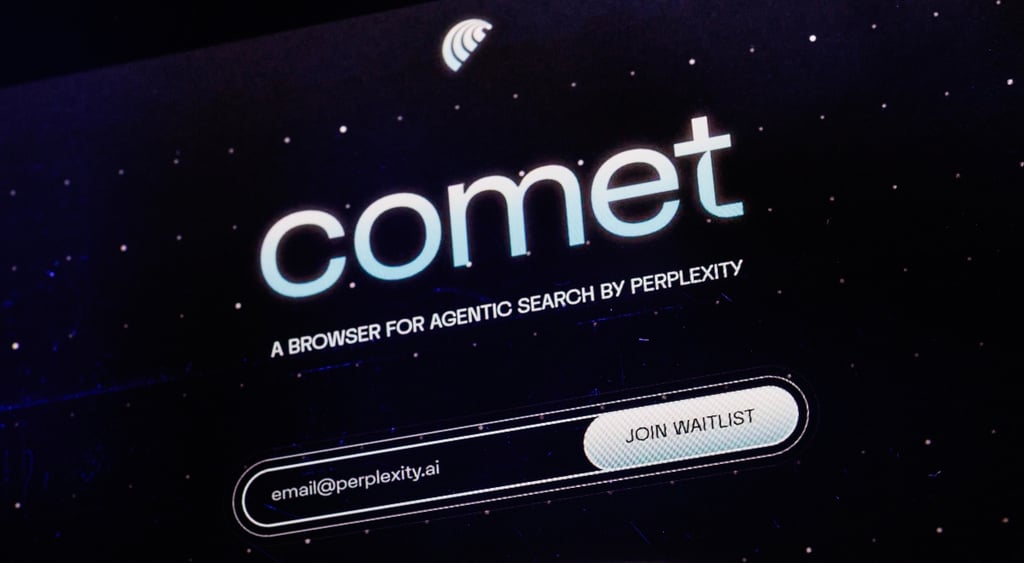
Perplexity AI, a tech startup, has announced the release of the Comet browser at no cost, which will soon be available on the app.

Image by Cybernews.

 Follow us
Perplexity AI, a tech startup, has announced the release of the Comet browser at no cost, which will soon be available on the app.
Perplexity first launched Comet to limited release on July 9th. The AI-powered, desktop-only browser was previously available through a waitlist and cost $200 a month.
Perplexity CEO Aravind Srinivas told Business Insider that users worldwide can now download Comet for free, but it comes with rate limits.
Comet browser acts on web pages and can summarize content, answer questions, fill out forms, and facilitate shopping and bookings, among other functions. Built on Chromium, the browser has a familiar Chrome-like interface.
Perplexity's statement released on October 2nd said that the Comet mobile app will soon be available on any device.












"Comet strips away the clutter and frustration of mobile ads and outdated app models. And, with industry-leading voice technology, your interface with Comet assistants is easier than ever," the press release says.
Comet Max users will now have access to Background Assistants, which the company describes as "a personal team of AI assistants that eliminates any task on your to-do list."
The Email Assistant, which was introduced last week and can draft replies and assist in scheduling and other tasks, is not included in the free Comet version.
The move takes aim at Google Chrome's dominance, with Alphabet's stocks plummeting on Thursday following Perplexity's announcement.
CNN and Fortune join Comet Plus scheme
Perplexity announced the inaugural participating publishers in Comet Plus, a $5 standalone subscription included at no cost with the Pro and Max plans that gives users access to paywalled quality journalism.
In return, the scheme allows for the sharing of revenue with news organizations whose content powers AI.
The signatories include CNN, Fortune, The Washington Post, and Condé Nast, the publishers of The New Yorker and Wired, among others. Two French newspapers, Le Figaro and Le Monde, also joined as participating publishers.
The move comes amid rising tensions between media and tech companies owning generative AI products. Publishers say their copyrighted content is used without permission or compensation.
A group of news organizations led by The New York Times sued OpenAI, the creator of ChatGPT, and its financial backer, Microsoft, for copyright infringement, for using its articles to train large language models.
Since then, OpenAI struck content-sharing deals with Condé Nast, News Corp., and Vox Media.