Tulip mania 2.0. AI’s bubble warning signs flash red
Investors, policymakers, and corporations are investing vast sums on the expectation that AI will soon deliver extraordinary returns. Yet, beneath the optimism, there are projects stuck in the pilot phase and a lack of ROI from expensive tech projects.

Westend61/Getty Images

 Follow us
Investors, policymakers, and corporations are investing vast sums on the expectation that AI will soon deliver extraordinary returns. Yet, beneath the optimism, there are projects stuck in the pilot phase and a lack of ROI from expensive tech projects.
We are beginning to see the familiar warning signs that AI is running the risk of becoming another speculative bubble ready to burst.
Economists and business leaders are openly debating whether we are inflating the next great AI bubble, and if so, how painful the fallout might be when reality fails to keep pace with imagination. But we have been here many times before.
A gallery of speculative madness
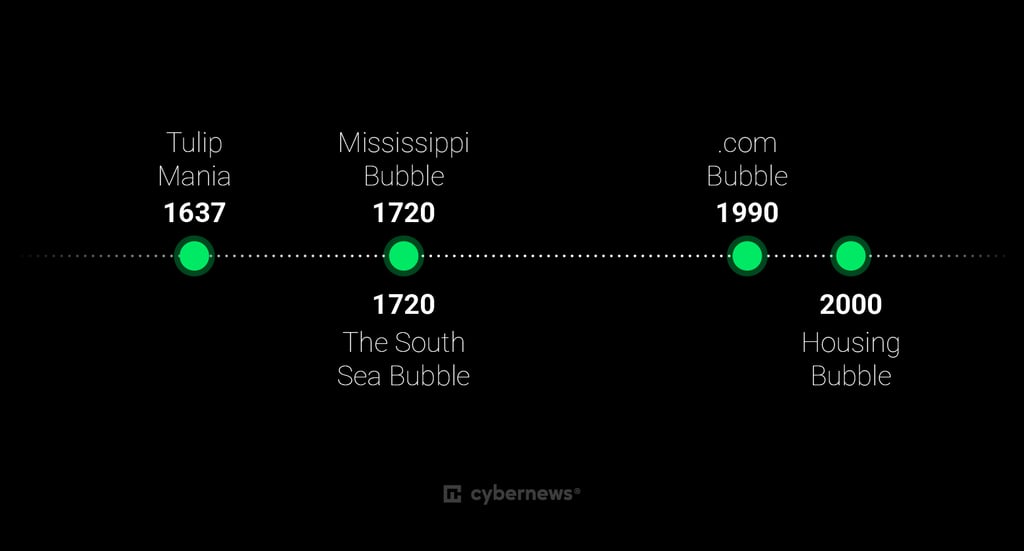
The first documented bubble can be found by taking a trip in the wayback machine to the 1630s. Rare tulip bulbs became symbols of wealth and social standing. Their prices spiraled upward as nobles, merchants, and everyday citizens joined the frenzy, trading bulbs at values that eclipsed annual salaries or even entire houses.






By 1637, prices collapsed almost overnight, leaving many in ruin. Tulip Mania may have been localized and its scale exaggerated in later retellings. Still, it remains an enduring symbol of what happens when beauty or novelty is mistaken for enduring value. When investors today back AI startups with billion-dollar valuations and little to show in terms of revenue, echoes of tulip bulbs as speculative tokens resurface.
The Tulip bubble.
undefined QE Infinity (@StealthQE4) July 27, 2025
Things always tend to revert to the mean.
Never forget. pic.twitter.com/klkJj2gsFQ
By 1720, Britain was gripped by the South Sea Company mania. The company promised vast riches from trade with South America, though little of that trade ever materialized. Shares skyrocketed eightfold in a year. Even Isaac Newton was caught up, investing heavily, selling at a profit, and then reentering the frenzy just before it collapsed, with shares losing nearly 90 percent of their value.
Around the same time, France was captivated by John Law’s Mississippi Company, which promised riches from colonies along the Mississippi River. The law’s system combined speculative shares with paper money, creating an illusion of limitless wealth.
Speculation drove prices sky-high until confidence broke and the bubble burst, weakening the French economy for decades. The Mississippi Bubble illustrates the dangers of financial engineering when combined with hype.
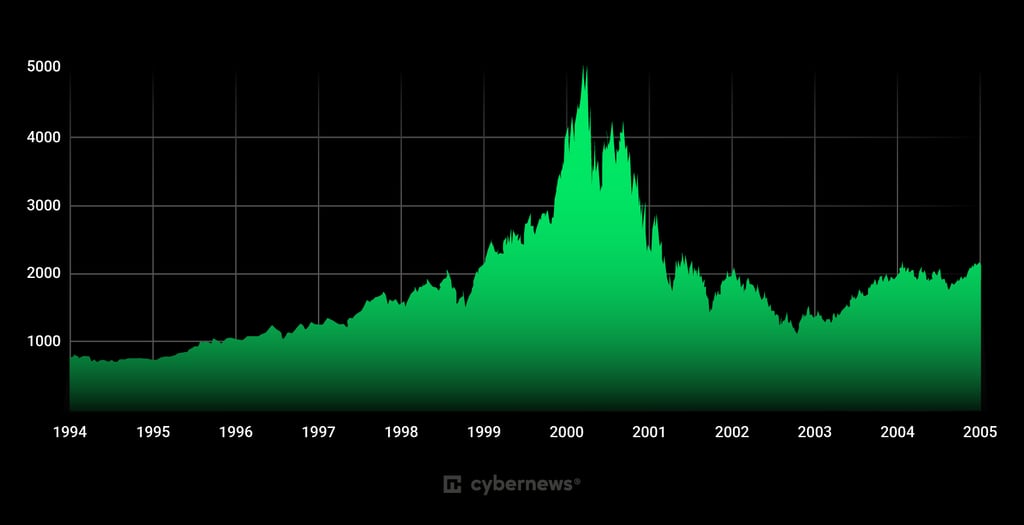
Fast forward to the late 1990s. The internet was the new frontier, and anything with a “.com” suffix seemed destined to succeed. Investors ignored profit models and focused on “eyeballs” and growth. The Nasdaq quintupled in five years before crashing in 2000.
Once again, companies vanished and fortunes were destroyed. But the internet itself would go on to reshape the world. History teaches us that compelling narratives, when unchecked by fundamentals, can pull entire nations into delusion.
The dot-com crash remains the closest parallel to today’s AI market. Transformative technology, extraordinary hype, venture capital inflows, and corporate FOMO mark both. Both illustrate how narratives can overshoot reality before recalibrating.
The housing bubble of the 2000s carried a different story: that home prices never fall. Financial innovation led to the creation of complex mortgage-backed securities that appeared to distribute risk. Instead, they magnified it. When defaults spiked, the system collapsed, triggering a global recession.




Just as mortgages were woven into the fabric of international finance, AI is becoming entangled in stock valuations, infrastructure investment, and even national economic strategies. A sharp reversal would not remain confined to Silicon Valley.
Lessons history refuses to let us forget
The past reveals recurring features of bubbles. In every case, investors placed faith in stories rather than profits. Tulips, South Sea shares, and dot-com stocks all promised transformation without the earnings to match. Today, ninety-five percent of enterprises experimenting with AI report no measurable financial return.
Systemic risk also lurks beneath the surface. The housing crisis showed how interconnected systems amplify shocks. AI’s reach into semiconductors, energy infrastructure, and corporate strategy could create similar ripple effects if the story falters.
Warnings, meanwhile, often go unheeded. Alan Greenspan’s “irrational exuberance” speech in 1996 and Newton’s personal losses in 1720 both remind us that clear-eyed voices exist in every bubble, yet enthusiasm drowns them out. Sam Altman, CEO of OpenAI, has already warned of “insane” valuations, but markets continue to climb.
⚠️ History lesson: every major tech or investment bubble bursts.
undefined Global Markets Investor (@GlobalMktObserv) September 12, 2025
The US dot-com bubble burst after a ~400% run in 2000.
AI euphoria has driven nearly 600% stock gains in the last 5 years, according to BofA.
Is the AI Bubble burst coming soon? pic.twitter.com/Q8nEkGWkq0
The shape of the AI bubble
Over half of all venture capital in 2025 was invested in AI startups. Corporations are committing tens of billions to generative AI pilots, infrastructure, and partnerships. Nvidia, Microsoft, Apple, and Meta are each spending hundreds of billions on data centers, chips, and research. The sheer concentration of capital surpasses the dot-com era.
Startups with little or no revenue are being valued at billions. Public market leaders carry forward price-to-earnings ratios and market caps that exceed the wildest days of 1999. Investors are paying for promise, not delivery.
Behind the curtain, corporate anxiety is rising. AI-related risk disclosures in S&P 500 filings have increased nearly fivefold since 2022. But some are privately warning of uncertainty and overreach. This divergence between external optimism and internal caution is another indicator of a potential bubble.

Just as dot-com companies once added “.com” to their names, firms now rebrand simple automation as “AI-powered.” Regulators are beginning to scrutinize these claims, but for now, many investors accept them at face value. This wave of AI washing distorts perceptions and inflates valuations even further.
The markets are already showing signs of volatility. When Chinese startup DeepSeek launched in 2025, Nvidia shares dropped nearly nine percent in a single day, dragging the market down. Such swings reveal how sensitive valuations have become to the narrative surrounding AI.
From the Economist article: What if the AI stockmarket blows up?
undefined Conch Shell Capital (@TMTMoats) September 14, 2025
undefinedWhere might AI sit in the rogue’s gallery? To judge this, we picked ten historical bubbles and assessed them on each factor—spark, cumulative capex, capex durability and investor group. By our admittedly… pic.twitter.com/p7U7du5i72
If the bubble bursts
Tech giants and startups may be forced into layoffs and cost-cutting measures. With the S&P 500 heavily weighted toward AI-linked companies, a sharp correction could erase trillions of dollars in value.
AI investment has become a form of private stimulus, helping to keep markets buoyant. Its removal could stall GDP growth and push some economies into recession. Infrastructure whiplash would follow as projects for massive data centers were scaled back or abandoned, disrupting utilities, regional economies, and even energy markets already strained by AI’s demands.
The unique danger is that AI is not just another tech fad. It is already baked into corporate roadmaps, government strategies, and market expectations. Its collapse would ripple far beyond Silicon Valley.
To be clear, AI is not tulips. Like the internet, it will reshape society and business. But as the dot-com boom proved, transformative technology can coexist with destructive speculation. The internet was real, yet its early valuations were absurd.
If investment returns fail to materialize as quickly as hoped, the spell could break. The question is whether we are willing to temper our excitement with discipline, or whether we will once again learn the hard way.
Unlock more exclusive Cybernews content on YouTube.