US vs China in AI: Can Greenland’s minerals be the winning factor?
The icy landscape of Greenland hides a treasure trove of rare earth minerals – materials that are crucial for producing high-tech products. In a time when the US is competing with China for dominance in the AI field, it seems that national security interests are not the only factors driving America’s interest in the Arctic island.
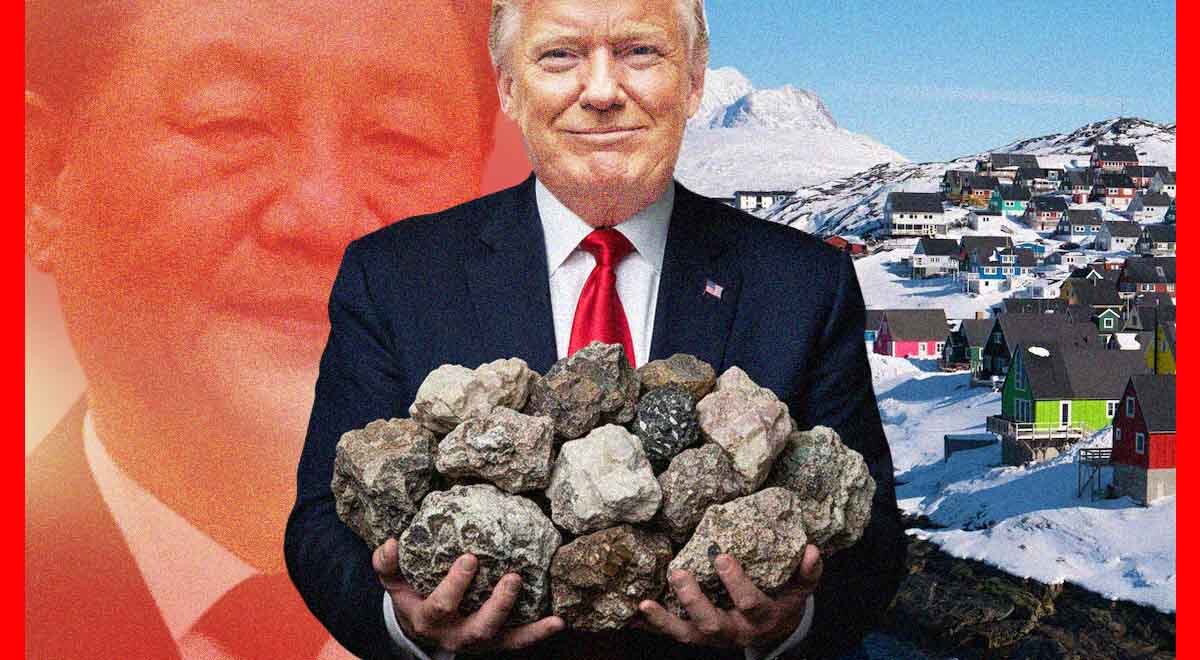
Image by Cybernews.

 Follow us
The icy landscape of Greenland hides a treasure trove of rare earth minerals – materials that are crucial for producing high-tech products. In a time when the US is competing with China for dominance in the AI field, it seems that national security interests are not the only factors driving America’s interest in the Arctic island.
- Greenland holds 1.5 million tons of rare earth reserves essential for semiconductors, microchips, and batteries powering AI systems. These include elements like Cerium (smartphone screens) and Germanium (fiber-optic cables).
- The US and China dominate AI development but both face the same bottleneck: securing rare earth minerals for tech production. Control over these supplies directly impacts their ability to build AI infrastructure.
- China controls 60% of global germanium supplies and imposed export restrictions requiring special approval for products containing Chinese rare earths—directly affecting AI-enabling device manufacturers.
- No mining has begun due to minerals buried under ice, potentially uneconomical extraction costs, environmental protections, and political opposition from both Greenlanders (85%) and Americans (75%).
Key Takeaways by nexos.ai, reviewed by Cybernews staff.
If we were to look at the participants in the AI race, it’s not much of a competition. The two countries that are shifting their diplomacy and tax laws to insert their dominance in the field are the US and China.
Europe and Asian countries are somewhere behind, with their investments in AI development and national LLMs not even equal to a single US company’s investment in the tech.
Although the US and China share the same goal in developing AI, both countries face a similar issue: a shortage of crucial components needed to produce high-end tech.




Often, they come in the form of rare-earth minerals. This is where Greenland enters the conversation.
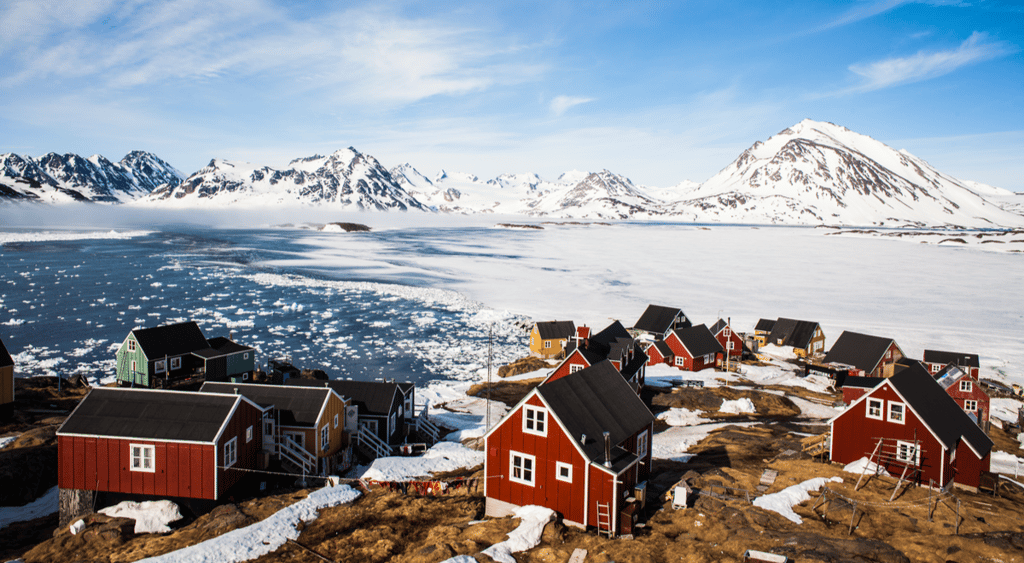
The island lies northeast of Canada and sits atop a massive deposit of rare minerals.
“Greenland ranks eighth in the world for rare earth reserves, with 1.5 million tons, and is home to two rare earth deposits that are among the largest in the world: Kvanefjeld and Tanbreez,” states a report from the Center for Strategic & International Studies (CSIS).
Rare earths are highly sought after by manufacturers of microchips and semiconductors, as these minerals are used to produce components such as batteries, magnets, and other advanced electronics.
For example, the US Geological Survey has presented a list of 60 critical minerals.
Fifteen of them are considered rare and have been found in Greenland. Take Cerium, for example. Its oxide is the gold-standard polishing material used to make smartphone screens, and in green tech, the element plays a key role in reducing vehicle emissions.
Another element, Germanium, is essential when producing fiber-optic wires. This is another possible motivation for the US to dig up this mineral, as China currently controls around 60% of global germanium supplies, according to NBC News.
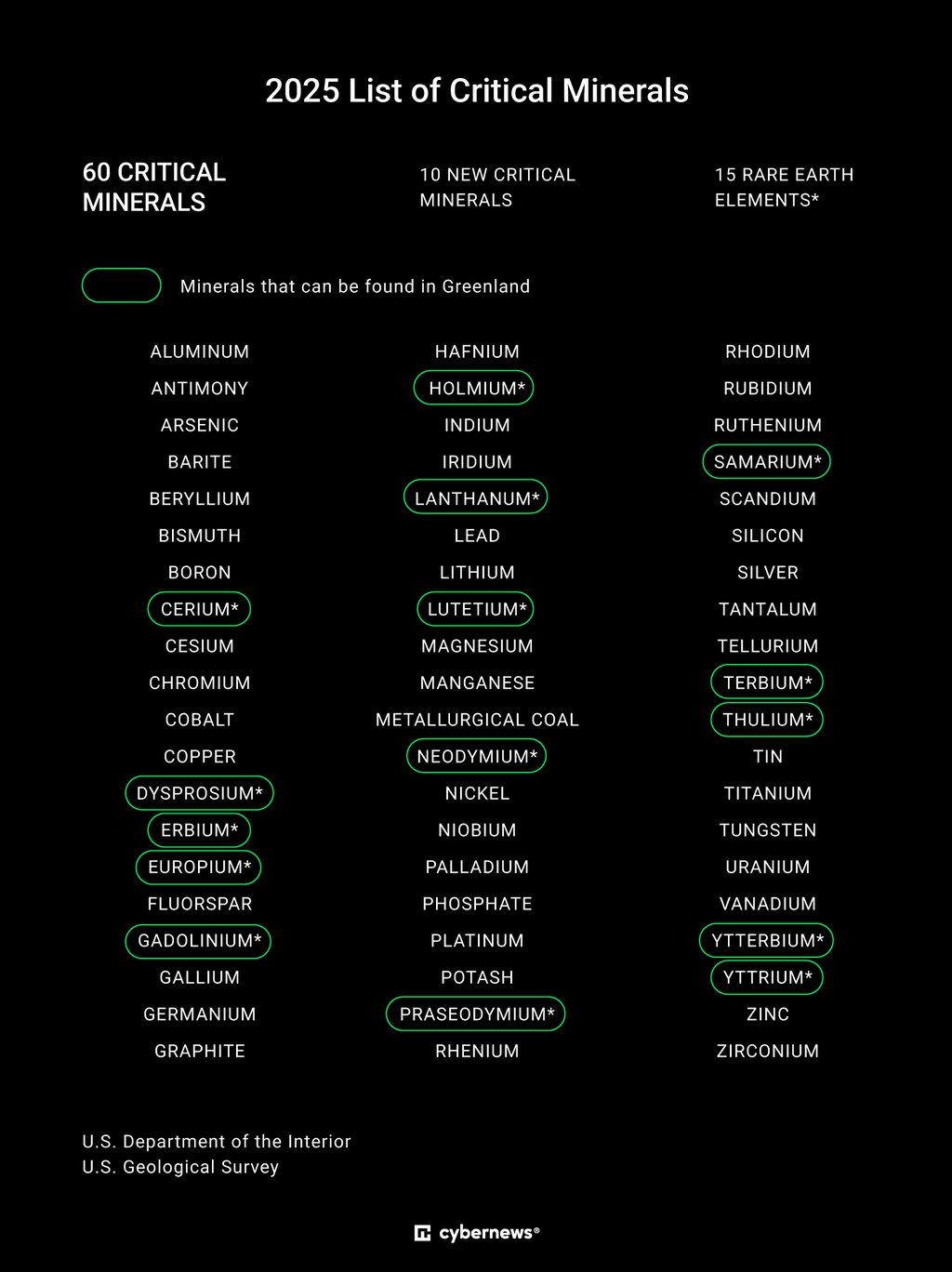
These minerals are critical minerals according to the Energy Act of 2020. Critical minerals are defined as:
- Essential to the economic or national security of the US
- Having a supply chain that is vulnerable to disruption
- Serving an essential function in the manufacturing of a product
- The absence of which would have significant consequences for the US's economy or national security.
Trump understands the benefits that Greenland's minerals could bring to the country’s tech industry.
The problem is that China understands it, too.
China has been trying to become a “Near-Arctic state” for years
China knows the value of rare earth minerals and has used them against the US.
Just last year, right before Donald Trump was set to meet Chinese leader Xi Jinping, the country announced new limits on exports of rare earths and related technologies. These regulations required foreign companies to obtain special approval to export products that contained even small traces of rare earth elements sourced from China, which was a major blow to manufacturers of phones, laptops, and other gadgets.






Another power move was made in the Arctic. China’s presence in the region (not just Greenland) is outlined in the country’s 2018 Arctic policy, also known as the Polar Silk Road.
China presents itself as a “Near-Arctic State” and has previously claimed that the Arctic situation “goes beyond its original inter-Arctic States or regional nature, having a vital bearing on the interests of States outside the region and the interests of the international community as a whole.”
The document states that the “interest” could be established through numerous economic, strategic, research, or environmental causes.
In practice, the Arctic has become somewhat of a diplomatic playground. For example, in 2022, when Russia invaded Ukraine, the aggressor faced Western sanctions and therefore lost revenue. That’s when China began investing in Russian energy projects, helping the country avoid the damage from sanctions.

To this day, no rare mineral mining has begun in Greenland. However, Trump claims on Truth Social that “anything less” than US control of Greenland is “unacceptable” and that it’s not only a matter of national security but about minerals as well.
Four obstacles to digging out the mineral treasures of Greenland
1. There is no guarantee that all metals can be reached
Not all minerals under Greenland are reachable. Many of them are buried deep under layers of rocky fjords and ice, often in very remote or environmentally sensitive areas.
Ted Feldmann, an expert in mineral exploration and the founder of Durin Mining Technologies, told NBC News that, even if dug up, the concentrations of minerals would likely not pay back the money required to mine them in the first place.
“The Tanbreez deposit in southern Greenland is supposedly one of the biggest rare earth mineral deposits in the world, but the mineral there just holds such a small percentage of the valuable metal that it probably isn’t economically viable to ship,” he said.
Experts also warn that environmental regulations and the need to preserve Greenland’s fragile ecosystem can further limit which minerals can actually be mined.

2. Greenland doesn’t belong to the US
Greenland is the largest island in the world that is not a continent. The largest part of it lies in the Arctic and sub-Arctic regions, and its closest neighbour state is Canada. Although it’s located closer to the US, politically it’s in Europe and belongs to Denmark.
For the US to mine on the island, companies would need a licence. However, the Trump administration is threatening other countries with import tariffs if they refuse to negotiate mining terms that would favour US companies.
3.Nobody wants the US in Greenland. Not even Americans.
A CNN poll from last week indicates that three-quarters of Americans say they oppose the US's attempt to take control of Greenland. The other quarter (25%) of Americans favor the Trump administration's initiative. Even those who should support it show mixed feelings – 50% of Republicans and Republican-leaning people claim support, while the other half oppose it.
Opinion polls from Greenland suggest that 85% of Greenlanders oppose the territory joining the US and would rather stay with Denmark.
Unlock more exclusive Cybernews content on YouTube.