US export controls on Anthropic’s AI models catch Europe unawares
The US government’s unexpected intervention in Anthropic’s march toward AI greatness and its decision to impose export controls on the company’s most powerful AI models is drawing scrutiny from the European Commission. The incident should be another wake-up call for Europe.
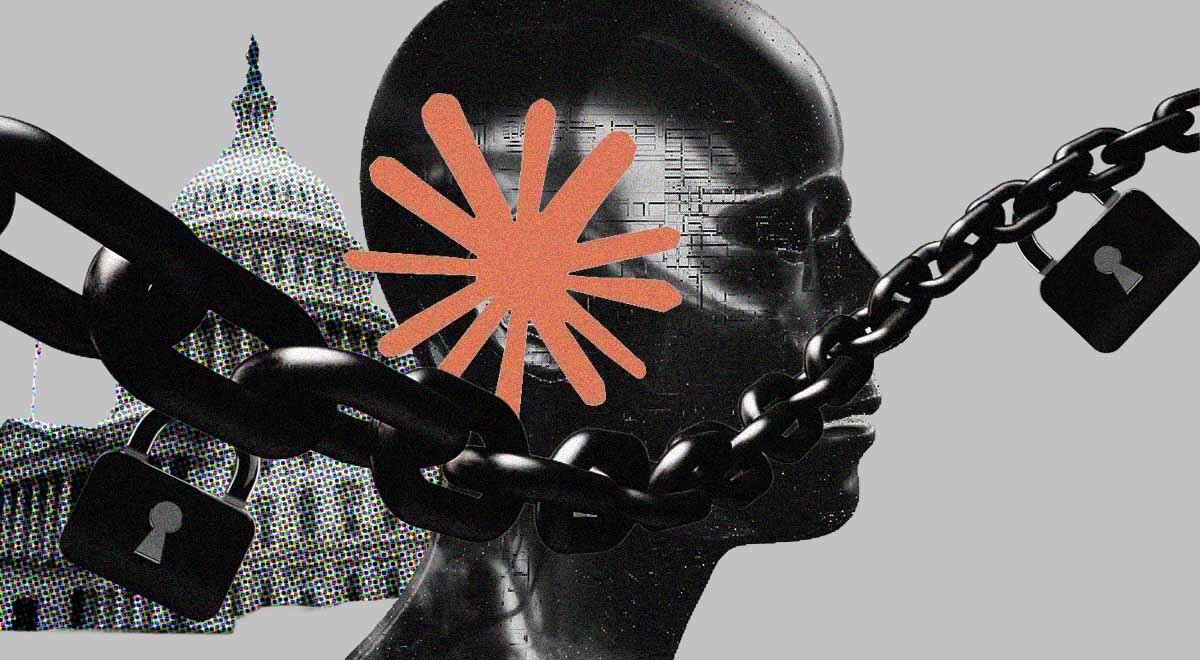
Image by Cybernews.

 Follow us
The US government’s unexpected intervention in Anthropic’s march toward AI greatness and its decision to impose export controls on the company’s most powerful AI models is drawing scrutiny from the European Commission. The incident should be another wake-up call for Europe.
- US export controls on Anthropic exposed Europe’s dependence on foreign AI infrastructure overnight and dramatically.
- European leaders now face pressure to match rhetoric on sovereignty with massive domestic technology investment.
- The episode shows AI access can become geopolitical leverage, reshaping alliances, trust, and industrial strategy.
There is, of course, great irony in the idea that Anthropic, a company that was ostensibly formed to “build safer systems,” is now in serious conflict with the US government over the safety of its latest models.
But that’s precisely what’s going on. Anthropic had to “abruptly disable” Fable 5 and Mythos 5 after the US issued an export control directive ordering the company to suspend all foreign access to the models.
The directive orders Anthropic to suspend access to Fable 5 and Mythos 5 to any foreign national, whether inside or outside the US, including the company’s employees. Since this is technically impossible, Anthropic had to disable access to the models for all of its global clients.







It all happened very quickly on Friday, with some media sources claiming that Anthropic shut down access to its AI models minutes after receiving the order from Washington.
But elsewhere in the world, particularly in the European Union and the United Kingdom, the incident has become a stark reminder that reliance on American AI models and technology in general is extremely risky.
Big words, little action
Yes, this is now a fact: a week after the European Commission presented its plans for the EU to become more technologically sovereign, the US has for the first time ever pulled the plug on the bloc’s access to cutting-edge American technology.

Check if your data was exposed
Find out if your email and related personal information have appeared in known data breaches.
This sort of “kill switch” has long been seen as a hypothetical threat, but now, it’s very real, and it’s being called a long-needed wake-up call for Europe. Politicians and entrepreneurs are now urging the EU to start seriously investing in its own technology.
“Europe cannot keep building its tech stack on access that can be switched off overnight by a foreign government,” said Finnish conservative MEP Aura Salla, seen in Brussels as pro-tech but increasingly frustrated with the US.
“We must take action to preserve our data and our market, primarily for European tech to scale it and build our own frontier AI.”
Edouard Philippe, the former French prime minister who’s expected to fight for the presidency next year, also chimed in, urging Europe to “avoid the vassalization” and, predictably, suggested investing more heavily in Mistral, a France-based AI company.
According to Sergey Lagdinsky, a German Greens MEP, the EU should team up with “middle powers” such as Canada, Australia, Singapore, and the United Kingdom to “pull together computer capacity through a consortium approach.”
One could even look beyond the AI industry. Why should the rest of the world buy American weapons and equipment, now marketed as AI-equipped, if Washington can theoretically disable their modern features in a blink?
Talk is cheap, though. Deeds aren’t. Yes, the EU wants to triple the bloc’s data center capacity over the next 5-7 years at a cost of around €200 billion ($231 billion).
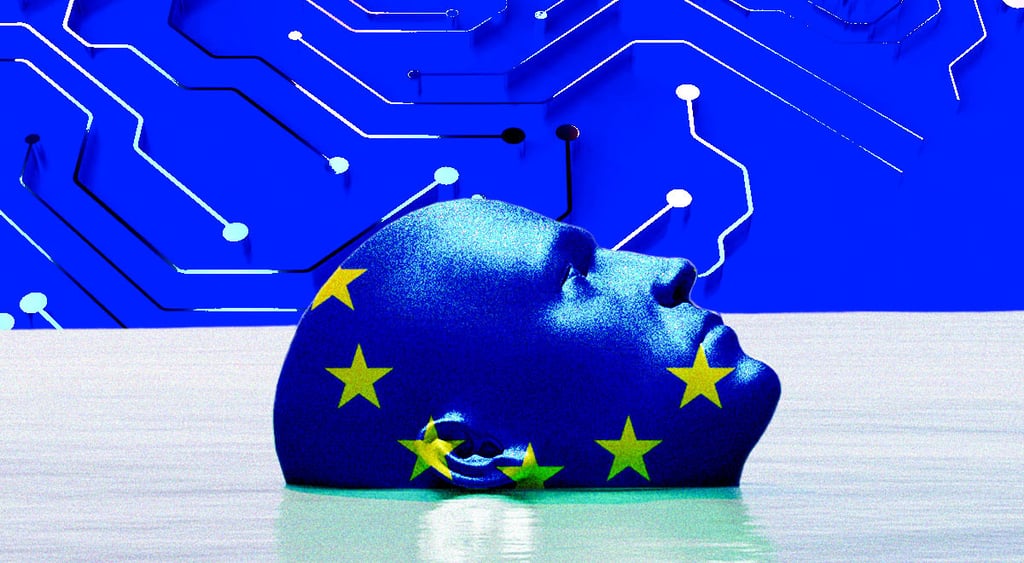
But the European plan is dwarfed by the more than $400 billion that US tech firms spent largely on expanding AI infrastructure in 2025 alone. In fact, American hyperscalers spent more than $200 billion on AI data centers in 2026 Q1.
“No longer a hypothetical threat”
The European Commission said on Sunday that it is assessing the practical implications of a US export control directive impacting Anthropic, and that measures should not be discriminatory against partners.
“We are seeing a new generation of highly capable AI models reach the market. These models offer significant benefits, including for cyber defense, but they also raise serious cybersecurity concerns that need to be addressed,” European Commission spokesperson Thomas Regnier said in a statement.
“We believe that contingency measures taken in this light should not be discriminatory against partners. This development is a further illustration of why Europe needs to strengthen its technological sovereignty.”






And it’s just the EU having a serious think right now. Ciaran Martin, former CEO of the UK’s National Cyber Security Centre, said on LinkedIn: “The Trump administration has indeed ordered the cutting off of cutting-edge AI to all foreigners, whether friend or foe, and this is a very concerning precedent.”
“It is a blessing in disguise. We don’t have to imagine what [sic] if the US pulled the plug on AI tools. No longer a hypothetical threat. It is a reality. What are we in the UK going to do about it?” added Aingaran Pillai, founder and CEO of Zaizi, a UK-headquartered global consultancy.
Pretty please from cybersec leaders
Of course, the issue might quite soon be resolved. According to Reuters, senior Anthropic technical staff will soon meet with White House officials to try to work it out.
Plus, cybersecurity leaders at major US firms including Nvidia and Adobe have asked the Trump administration to lift the restrictions, arguing that the bans hamper efforts to prevent the spread of digital attacks.
“This action has taken the best models away from defenders, created market uncertainty, and risked America's AI leadership without any real risk to justify it,” Sunday's letter stated.
It argued that taking away access to Anthropic’s latest models at a time when China is rapidly progressing with its own AI ambitions is “dangerous.”
But the initial signals aren’t good. David Sacks, now co-chair of the President's Council of Advisors on Science and Technology, wrote on X that Anthropic CEO Dario Amodei plainly “refused” to patch the alleged Fable 5 vulnerability when the government asked him to.
“It is frankly bewildering that Anthropic hasn’t wanted to comply with safety requests that it previously said were its highest priority,” said Sacks.
Unlock more exclusive Cybernews content on YouTube.