Workers fearing AI replacement tend to slack off more
“If you're not showing up, that puts more work on your co-workers.”
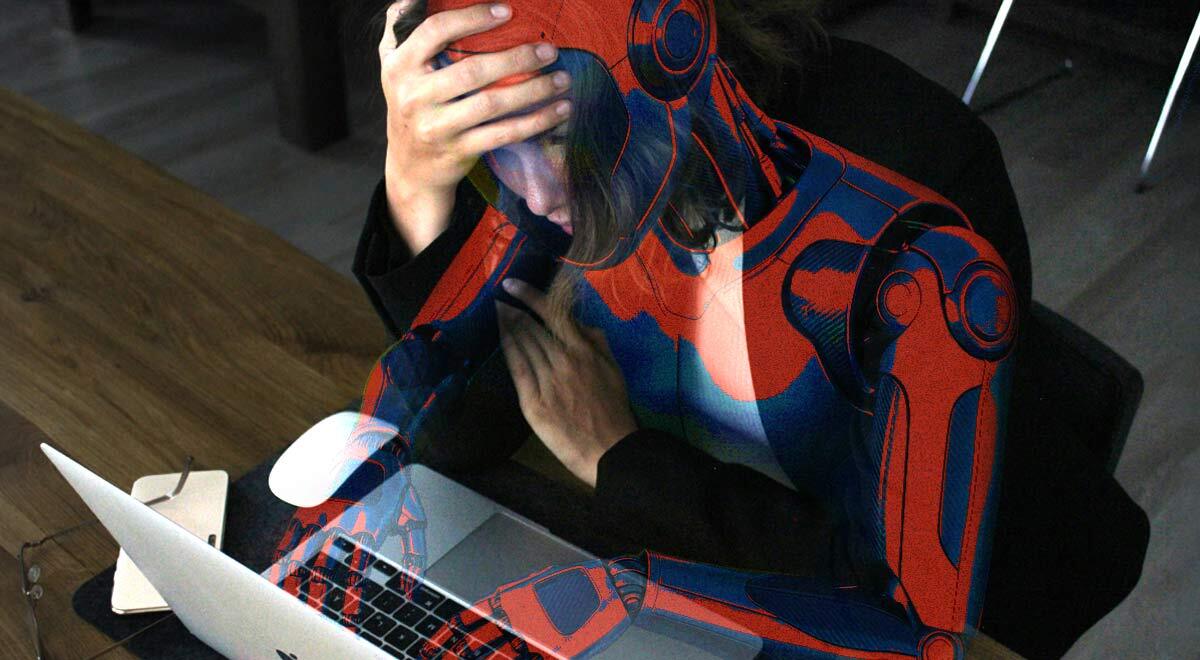
Workers fearing AI replacement slack off more on the job. By Cybernews / unsplash.

 Follow us
- A study across 18 industries links AI job fears to procrastination, absenteeism, and other harmful workplace behavior.
- Workers who fear their occupation may disappear are more likely to justify rule-breaking or cutting corners.
- Manufacturing, technology, insurance, and finance workers appear more exposed to stress from AI disruption.
- Researchers say employers should explain AI plans clearly and support workers through adoption.
Key Takeaways by nexos.ai, reviewed by Cybernews staff.
Workers who feel that AI is threatening their occupation are more likely to procrastinate, swipe a co-worker’s lunch, or engage in other counterproductive workplace behavior, a new study has found.
The study, led by Washington State University researchers, evaluated the effects of looming AI adoption on worker attitudes and behaviors across 18 industries.
Its findings clearly suggest that concerns over AI can harm workers and businesses. Employers should pay attention to how they discuss and implement the technology in order to keep employees engaged and supported, the study further advises.
Harms to you and to the organization





“Counterproductive workplace behaviors are harmful to the interpersonal relationships within an organization,” said Tahira M. Probst, a professor of psychology at WSU Vancouver and lead author of the study.
“If you're not showing up, that puts more work on your co-workers. If you're doing things that impact your ability or your co-workers’ ability to get their work done properly, or if you're wasting organizational resources, there’s a lot of potential harm to an organization – not just to the bottom line, but to the effective functioning of the organization.”
This sort of procrastination is most visible in occupations where AI is likely to have the greatest impact, the study shows.
Workers plugging away in fields such as manufacturing or tech naturally worry more about the potentially negative consequences of AI advancements like intelligent robotics or algorithmic management.
The resulting stress can lead to burnout, reduced job satisfaction, and disengagement. Physical and mental health also get worse.
This is very individual, of course. But, as per the press release, the authors of the study also wanted to examine a broader concern: what happens when AI-related concerns make workers worry that their entire occupation will become obsolete?
If you're a bartender and the bar that you're working for goes under, you can get another job as a bartender somewhere else,Tahira M. Probst, a professor of psychology at WSU Vancouver and lead author of the study, said.
“That profession is not going away. That's not necessarily the case with occupations that are affected by AI.”
Moral disengagement
She gives the example of medical transcriptionists. In the field, a lot of that coding and transcription can now be fully automated, and “that’s not something where if you are let go, you can just go find work in another organization.”
Workers who feel their entire occupation is under threat are more likely to justify behaviors they would normally consider inappropriate, such as surfing the web or coming in late for a shift.
According to the study’s authors, they might additionally begin rationalizing behaviors such as cutting corners or undermining others as necessary to protect themselves.
Has your password leaked?
Industries such as insurance and finance, which are more heavily exposed to AI disruption, also see much more of what the study calls “moral disengagement.” The effect is less pronounced in forestry and construction.
The world has been talking about AI threats to jobs for years now. In August, Microsoft co-founder, billionaire Bill Gates wrote in an essay that the world was “woefully unprepared” to enter the AI era.
Gates is proposing a concept he calls Human Reserved Jobs – societally agreed-upon jobs for humans in areas ranging from mental health care to education. The philanthropist also envisions taxing revenue from firms that use AI outputs to displace human labor.