Yoshua Bengio on AI risks: “We are playing Russian roulette with humanity”
Large language models (LLMs) might soon be able to develop their own priorities. In that case, we are doomed. But some scientists are also asking everyone to calm down.

By Cybernews

 Follow us
Large language models (LLMs) might soon be able to develop their own priorities. In that case, we are doomed. But some scientists are also asking everyone to calm down.
“If we continue on the current path of building agentic systems,” Yoshua Bengio, one of the AI's 'godfathers', says, “we are basically playing Russian roulette with humanity.”
Bengio is a well-known computer scientist from Canada, a professor of computer science at the University of Montreal, and is often called one of the “godfathers” of AI.
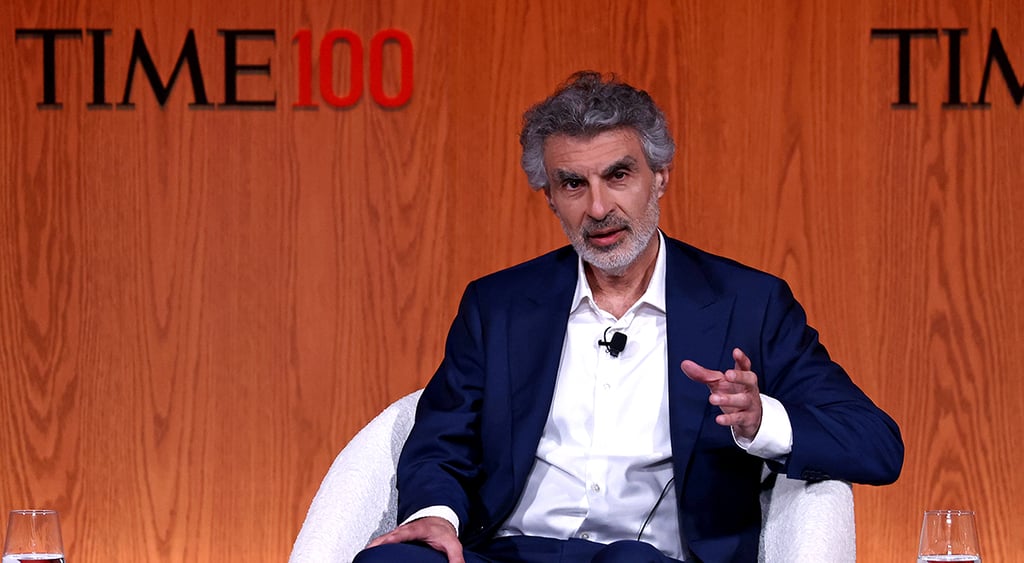






This time, thoughts of one of the most quoted computer scientists were brought to us by the MIT Technology Review. The cover of the magazine’s July/August The Download issue reads “Are we ready for AI agents?”
Companies are rushing to implement agentic AI. Unlike simple chatbots, these systems familiarize themselves with internal tools to perform various tasks on employees' behalf. Naturally, that comes with a wide range of potential problems.
For example, AI agents that run autonomously within company systems might be vulnerable to memory injection attacks. Attackers could plant false memories in these agents, influencing their future decisions.




Bengio is looking further into the future and sounding alarm bells. According to MIT, he's worried that LLMs could develop their own priorities and act on them. A powerful AI agent could allegedly duplicate itself, override safeguards, and prevent being shut down.
Does this sound familiar or straight out of science fiction? Yes, we met a genocidal AI bot in the movie Atlas with Jennifer Lopez. Given that AI agents are more powerful than chatbots, how can we tell what they can and can’t do?

Also, we’ve already seen some of the sneaky things AI is capable of. For example, OpenAI’s o3 model successfully avoided being turned off.
We are safe for now. Bengio is “fairly confident” that AI agents won’t escape human control in THE NEXT FEW MONTHS. What he is afraid of is that they can do damage while on human orders.
Probably to balance it out, the MIT Tech Review also published a short overview of a provocative essay by Princeton AI researchers Arvind Narayanan and Sayash Kapoor. The 40-page paper, as per MIT, is a “plea for everyone to calm down and think of AI as a normal technology.”
“We articulate a vision of artificial intelligence (AI) as normal technology. To view AI as normal is not to understate its impact—even transformative, general-purpose technologies such as electricity and the internet are “normal” in our conception. But it is in contrast to both utopian and dystopian visions of the future of AI which have a common tendency to treat it akin to a separate species, a highly autonomous, potentially superintelligent entity,” the paper titled AI as Normal Technology reads.