Royal Navy's multimillion-pound "hybrid defense" push to counter threat from Russia
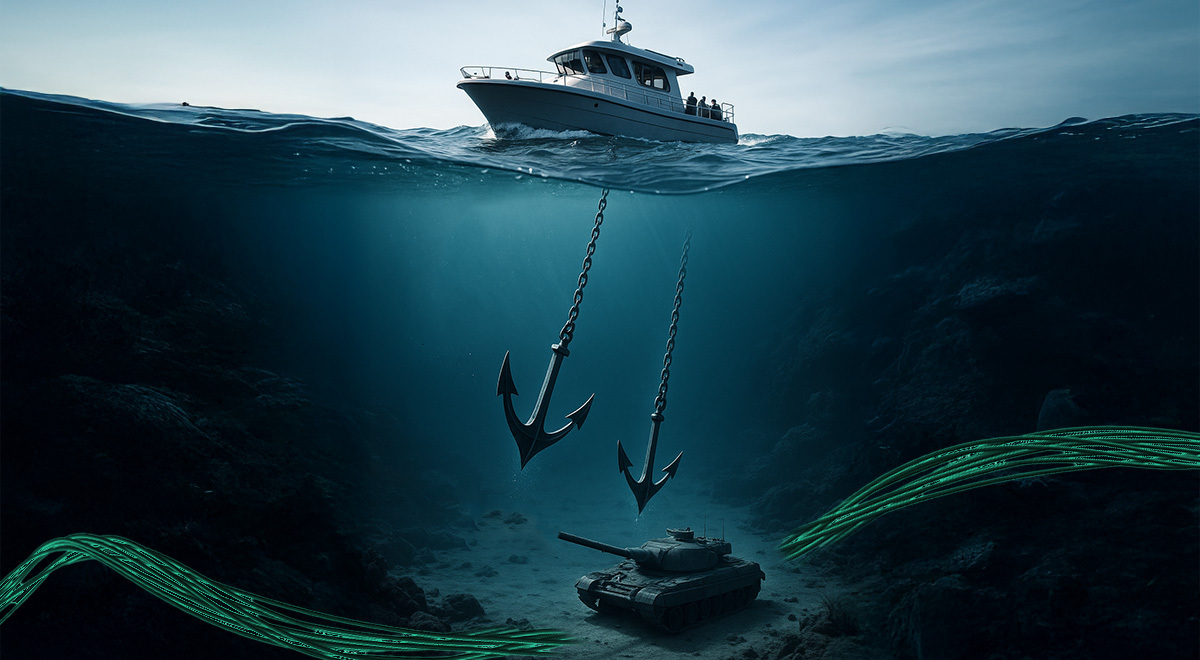
The UK Government is investing millions in technology as part of a new initiative to combat the threat of undersea cable sabotage from Russia.
By Cybernews.

 Follow us
The UK Government is investing millions in technology as part of a new initiative to combat the threat of undersea cable sabotage from Russia.
Announcing its new Atlantic Bastion programme the Ministry of Defence (MoD) said the initiative will combine autonomous vessels and AI with warships and aircraft to create a “highly advanced hybrid force” to protect undersea cables and pipelines.
It notes that this hybrid naval force will enable the UK to locate, track, and, if necessary, counter adversaries across vast areas of the ocean.
Atlantic Bastion will connect ships, submarines, aircraft, and unmanned vessels through AI-powered acoustic detection technology, integrating them into a digital targeting web.












The MoD describes this as “a pioneering network of weapons systems that allow battlefield decisions for targeting enemy threats to be made and executed faster.”
Defence Secretary, John Healey MP, described the programme as a “blueprint for the future of the Royal Navy.
“The Atlantic Bastion combines the latest autonomous and AI technologies with world-class warships and aircraft to create a highly advanced hybrid fighting force to detect, deter, and defeat those who threaten us,” he added.
Private industry and start-ups have also been drawn into the defense effort, with seedcorn investment of £14 million already committed this year to testing and development.
According to the MoD, 26 firms from the UK and Europe have submitted proposals to develop anti-submarine sensor technology, and 20 companies from big primes to tech SMEs are already showcasing technology demonstrators, with public investment matched by private investment so far at a 4:1 ratio.
Russian submarine resurgence
The programme is in direct response to a resurgence in Russian submarine and underwater activity, including the activities of Russian spy ship Yantar around UK waters last month.
UK Defence Intelligence has identified that Putin is currently modernizing his fleet to target critical undersea cables and pipelines.
The UK is particularly vulnerable as 99% of its data travels via undersea cables, making these assets prime targets.
Earlier this year, the UK’s Royal Navy introduced an underwater robot that can be operated remotely and can dive deeper and stay submerged longer than human divers. It’s designed to detect and disarm underwater bombs and sabotage devices.
Countries from Europe and the “Quad” – the US, Australia, Japan, and India – are also stepping up maritime security.
Unlock exclusive Cybernews content on YouTube