Europol calls for European response against caller ID spoofing
Europol wants a coordinated, European response to tackle telephone spoofing.


 Follow us
Europol wants a coordinated, European response to tackle telephone spoofing.
With caller ID spoofing, people are shown a different phone number on their phone display than the one that’s actually being used. That way, scammers pretend to be, for example, a bank employee or government agency, making numbers appear legitimate to deceive victims.
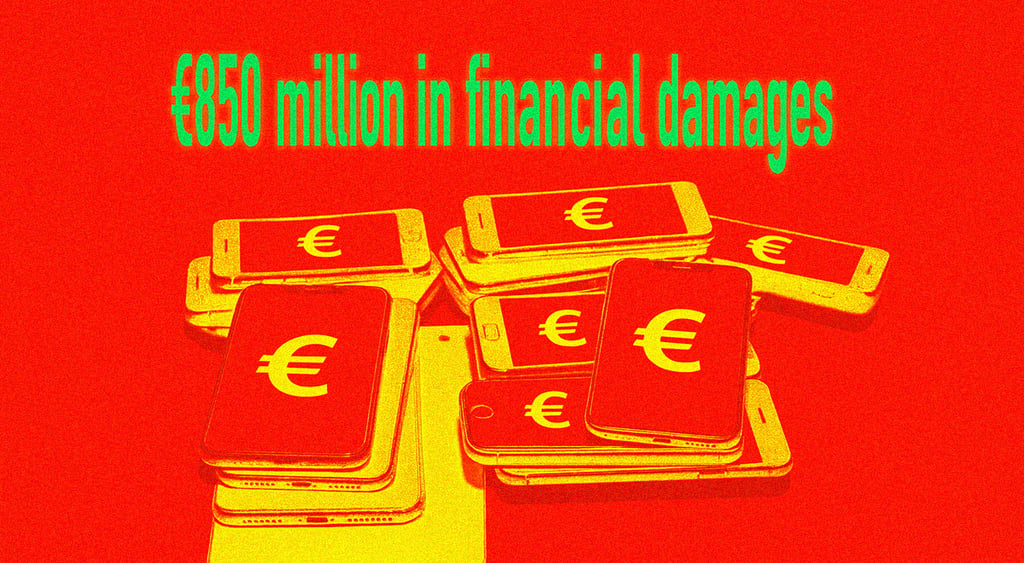
According to Europol, “spoofing-as-a-service” is becoming a major business model for scammers and criminal organizations, providing ready-made tools for impersonating trusted entities and committing online fraud and social engineering scams. It’s estimated that this practice causes approximately €850 million in financial damages worldwide each year.
Criminal networks operate from abroad to exploit jurisdictional gaps to evade detection and prosecution, Europol states.




“By hiding their true identities and locations, criminals trick victims into revealing personal information, transferring funds, or granting access to devices and accounts, making it extremely difficult for law enforcement to trace and prosecute them,” the European intelligence agency says in a press release published on Monday.
Have thoughts about this topic? Others do, too. Join them in the discussion.
A survey conducted by Europol across 23 countries revealed that significant challenges arise when law enforcement authorities try to implement anti-caller-ID spoofing measures, including limited cooperation with telecom operators, fragmented regulations, and a lack of technical tools to identify and block spoofed calls.
Europol wants to change this by implementing a coordinated, European response. To do this, the European agency and its partners have identified three priorities.
For starters, technical standards must be harmonized by developing EU-wide mechanisms to trace fraudulent calls, verify legitimate caller IDs, and block deceptive traffic.






Second, collaboration between law enforcement, regulators, and industry must improve by sharing intelligence and evidence more efficiently.
Lastly, national rules of European Member States must be harmonized to enable lawful tracebacks, clarify legitimate uses of caller ID masking, and promote proven anti-fraud tools.
Furthermore, to restore the integrity of Europe’s communication networks, Europol argues that further consideration must be given to measures other than just caller ID spoofing, including tackling the existence of anonymous prepaid services, SIM-based scams, and smishing schemes.
Unlock more exclusive Cybernews content on YouTube.