They used hair dryers to steal America's AI chips for China
Three people associated with artificial intelligence server maker Super Micro Computer Inc, including its co-founder, were charged with helping smuggle at least $2.5 billion of US AI technology to China in violation of export laws, the US Justice Department said on Thursday.

Image by Shutterstock.

 Follow us
Three people associated with artificial intelligence server maker Super Micro Computer Inc, including its co-founder, were charged with helping smuggle at least $2.5 billion of US AI technology to China in violation of export laws, the US Justice Department said on Thursday.
US prosecutors did not name Super Micro in the complaint, referring only to a "US manufacturer." San Jose, California-based Super Micro said it was informed by federal prosecutors of the indictment on Thursday. It noted that the company itself was not named as a defendant in the case and said it had cooperated with investigators.
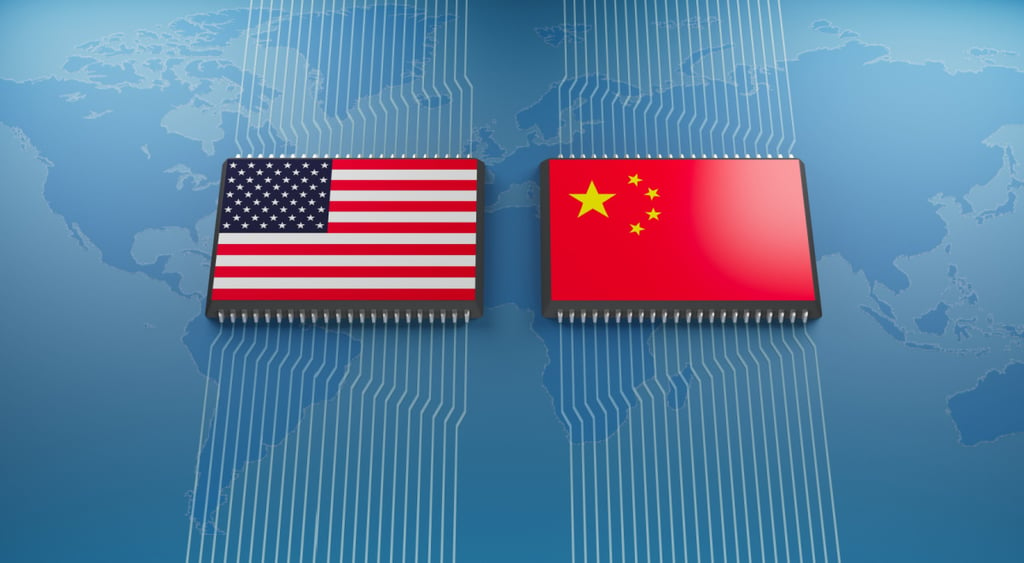
The Justice Department said it has charged Yih-Shyan Liaw, Ruei-Tsang Chang, and Ting-Wei Sun. The charges were revealed in a federal court in Manhattan on Thursday. They are accused of taking servers made in the US and sending them first to Taiwan, and then to other countries in Southeast Asia. In those countries, the servers were put into unmarked boxes before being sent on to China. The US has had rules since 2022 that restrict the export of advanced AI chips to China.
Liaw co-founded Super Micro in 1993, and joined its board of directors in 2023. Chang was a sales manager in the Taiwan office of Super Micro, while Sun was a contractor.





US officials say the three went to great lengths to hide what they were doing from both the US companies that made the servers and from U.S. export control authorities. They reportedly used hair dryers to peel labels and serial numbers off the real servers and put them on fake, non-working servers that were left behind after the real machines were shipped to China.
The company said it placed Liaw and Chang on leave and terminated its ties with Sun, who was a contractor, after being made aware of the charges on Thursday. Super Micro's shares fell 8% in after hours trading following the news.
Dummy servers used to smuggle AI tech to China
US officials also did not name which chips were involved in the alleged scheme, but Nvidia dominates the market for AI chips and its offerings command some of the highest prices.






In a statement, Nvidia, which sells chips to Super Micro and other server makers, said that "strict compliance" with export laws is a top priority
"We continue to work closely with our customers and the government on compliance programs as export regulations have expanded," an Nvidia spokesperson said.
"Unlawful diversion of controlled US computers to China is a losing proposition across the board—NVIDIA does not provide any service or support for such systems, and the enforcement mechanisms are rigorous and effective."
Nvidia did not immediately respond to a question about whether the company was aware of the alleged smuggling activity.
Reuters in 2024 reported that China acquired banned Nvidia chips in Super Micro servers, among others.
Prosecutors said the alleged co-conspirators took servers that were assembled in the United States and shipped them to facilities in Taiwan, both locations where Super Micro has facilities.
From there, prosecutors allege, the servers were sent to other countries in Southeast Asia, where they were put in unmarked boxes before being sent to China.

Prosecutors say the co-conspirators tried to trick the US company’s compliance teams by creating thousands of “dummy” servers, which were non-working copies of the real machines, for inspections, while the real servers were sent to China. The Department of Justice said surveillance footage showed workers using hair dryers to remove labels from the real servers and attach them to the dummy ones.
"The defendants’ scheme became more brazen over time and resulted in massive quantities of servers with controlled US artificial intelligence technology being sent to China," the Justice Department said in a statement, saying that more than half a billion dollars worth of servers were diverted to China between April 2025 and mid-May 2025.
The DOJ said Liaw, a US citizen, and Sun, a citizen of Taiwan, were arrested on Thursday while Chang, a citizen of Taiwan, remains a fugitive.
Liaw regularly engaged with top tech executives
Liaw, in particular, was well-known in Silicon Valley, where Super Micro builds computers using chips from some of the region's biggest firms such as Nvidia, Intel and Advanced Micro Devices. According to postings on his LinkedIn profile, he actively welcomed customers to the company's headquarters and attended a groundbreaking ceremony for one of Micron Technology's new factories and met with Micron CEO Sanjay Mehrotra, according to photographs posted on LinkedIn.
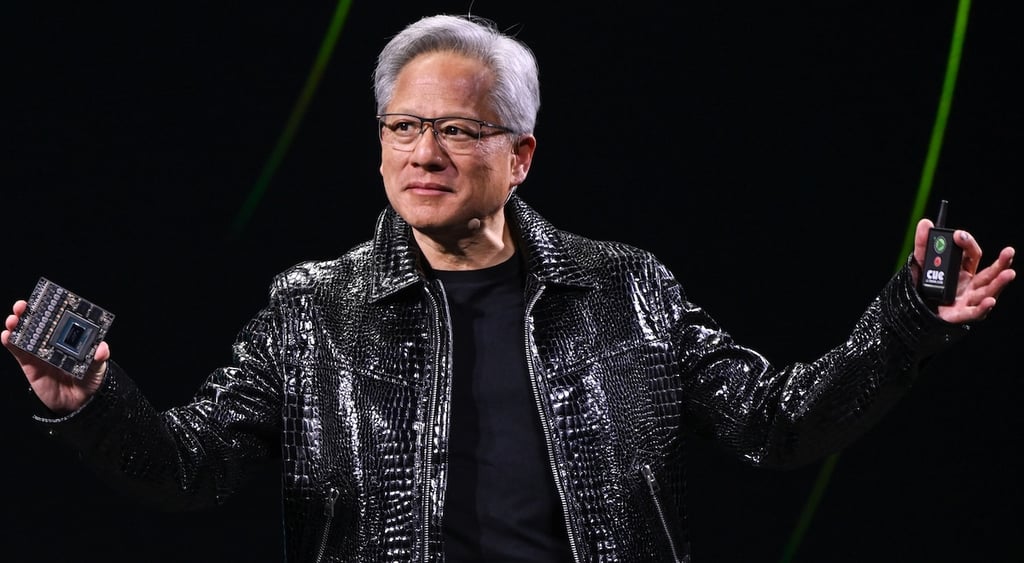
On Monday, Nvidia CEO Jensen Huang walked the floor of Nvidia's massive developer conference meeting and meeting executives from key partners such as Samsung Electronics Co Ltd and SK Hynix. When Huang stopped at Super Micro's booth to shake hands with Super Micro co-founder and CEO Charles Liang, Liaw was standing nearby, according to a photograph posted by Super Micro on social media platform X.
Liaw did not respond to an emailed request for comment at his Super Micro address or a call at a phone number listed for him.
"The conduct by these individuals alleged in the indictment is a contravention of the company's policies and compliance controls, including efforts to circumvent applicable export control laws and regulations," Super Micro said.
Unlock more exclusive Cybernews content on YouTube.