Europe’s tech revolution feels like Soviet déjà vu
The code powering Europe’s digital revolution has Russian fingerprints all over it.
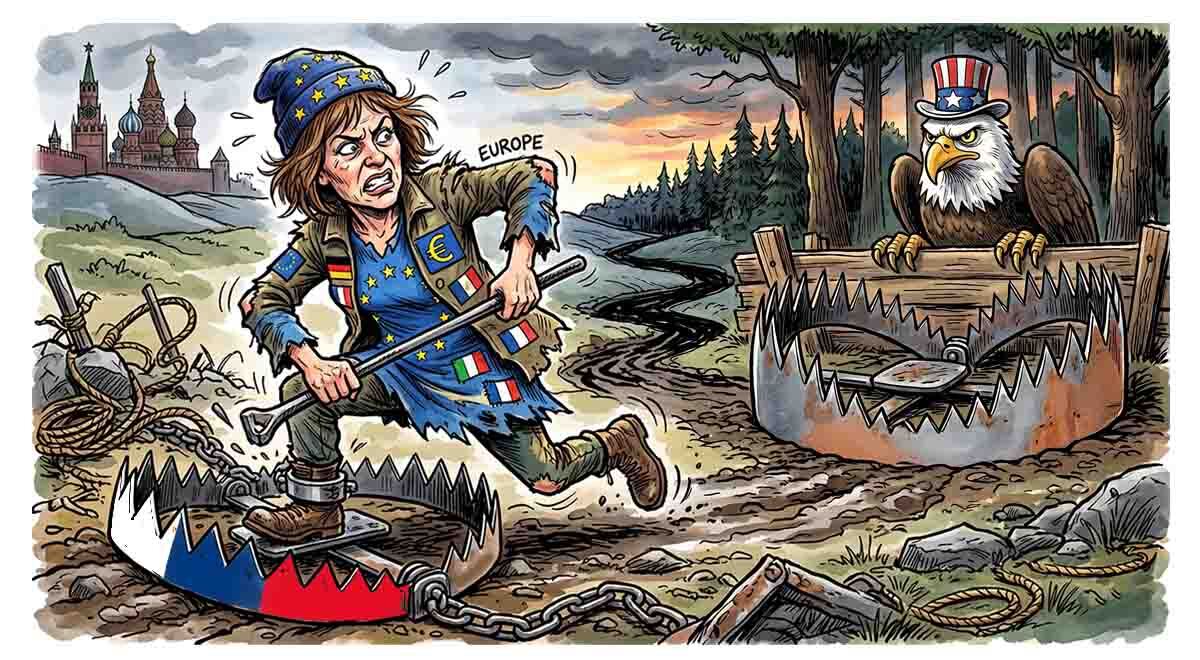
Europe trapped. By Cybernews.

 Follow us
The code powering Europe’s digital revolution has Russian fingerprints all over it.
The Journey to Tandadrika, my favorite childhood book, tells the story of six lonely, worn toys that get tossed aside and embark on a long search for the Toy Planet – Tandadrika. Written by a Lithuanian author, the book begins on New Year's Eve, as everyone prepares to celebrate.
"It's the most magical evening of all the evenings," the book reads.
Only it's not, is it? It should be Christmas Eve, with everyone waiting for the birth of baby Jesus. The book was first published in 1984, with over 7 years still to go before the official collapse of the Soviet Union. Under the Soviet regime, we had no Christmas.
In the late sixties, when my mom was still a student, they would often schedule exams during Christmas. Later, people would pretend it was someone's birthday just to have a little gathering around the holidays, so as not to alert nosy tattletale neighbors.




Having learned how to survive the Soviet regime, my mother wasn't too happy about the strong reliance on the West when the Iron Curtain fell. To her, freedom wasn't about embracing the American way of life, even though we desperately needed the US at the time to remain independent.
Fueled by naivete and hope, the journey matters more than the destination.
Judging by recent European efforts to create local alternatives to American tech, you might think we are waking up to the importance of standing on our own.
But not every nation in Europe shares our sentiment toward Russia.
For months now, Cybernews' most-read stories have circled around European tech alternatives, local governments ditching Microsoft, and so on. Well, you get the idea.
But pompous statements might be stronger than the tech behind them. This week, a handful of European tech companies and organizations are launching Euro-Office as a European answer to Microsoft Office and Google Docs. However, our investigation revealed that the Euro-Office code might be vulnerable to Russian modifications.
It's not a crucial project for Europe, of course, with many questioning why LibreOffice or OpenOffice isn't good enough if you want to reduce your reliance on US tech. But it's rather funny how the tables have turned.
We continuously laugh at Russia's attempts to build its own sovereign internet, and yet we are somewhat following in its footsteps, with the Americans now laughing at us. If that wasn't enough, we are relying on code written in Russia.
Europe's journey toward digital sovereignty is very reminiscent of the worn toys' trip to Tandadrika. Fueled by naivete and hope, the journey matters more than the destination.






Top 5 Cybernews stories on the European journey towards digital sovereignty
- Euro-Office is being launched as Europe’s answer to Microsoft Office and Google Docs to reduce reliance on US tech. Yet it could be vulnerable to Russian modifications, according to Cybernews analysis.
- Europe’s centralized consent service Utiq is built on a promise to address privacy concerns caused by third-party cookies. Experts, however, aren’t convinced.
- There’s no shortage of European alternatives to Google Search, but some rely on Google and Bing indexes, raising concerns about whether they are truly sovereign.
- Palantir’s efforts to push into the German security market haven’t paid off. The country’s domestic intelligence agency has just acquired a French alternative to the controversial US data broker.
- Austria, Switzerland, and Luxembourg have pledged to join Germany’s efforts to build a European military space command to reduce the continent’s dependence on the US.