Germany leads efforts to build alternatives to US space tech
Austria, Switzerland, and Luxembourg have pledged to join Germany’s efforts to build a European military space command to reduce the continent’s dependence on the US.
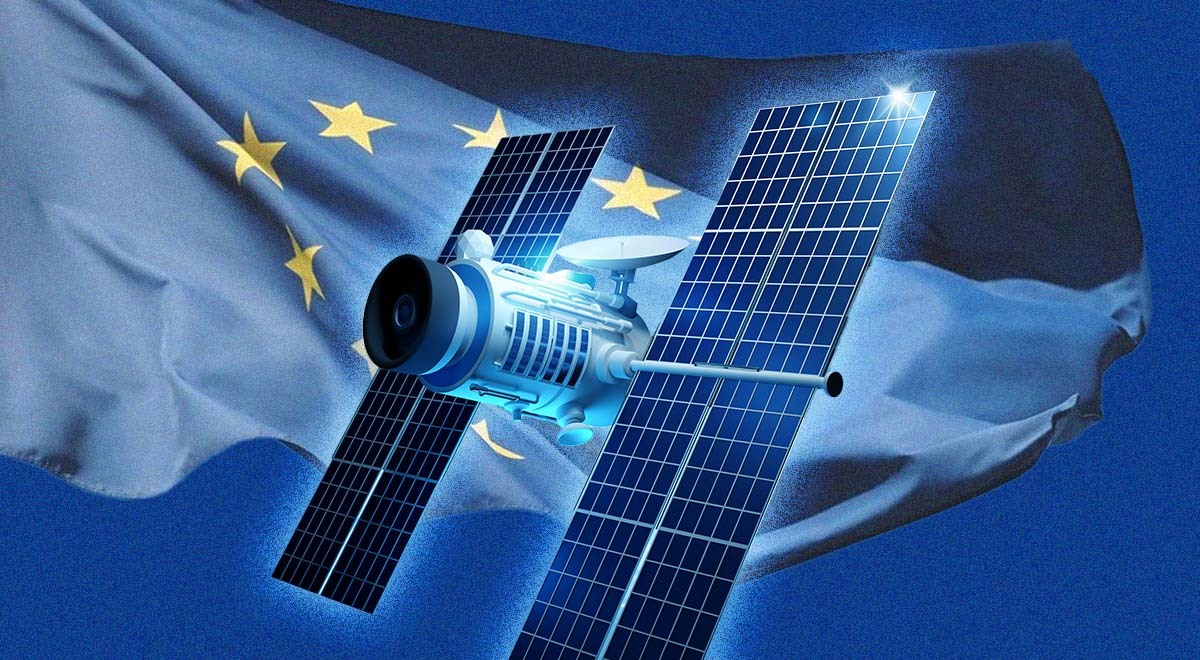
Image by Cybernews

 Follow us
Austria, Switzerland, and Luxembourg have pledged to join Germany’s efforts to build a European military space command to reduce the continent’s dependence on the US.
Germany’s defense minister, Boris Pistorius, announced at a press conference in Berlin that Germany is developing a European Space Component Command and a space training academy.
Pistorius invited partner nations Austria, Switzerland, and Luxembourg to help shape the initiative rather than simply adopting it, according to Defense News.
The announcement comes as part of Germany’s €35 billion ($40.7 billion) military space investment package, which foresees encrypted low-earth-orbit satellite constellations and military-grade launch capacity.











In addition, the investment will cover the expansion of Space Command within the Bundeswehr, the German armed forces.
Austria’s Defense Minister Claudia Tanner said the country plans to launch three operationally designated military satellites and a test object into orbit next year.
Among the projects is LEO2VLEO, an Austrian-Dutch joint initiative covering imaging and navigation in very low Earth orbit.
Tanner said the satellites, developed in cooperation with Austrian startups, would be made available to partners, emphasizing the need to ensure independence of communications in a crisis.
Swiss Federal Councilor Martin Pfister said the space domain is where Europe faces the greatest dependency on non-European technology providers.
“It is not possible for one country to solve this alone,” he said.
While the meeting’s most tangible result may be reaffirmations of collaboration, they still carry significance.
While Luxembourg is a founding member of NATO, Austria’s neutrality is enshrined in its constitution. Permanent neutrality is also an important instrument of Switzerland’s foreign policy, preventing the country from joining military alliances such as NATO.
Therefore, their willingness to step up cooperation in military space operations marks a deviation from the status quo.
Despite growing calls for Europe’s strategic autonomy in space, “the operational reality remains constrained by industrial fragmentation and risk aversion,” according to the 2025 analysis by the Center for Strategic and International Studies.
For example, strategic autonomy requires operating critical infrastructure, such as launch services, which are currently primarily provided by SpaceX and other non-European companies.
Europeans are shifting away from American tech
The EU announced in January 2026 the rollout of a secure, encrypted satellite communication system that could serve as an alternative to Elon Musk’s Starlink.
Militaries and governments of all member states were given access to sovereign satellite communication, which, according to Andrius Kubilius, the bloc’s commissioner for defense and space, was “built in Europe, operated in Europe, and under European control.”
However, space is far from the only area where European nations are increasingly seeking to reduce their reliance on American technologies.

The Austrian Armed Forces announced in September 2025 that it would replace Microsoft Office with open-source LibreOffice across 16,000 workstations.
Germany’s domestic intelligence reportedly snubbed the controversial US data broker Palantir despite the company’s aggressive lobbying efforts, choosing a French alternative instead.
In March, Germany’s Ministry for Digital Transformation and Government Modernization ordered that all public-sector documents be available only in open formats, excluding proprietary alternatives such as Microsoft Word.
Switzerland is also mulling replacing Microsoft products on 54,000 Swiss federal administration workstations with open-source alternatives.
Unlock more exclusive Cybernews content on YouTube.