Beyond Qwant: what are European alternatives to Google Search?
There’s no shortage of European alternatives to Google Search, but some rely on Google and Bing indexes, raising concerns about whether they are truly sovereign.
Image by Cybernews

 Follow us
There’s no shortage of European alternatives to Google Search, but some rely on Google and Bing indexes, raising concerns about whether they are truly sovereign.
- The EU Parliament’s decision to switch to Qwant illustrates increasing interest in European alternatives to Google Search.
- Germany-based Ecosia donates its profits to environmental initiatives, but partly relies on Microsoft’s Bing search index.
- The UK’s Mojeek has its own index of web pages and has a strict no-tracking policy.
- Berlin-based search engine GOOD relies on the American independent index Brave and is available for a subscription fee.
The French-owned Qwant will become the default search engine on the European Parliament's Microsoft Edge and Mozilla Firefox browsers from June 4th.
The move comes as the EU advances its Tech Sovereignty Package, aimed at reducing the bloc’s reliance on American and Chinese technologies.
With Google Search currently holding around 90% of the European market, the switch to privacy-focused Qwant may be just a drop in the ocean, albeit of symbolic importance.






At the same time, Europeans’ patience with US companies, accused of surveillance-based business models, is running thin.
More than 8 in 10 (84%) of Europeans say they don't trust American tech companies to handle their personal data responsibly, according to a Politico survey.






What is Qwant?
Created in 2011, the search engine Qwant is hosted in Europe, is free, and doesn’t use third-party cookies, trackers, or behavioral targeting. Its business model is based on advertising, displayed on the right side of the search bar.
Qwant relies on its own library, which has over 20 billion indexed web pages as of 2023, and Bing to supplement search results.
In 2024, Qwant joined forces with the Berlin-based search engine Ecosia and announced a new venture, European Search Perspective (EUSP), aimed at creating an independent European web index to reduce its reliance on Bing.
Earlier this year, the EUSP urged European governments to switch to Ecosia and Qwant as their default search providers, estimating that the transition would help finance the €50m ($58.13m) European index.
The search market is locked down by a cartel of Google and browser vendors, and anything that helps break that improves sovereignty by unlocking this market.Robin Berjon
According to Qwant’s privacy policy, it collects users’ device technical identifiers and characteristics, such as device type and operating system, as well as IP addresses.
If a user creates an account and accesses new features, such as unlimited AI use, Qwant allows its partner, Microsoft, to use device and browsing data to create profiles for personalized ads.
Robin Berjon, a technologist and founder of Supramundane Agency consultancy, says moving to European search engines, even with dependencies on the US, benefits Europe’s digital independence efforts.
He emphasizes that sovereignty doesn’t necessarily mean building all technologies locally. Instead, it is about setting your own rules in your own jurisdiction.
“The search market is also locked down by a cartel of Google and browser vendors, and anything that helps break that improves sovereignty by unlocking this market,” Berjon tells Cybernews.
The 3 best alternatives to Google Search
Many Europeans may simply be unaware of local alternatives, because Google Search is the default engine in most major browsers and on the Android operating system.
Here are some lesser-known European search engines:
Ecosia (Germany)
Ecosia, Qwant's partner in building the European web index, is best known for its strong focus on the environment and sustainability. Founded in 2009, the company donates 100% of its advertising profits to planting trees and broader climate action.
Ecosia says its users aren’t targeted by personalized search results by default unless they opt in. Moreover, it doesn’t use search data to personalize advertisements elsewhere.
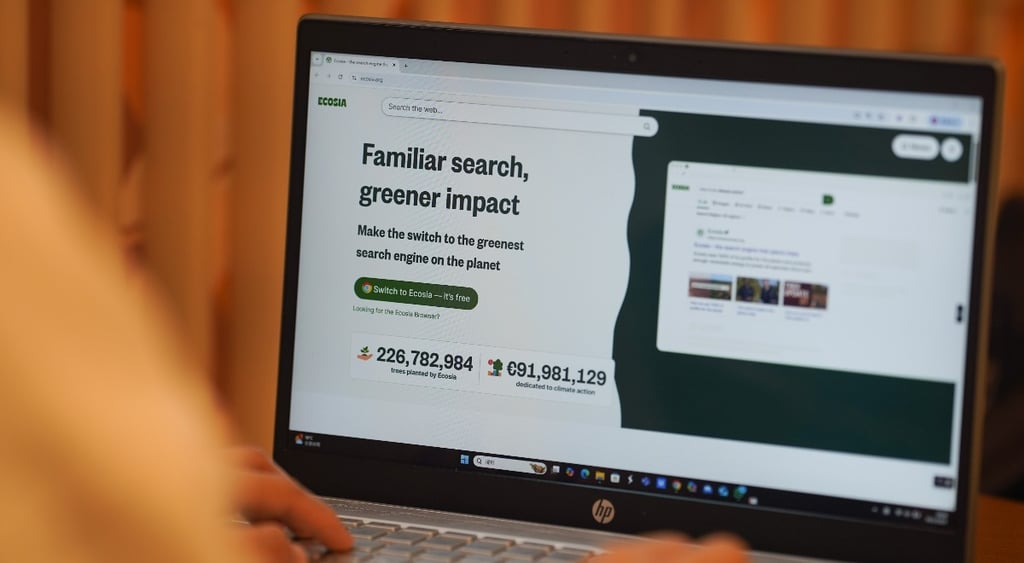
The company claims that the only data it collects is IP addresses, search terms, and session behavioral data, according to its privacy policy.
Besides EUSP, Ecosia’s search results and ads come from American engines Google and Bing, which means that data, such as search queries and IP addresses, are shared with partner companies.
Mojeek (the United Kingdom)
Mojeek, the UK-based search engine, runs on its own index of web pages, meaning that it doesn't rely on Bing, Google, or any other engine to produce results. It is hosted in the UK and runs from the country’s greenest data center.
Mojeek follows a strict no-tracking privacy policy, but does keep standard logs indefinitely, which contain the time of visit, the page requested, and possibly referral data.
The company says it doesn’t record IP addresses. Instead, they are replaced with a 2-letter code indicating the visitor’s country of origin.
Mojeek is free to use because the company’s revenue comes from ads displayed above search results.
GOOD (Germany)
Berlin-based search engine GOOD markets itself as an escape from big tech. However, it is based on an independent index, Brave, developed and operated by the American company Brave Software, Inc.
GOOD says the engine doesn’t collect or store personal data, and its mobile browser apps include ad blockers and anti-tracking.
However, the company works with third-party providers, including Bing and Wikipedia, to display ads and matching results for search queries.
Unlike other European search engines, GOOD is supported by subscriptions, starting at €2 ($2.33) a month or €19 ($22.09) a year. More expensive subscription models allow users to contribute to GOOD’s social change and climate protection projects.
A new era of privacy-focused search engines
While the EU Parliament’s switch to Qwant first and foremost reflects the broader technological sovereignty push, there has been growing interest in privacy-minded alternatives to Google Search.
The US-based DuckDuckGo reported an increase in installs and traffic to its AI-free search page, noai.duckduckgo.com, after Google announced sweeping new AI features in search.
However, a 2023 study concluded that privacy-minded search engines, including Qwant and DuckDuckGo, fail to protect users’ privacy when clicking ads.
The authors noted that advertising systems collude with advertisers across all search engines by passing unique IDs to advertisers in most ad clicks.
Berjon says reliance on US search indexes helps Google continue to distort the ad market when they see query data.
He adds, “We need to move beyond the search experiences we have, locked in the 90s, and start using European search index more.”
Unlock more exclusive Cybernews content on YouTube.