The “ancestral voice” of Mama Graves is AI, but does that ruin the message?
Would you still resonate with a brilliant spoken word poet if you found out they were AI-generated?

Image by Cybernews

 Follow us
Would you still resonate with a brilliant spoken word poet if you found out they were AI-generated?
- The internet's viral, swearing, and trusted grandmother, Mama Graves, is generated using artificial intelligence (AI).
- AI personas can still deliver real and powerful messages despite their voices and faces being synthetic.
- The director of AI literacy publication Riddance, Jeremy Carrasco, told Cybernews that undisclosed AI-personas are “inherently dishonest” and “manipulative” after Carrasco made a video exposing Mama Graves as AI.
Like most people, I get into bed at night with the best intentions.
I promise to put down my phone and detach myself from screens for at least an hour before I fall asleep.
But, as usual, I’m sucked back into the addictive world of social media – with Meta’s Instagram being my poison of choice.






While doomscrolling Reels one night, I stumbled across a post that spoke to me in ways that felt almost uncanny.
Not only was it unusual that the algorithm provided me with content that actually made me think about my life, but the words were spoken like poetry that seemingly read my mind.
The video had such an effect on me that I decided to investigate who was responsible for evoking such a reaction.
I soon realized that the poster had used another user's audio. Hoping to discover my new favorite poet, I followed the audio back to the source, and what I found blew my mind.
Mama Graves – the voice of reason
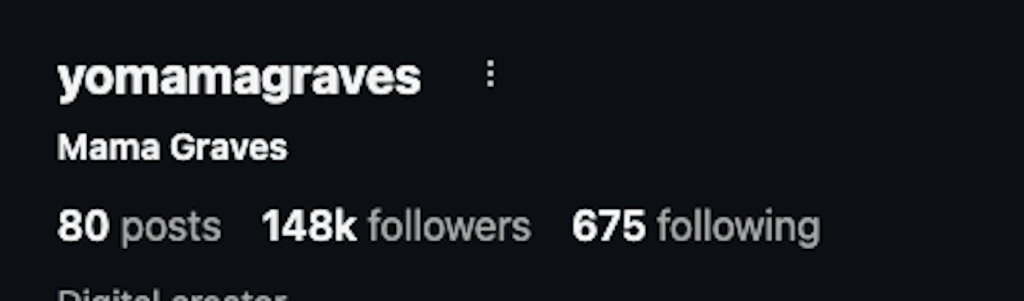
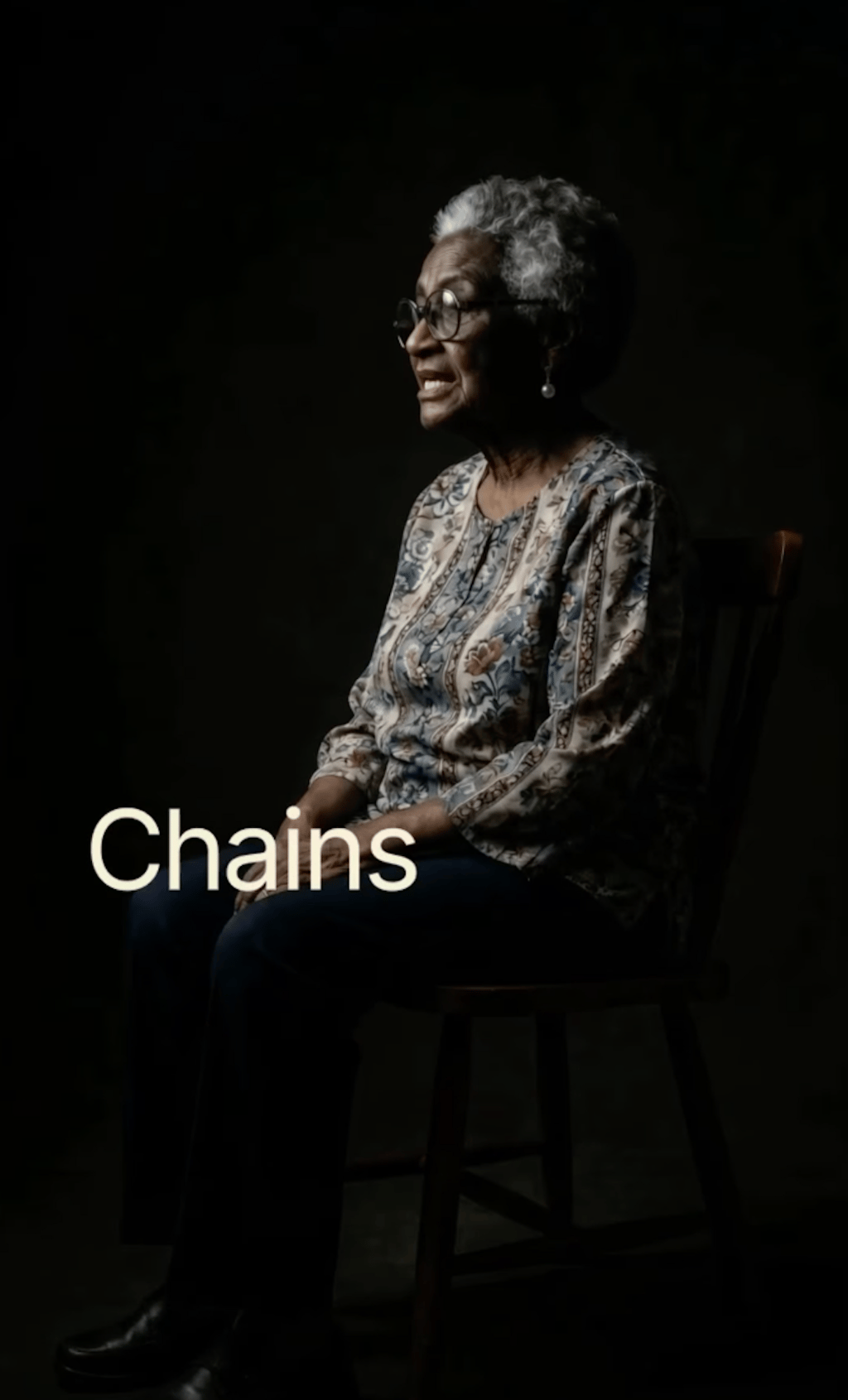
I was redirected to the account “yomamagraves,” featuring an older black woman with around 147,000 followers and 80 posts.
The bio describes Mama Graves as “the ancestral voice,” providing “authentic spoken word” and “real life experiences and perspectives.”
Mama Graves’ content seems preoccupied with amplifying the female experience, foregrounding the profundity of feminine roles in the modern world.
Poetry written with such sincerity to reflect the feminine experience, imbued with the wisdom to teach men about women, and women about themselves.
“You met the smoke he taught to smile,” “touched your wounds soft like a thief testing alarms,” and “sit pretty in borrowed tenderness while taking notes on every place grief made a home in you.”
This is the general trend Mama Grave’s follows. Bringing awareness to the potential suffering buried deep beneath the contrived exterior of a woman doing as she’s told.
Mama Graves promises to “deliver raw no-nonsense porch sermons on trauma, family dysfunction, self-sabotage, accountability, and personal growth.”
“Expect tough love, deep reflection, and truth most people avoid. No sugarcoating. No excuses. Just real conversations that challenge you to grow,” Mama Graves’ YouTube bio reads.

If you didn’t know already, Mama Graves isn’t a real person
When I headed to Mama Graves' accounts, I was immediately made aware that these videos are synthetic (generated using artificial intelligence).
There are many giveaways, mainly the lighting, Mama’s movements, and the lack of frequent blinking, present within the videos.
Unsurprisingly, many social media users didn’t pick up on the AI-generated avatar, despite the account’s, albeit vague, acknowledgment of it.
“IF YOU ARE AGAINST AI, MOVE ALONG!” Mama Graves’ bio concludes.

There are many user comments (who may or may not be aware of AI use) expressing appreciation for Mama’s wisdom.
But, there were still people who wished to shed light on the use of AI and accuse the account of borrowing “from real women without earning it.”
While many might (and do) feel affronted after learning that Mama Graves isn’t a real person, it didn’t diminish the astuteness of the spoken word.
But that’s just my opinion.
Substacker takes on AI old lady
One social media creator and director of the AI media and literacy publication Riddance took to Instagram to blow the case wide open.
Jeremy Carrasco, the director of Riddance, claims that the Mama Graves account is stealing the lived experience of black women to gain internet fame and clicks.
“This black grandmother character is AI, and that’s a problem, because maybe you notice that the character, voice, script, music, and captions are all AI, but many people can’t tell, and they struggle to cope when they find out,” Carrasco says.
While Carrasco raises some important points, he doesn’t care to provide Instagram users with any evidence to support his claims.
Carrasco told Cybernews that their are strong cues to support that claim that the entire account is AI generated.
"The text follows parallel structures and uses vocabulary with strange dual meanings," yet Carrasco acknowledged that “proving that the text is AI-generated is quite difficult.”
Have thoughts about this topic? Others do, too. Join them in the discussion.
It’s obvious that the person, voice, and likely captions are generated using AI, but Carrasco gives no evidence to suggest that the scripts are synthetic.
Mama Graves’ bio claims the persona is performing “authentic spoken word” and also acknowledges that those opposed to AI should not engage with the account.
Interestingly, Carrasco attributes Mama Graves’ enhanced video quality to the release of ByteDance’s text and image-to-text model Seedance 2.0, while providing no specific evidence to support his claims.
Carrasco goes on to imply that the account is manipulative and that the creators found what got them views, “and pushed it really hard.”
Mama Graves isn’t like other AI accounts
While Carrasco implies that Mama Graves is supposedly forcing out AI content and pumping it to unsuspecting users at a rapid rate, this might not be the truest of implications.
The Mama Graves accounts on YouTube and Instagram started in February 2026 and have since published around 80 to 100 videos.
The user has posted 80 videos on Instagram, averaging about 4.6 per week. Obviously, the posting frequency isn’t split evenly, but you get the point.
“The daily posting cadence and workflow were suspicious, especially given a sudden eloquence about motherhood, a topic the page had not covered much until Mother’s Day,” Carrasco told Cybernews.
However, it doesn’t seem that Mama Graves is spamming social media platforms with AI-generated content for the sake of clicks.
Carrasco actually released a video (on TikTok, not Instagram) following a response from Mama Graves, stating that his Instagram Reel was “inaccurate” because Mama Graves is a real person.
“The creator has reached out to me without denying any specific claim I made,” Carrasco said.
However, Carrasco doubled down, claiming he doesn’t believe his statement was entirely false, since the AI persona “pretends to be” the user's grandmother and isn’t actually her.
But, how can AI pretend to be anything? It's just instructed what to do by the user. So surely, the user should be responsible?
Yet, Carrasco seems to believe that "the identity of the creator behind the character is irrelevant, especially because this is an unlabeled AI character that has not been claimed by a specific human creator."
"AI personas inherently appropriate identities and the cultural associations tied to them," Carrasco told Cybernews.
Users raged in the comments, saying they’d been “duped” and that the poetic wisdom of the videos must therefore be false, not because the persona is AI-generated.
Mama Graves has since started recently labelling their content with AI-generated tags on TikTok and Instagram.
Cybernews has reached out to the people behind Mama Graves for comment.
Why users distrust AI influencers
There is a level of logic for users' distrust of AI, and particularly AI influencers. Certain cases, such as Emily Heart, have ruined AI personas for all of us.
Emily Heart was a convincing AI avatar created by a student in India to essentially attack the MAGA community.
The medical student was struggling financially and discovered he could create an AI influencer.
So he made Emily, a beautiful blonde who freely posted bikini pics on Instagram for the world to see.

But Emily didn’t take off, forcing the student to ask Gemini how to appeal to more people.
Google’s AI told the student that he should narrow his focus and target a specific audience – the MAGA crowd.
So the AI influencer switched from a bikini model to a Christian nurse who supports Donald Trump and gun rights, while also opposing abortions and immigrants.
After discovering Emily’s true identity, millions of her fans (understandably) felt deceived, as the student was actively exploiting a certain group of people for financial gain.
The student did actively deceive people because their intentions were malicious.
So, people prescribe black and white thinking when it comes to AI online because big tech has made it really easy to manipulate people – if that’s your aim, of course.






Unlock more exclusive Cybernews content on YouTube.