Quantum physicist refused Epstein after mum warned: “Stay away from this slime machine”
Documents released last month by the US Department of Justice, related to Jeffrey Epstein, mention hundreds of figures from science and technology. Less widely discussed, however, are the researchers who declined the financier’s offers.
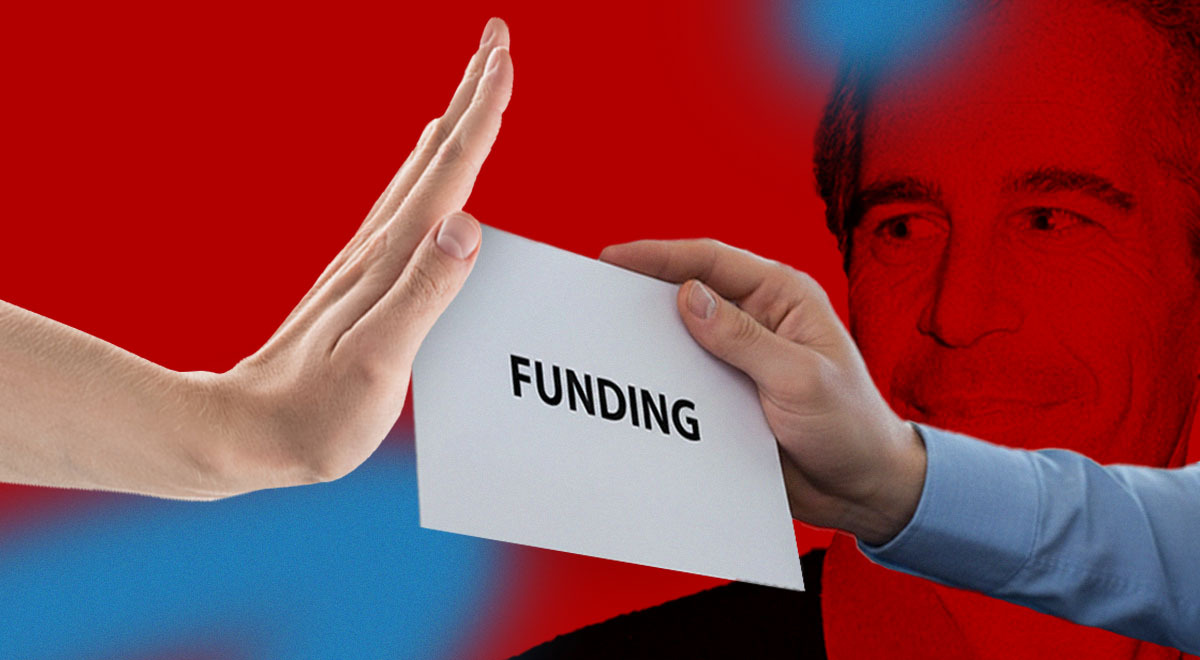
Image by Cybernews

 Follow us
Documents released last month by the US Department of Justice, related to Jeffrey Epstein, mention hundreds of figures from science and technology. Less widely discussed, however, are the researchers who declined the financier’s offers.
Epstein – who died in a New York Jail in 2019, awaiting trial on child sex trafficking charges – cultivated relationships with academics for years.






Presenting himself as a patron of cutting-edge science, he offered research funding, hosted gatherings of prominent thinkers, and maintained extensive correspondence with scientists worldwide.
Being mentioned in the so-called Epstein files does not imply involvement in his crimes. But as Epstein’s connections to elite universities and laboratories have come under scrutiny, some researchers who accepted his support have faced uncomfortable questions about their judgment.





A number have since acknowledged mistakes. These include Richard Axel, a Nobel Prize-winning biologist, and Seth Lloyd, a quantum physicist at MIT who in 2019 published a letter apologizing to Epstein’s victims for accepting funding from the financier.
Others, however, chose a different path. A report by the journal Science recounts the stories of several scientists who say they turned Epstein down.
The computer scientist whose mother warned him off
Scott Aaronson, now a computer scientist at the University of Texas at Austin, recalls being approached in 2019, while he was a young assistant professor at MIT.
According to this account in Science, an intermediary connected to Epstein invited him to lunch, and shortly afterwards, Aaronson received an email proposal.
Epstein wanted to support research into cryptography using DNA and other molecules, a topic that intrigued him.
At the time, Aaronson was not aware of Epstein’s criminal history and initially found the proposal interesting. The approach seemed all the more credible, he added, because Epstein appeared to have some connection with Lloyd, who was Aaronson’s colleague at MIT.
Instead of researching the financier, the professor asked his mother to look into it.
Her reply was blunt: “Be careful not to get sucked up in the slime-machine going on here,” she warned.
Aaronson ultimately declined an invitation to participate in an Epstein-funded workshop.
Looking back, he says that while accepting would not have made him complicit in wrongdoing, “it would have been very embarrassing for me.”
Cancer researcher spent 7 years avoiding Epstein
Another scientist who rebuffed Epstein was David Agus, a cancer researcher and professor of medicine and bioengineering at the University of Southern California.
Agus told Science that the financier first contacted him in 2012 after watching one of his TED talks.
Epstein suggested meeting during Agus’s next trip to New York. Instead of accepting, the professor looked up Epstein online and discovered details of his 2008 conviction for soliciting sex from a minor.
Agus also contacted several people whose names Epstein had mentioned in subsequent emails. Their advice was consistent: avoid him.
Rather than confront Epstein directly, August said he simply declined to schedule a meeting, telling his assistant to say he was too busy whenever the financier asked to get together.
The exchanges continued for years but never led to a meeting. Agus later explained that while he preferred not to judge people, he was unwilling to associate with someone whose past raised serious concerns.
Physicist repulsed by “sexist attitude”
Sean Carroll, a theoretical physicist at Johns Hopkins University, recalls a brief interaction with Epstein before deciding against further contact.
Carroll said he was unaware of Epstein’s criminal past in 2010 when he attended a dinner hosted by one of the billionaire's associates at the California Institute of Technology.
Strong password generator

During the meal, the host phoned Epstein and handed Carroll the phone. He says the two men briefly spoke about cosmology, including the Big Bang and dark energy.

A few months later, Carroll received an email invitation to a scientific gathering at Epstein's private Caribbean island. When Carroll asked if his science writer wife Jennifer Ouellette could attend as a participant, he says he was told she could accompany him on the trip but would not take part in the meeting itself.
He recalls: “They said ‘she could go shopping with the other wives’.And we were repulsed by that sexist attitude.”
Carroll reflects that Epstein was far less widely known at the time than he is today, and while information about his criminal record existed, it was not always easy to find.
It has been reported that Epstein paid online reputation management firms to bury negative coverage of his 2008 sex offense conviction and flood the internet with favorable content. It is also alleged that he paid hackers to change his Wikipedia page.
Gravitational wave specialist who rejected offer outright
Physicist Ivette Fuentes, now Professor of Physics at the University of Southampton, encountered Epstein’s name through a different route.
She told Science in 2019 that the possibility of funding arose after she attended a conference linked to the Penrose Institute while working at the University of Nottingham.
Soon afterwards, she was asked if she might be interested in support from a wealthy donor who had previously been convicted of a sex offence.
She immediately declined. Only months later, after Epstein’s arrest made the headlines again, did she learn that he had been the potential benefactor.
For Fuentes, the decision had been straightforward. Her research focuses on ambitious goals such as developing new gravitational wave detectors, which, among other things, may allow us to see the very first black holes forming and test Einstein’s theories with extreme precision. These are projects that require substantial funding and long-term commitment.
While the promise of financial backing might have accelerated that work, she acknowledges, the ethical considerations outweighed any potential benefit.
"Even if you lose some opportunities, [saying no] is the right thing to do. … What Epstein has taught me is how important it is to do that."Ivette Fuentes, Professor of Physics, University of Southampton
Unlock more exclusive Cybernews content on YouTube