We’re living in a Black Mirror reality
I don’t remember signing up for it, though.
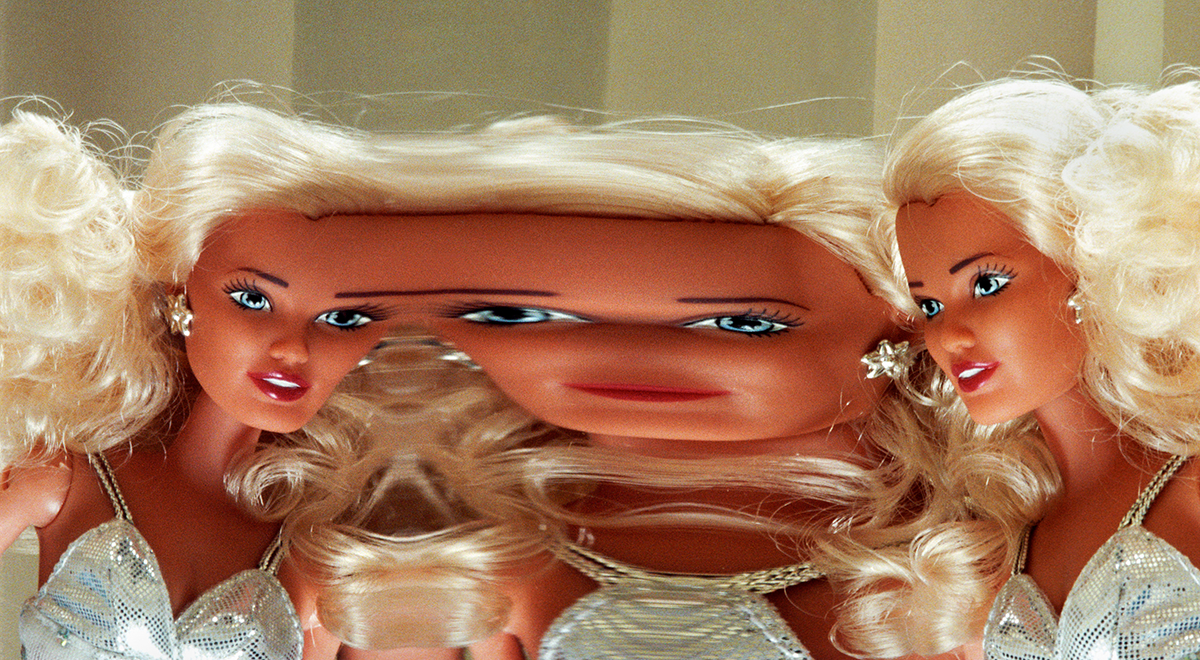
Claudia Shiffer fashion doll. Rolf Schulten/ullstein bild via Getty Images

 Follow us
- AI is drawing backlash as workplace layoffs, flawed advice, and automated fines fuel public distrust.
- A Lithuanian hiking rescue and an Australian camera fine show how AI errors can create real-world consequences.
- Experts warn AI could cause faster economic disruption than past technologies, raising fears about job security.
- Young people and cultural figures are pushing back against AI, social media, and low-quality AI-generated content.
Key Takeaways by nexos.ai, reviewed by Cybernews staff.
One company lured a new employee with a promise of unlimited AI tokens. After he used thousands of dollars' worth of tokens during his first day, the employer had to put a cap on just how much AI employees can use.
Meanwhile, other modern citizens are still figuring out what to use AI for.
“We have two more unicorns!” someone exclaimed after a viral news story in Lithuania about a rescue mission launched after the chatbot's advice went horribly wrong.
A couple of Lithuanian hikers wanted to cut a corner in the Tatra mountains in Poland and decided to consult ChatGPT. Instead of good advice, they got themselves a helicopter rescue mission.



[The “unicorn” comment was related to a proud Lithuanian moment when a web intelligence platform, Oxylabs, became a unicorn by securing its first outside investment and reaching a $3.6 billion valuation.]
There’s an ongoing, growing sentiment against AI, and stories of it going rogue or losing control attract a lot of attention. Could it be because we feel threatened by the technology?
On Sunday, 12 nurses at Montefiore Hospital in the Bronx were let go and replaced by AI software. The layoffs followed an agreement to protect workers’ rights against AI, resulting in a surge in job insecurity.
Recently, 200 experts – including Nobel laureates and representatives from Google and OpenAI – warned that AI could trigger an economic shift greater than the Industrial Revolution.
Steam, electricity, and computers each gave societies decades to adapt. AI may give us only a few years,said Anton Korinek, a professor at the University of Virginia.
"Steam, electricity, and computers each gave societies decades to adapt. AI may give us only a few years," said Anton Korinek, a professor at the University of Virginia.
Can it be done? Can we adapt in only a few years? Adaptation doesn’t mean succumbing to the technology. On the contrary, it can mean turning our backs on the machines.
Christopher Nolan, the Oscar-winning director and veteran critic of AI, believes that young adults are rapidly and harshly rejecting AI-generated "slop" in filmmaking. The public’s growing fatigue with technology and desire to reclaim control is becoming increasingly evident.
Recently, journalists reported from New York City's "Summer of Ludd" festival, which encourages people to disconnect. Interestingly, it is primarily young Gen Zers who are growing tired of the technology.
“Summer of Ludd organizers describe the goal of the event as twofold: help people understand how platforms are profiting off their helpless users, and remind them of a better, more meaningful world off social media,” the Washington Post writes.



Stay updated with our latest stories and follow us on social media
Be the first to discover new stories, ideas, and updates from our team.
Speaking of platforms that profit from “helpless users,” here is arguably the most widely discussed tech story of the week: Krista Campbell, an Australian, was shocked to receive an AUD$1,251 (US$820) fine after an AI-assisted roadside camera captured what appeared to be a smartphone resting on her lap.
Campbell’s story resonated widely because, to many, it appeared as though AI had punished someone for an act that wouldn’t necessarily be illegal where they live.
Given how biased and flawed AI systems can be, people aren’t wrong to be upset.
