Pulsetto vs Truvaga: which vagus nerve stimulation device is better?
Being behind major reports like The Mother of All Breaches and RockYou2024, our in-house cybersecurity experts and journalists provide unbiased, real-world testing and in-depth analysis.
We maintain complete transparency by openly sharing our testing methodologies with our audience.
Learn more
Have you noticed the growing number of mentions of the vagus nerve lately? Given its role in nervous system and brain functions, such popularity is not coincidental and is worth exploring further.
That’s where non-invasive vagus nerve stimulation (nVNS) devices come in. This growing category of wellness technology aims to support stress reduction, sleep quality, and overall well-being.
You may have already come across some of the big players in the at-home nVNS market, such as Pulsetto and Truvaga. Both brands offer consumer-focused vagus nerve stimulators that are relatively affordable and. But when it comes to Pulsetto vs Truvaga, which device is more effective, easier to use day-to-day, and offers better overall value?
To answer your questions, the Cybernews research team and I created a Pulsetto vs Truvaga comparison of 2026. Read on to learn about their features, safety, comfort, cost, and user sentiments, along with the technology behind vagus nerve stimulation.
I find Pulsetto’s at-home non-invasive vagus nerve stimulation devices slightly more appealing than its competitor. The brand offers aesthetic appeal, comfort, customization, and app integration – all important factors for long-term use.
Pulsetto vs Truvaga overview
Although both devices are vagus nerve stimulators, there are several factors that may influence your decision. Design and portability are the first things to notice: Pulsetto is worn around the neck, making it hands-free but slightly bulkier, while Truvaga is a compact handheld device easier to carry around.
Here’s a quick rundown of other important features and specifications to keep a close eye on:
| Pulsetto | Truvaga | |
| Rating: | 4.4 | |
| Overall rank: | All-rounder | Great portability |
| Key features: |
|
|
| Best for: | Daily stress management | Sleep support |
| Price: | From $242 | From $299 |



Our team of in-house researchers, writers and editors reviews and analyzes health tech products using a research-driven approach. We gather data from multiple sources, fact-check all information, and conduct our research based on peer-reviewed studies, expert opinions, consumer ratings, and regulatory approvals.
You can learn more about how we test health tech products here.
About Pulsetto
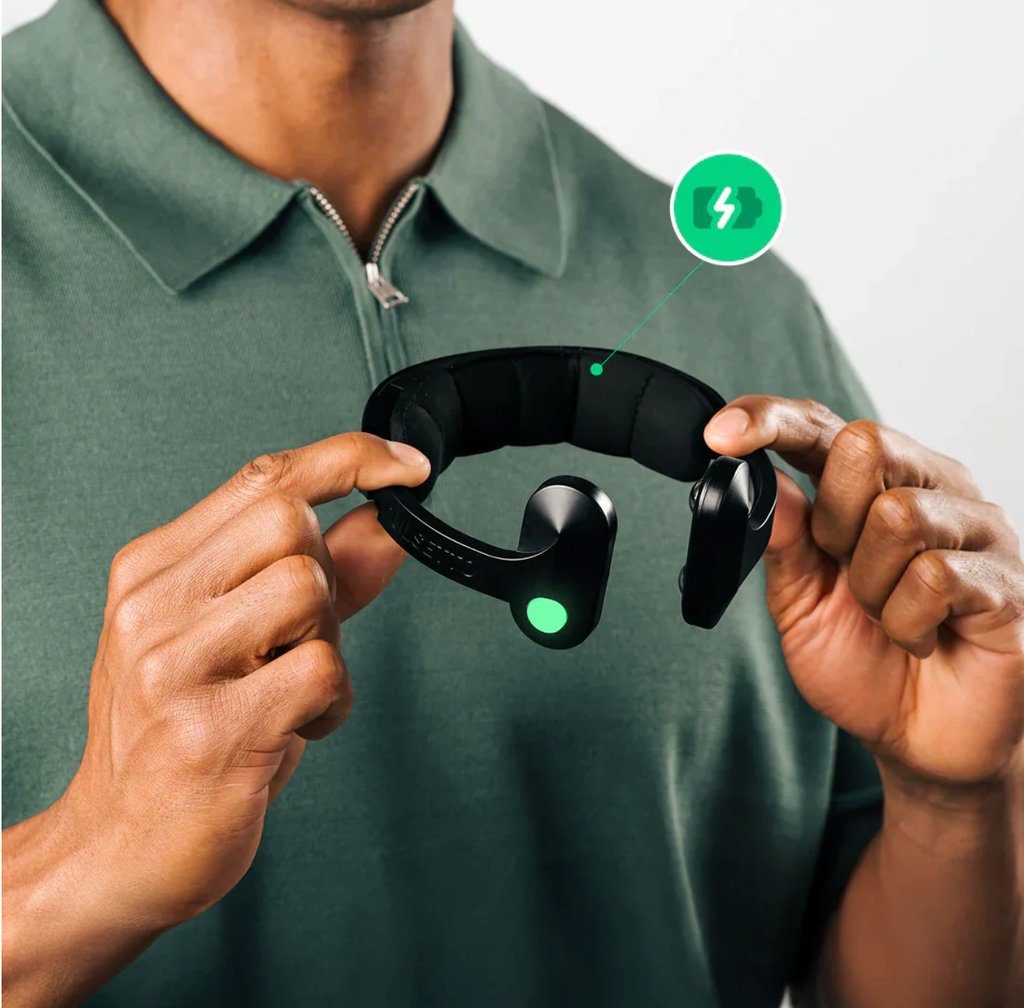
Pulsetto is a growing European wellness brand focused on bringing consumer-friendly vagus nerve stimulation into everyday routines. With supposed input from medical experts, the company developed two nVNS wearables: Lite and FIT.
Both are hands-free devices that sit against the neck to deliver electrical stimulation to the vagus nerve. Their lightweight design and cushioned interior help maintain comfort. According to the brand, users may feel calmer and more relaxed within minutes of use. With regular sessions, Pulsetto devices may support stress management, sleep quality, and overall mood.
The devices connect through Bluetooth to a Pulsetto Wellness app, where users can select programs and adjust intensity. A premium subscription is available for additional programs, guided meditations, and breathing exercises, but it isn’t required for core device functionality.
About Truvaga
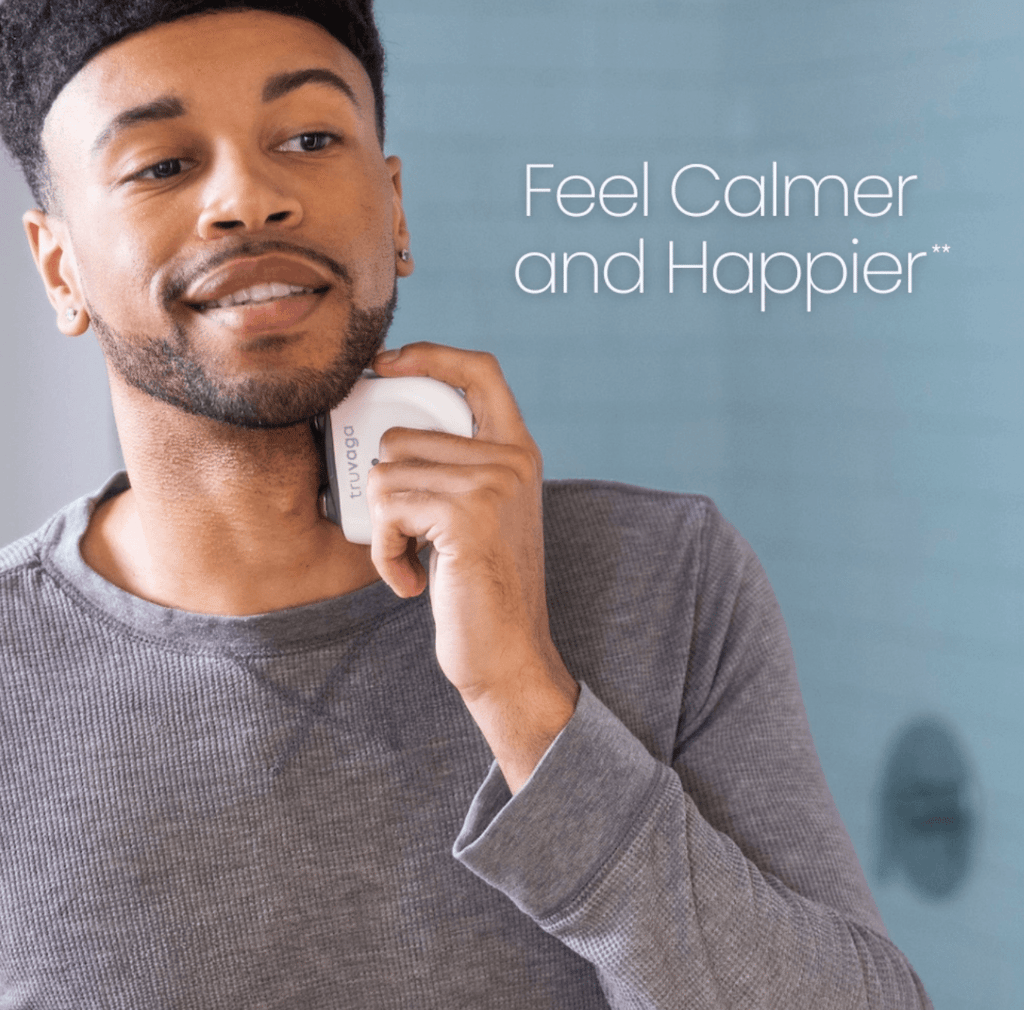
Truvaga is a well-established U.S.-based wellness company that produces handheld vagus nerve stimulation devices. While the brand doesn’t hold formal certifications, its technology is similar to that used in gammaCore, an FDA-cleared medical device for treating migraine.
The product lineup includes two models: Truvaga Plus and Truvaga 350. Both devices are compact and lightweight, yet offer several advanced features that may support stress reduction and rest improvement.
One notable difference between the two models is connectivity. The Truvaga 350 can operate without an app, whereas the Plus model relies on a companion app for session control, scheduling, and progress tracking. The Truvaga Plus app is free, available on both iOS and Android, and can also integrate with Apple Health for more comprehensive wellness tracking.
Truvaga vs Pulsetto: features compared
Let’s take a closer look at Truvaga vs Pulsetto features to better understand which product delivers more value. Together with the Cybernews research team, I collected key specifications and compared them side by side below.
| Feature | Pulsetto | Truvaga | Why it matters |
| Device type | Neck wearable | Handheld device | Comfort during use |
| Stimulation modes | 5 programs | 1 program | Treatment customization |
| App integration | Required | Depends on a model | Progress tracking |
| Battery life | 10–12 days per single charge | N/A | Long-term use |
| Guided programs | ✅Yes | ❌No | Ease of use |
| Portability | Weighs around 0.73lb | Weighs around 0.23lb | Convenience |
| Intensity adjustment | Multiple intensity levels | Multiple intensity levels | Efficiency and safety |
Both brands take quite a different approach to nVNS. Pulsetto provides hands-free comfort and guided use, with multiple programs tailored to specific needs and app integration for progress tracking.
Truvaga focuses on simplicity. The devices’ lightweight, handheld design makes them easy to carry, while a time-tested program with adjustable intensity keeps operation straightforward. Although battery details are unclear, some users report needing to recharge the devices every few weeks.
Session length and frequency also shapes the experience. Pulsetto sessions typically take 4–10 minutes twice a day, making comfort a key factor, while Truvaga requires daily 2-minute sessions.
Pulsetto vs Truvaga: technology and effectiveness
Pulsetto and Truvaga are consumer nVNS devices designed to stimulate the vagus nerve through the neck. While nVNS has been widely studied for its potential to support brain function and autonomic regulation, most suggested benefits come from medical-grade devices. So, note that results with Pulsetto or Truvaga may vary.
When comparing these devices to studied ranges, stimulation frequency is one of the key factors. Both brands align well with research-backed ranges: Truvaga operates at around 25Hz, while Pulsetto uses 25–30Hz frequencies. However, there are some technical differences, as Truvaga follows more standard specifications similar to medical devices than Pulsetto, which provides less technical transparency.
Besides all that, usage also matters. Session length typically stays within the studied limits of up to 10 minutes for both brands' devices. Although Pulsetto’s wearable design may help maintain consistent placements better than competitors’ handheld format, as Truvaga requires more precision from the user.

Pulsetto vs Truvaga: safety
As Pulsetto and Truvaga use low-level electrical currents, there are several safety considerations to keep in mind. Always review device contraindications and consult a healthcare professional before use if you have any concerns.
The nVNS devices are typically considered safe, with most side effects being related to mild tingling, pulling sensation, or skin irritation. However, they should never be used on injured or inflamed skin.
Both Pulsetto and Truvaga share similar contraindications. Avoid use if you have implanted electronic or metallic devices, as electrical currents may interfere with them. Use is also not recommended for individuals with heart conditions, history of seizures, those who are prone to fainting, pregnant, or trying to conceive.
Comfort and ease of use
Comfort and ease of use are key factors for long-term treatment consistency. At a glance, Truvaga devices are simpler to set up, while Pulsetto’s wearable design focuses on user comfort. Though, each approach has benefits and drawbacks.
Pulsetto wraps around the neck, allowing for hands-free use and minimal adjustment during sessions. However, the wearable device might not fit every neck shape. In contrast, Truvaga is handheld, which can be less convenient since you need to hold the device in place without moving, yet allows more position adjustments.
When it comes to usability, Truvaga offers a more straightforward experience with a single program and simple controls. Pulsetto, on the other hand, includes more programs and app features. It may feel complex at first but is generally easy to learn due to guided sessions.
Total cost of ownership
Another Pulsetto vs Truvaga category worth examining is pricing and overall value for money. Here’s a side-by-side comparison of all nVNS devices these brands offer:
| Pulsetto FIT | Pulsetto Lite | Truvaga Plus | Truvaga 350 | |
| Price: | $269 | $278 | $499 | $299 |
| App subscription: | Optional | Optional | No | No |
| Accessories: | USB-C cable, Electrode gel, User guide | USB-C cable, Electrode gel, User guide | USB-C cable, Signaspray Electrode Solution | USB-C cable, Signagel Electrode Gel |
| Warranty: | 2 years | 2 years | Limited | Limited |
| Refund window: | 30 days | 30 days | 30 days | 30 days |
Pulsetto offers more affordable options, though Truvaga 350 is close in price. Also, Pulsetto takes a slight edge in overall value with longer warranties and a free companion app for both models (premium subscription is optional).
While both brands require a significant upfront investment, these devices are built for long-term well-being. Without counting gel creams, after three years of Pulsetto FIT use, cost per session is just $0.13, compared with $0.23 for Truvaga Plus.
How to choose the right vagus nerve stimulator for you?
With a wide variety of nVNS devices available, it’s important to ask the right questions about what you’re looking for. So, here’s a list of considerations to keep in mind:
- Intended use. Ask what you expect the device to do. Pulsetto offers multiple programs for different aspects of well-being, whereas Truvaga has a single, time-tested program.
- Device format. Consider which device fits your lifestyle. Are you always on a go and need a portable Truvaga, or do you prefer the comfort of Pulsetto?
- Budget. Decide how much you’re willing to spend, as prices range from $278 for Pulsetto Lite to $499 for Truvaga Plus.
- Intensity adjustability. This is crucial – even studies on nVNS suggest it supports comfort and safety.
- App connectivity. Evaluate whether an app adds clarity and consistency to treatments or feels like a distraction, since only Truvaga 350 doesn’t require app connection.
- Brand transparency. Research the brand you’re considering. Truvaga clearly states its technology and specifications, while Pulsetto is less transparent with such information.
Customer reviews and testimonials
After researching and evaluating the products, it’s useful to check various Reddit threads and review platforms for overall user sentiment. Let’s compare Pulsetto vs Truvaga based on customer experiences.
Truvaga has relatively few reviews outside its official site – on Trustpilot, it has a 3.8 rating from just 11 reviews. That said, Reddit users show great interest in its devices. Many users report improved sleep quality and relaxation, while others mention straightforward use and fit for an active lifestyle of Truvaga 350.
Common complaints focus on the high price, along with occasional issues connecting to the companion app with the Truvaga Plus model.
In contrast, Pulsetto has a large number of reviews, with ratings between 3.8 and 4.4 across various platforms. Users on Trustpilot frequently praise its guided sessions and sleek design. Many mention feeling calmer and more relaxed after about a week of use, with some noting improvements in stress-related issues like insomnia and headaches.
Criticism centers on the Pulsetto Wellness app, with reports of glitches, Bluetooth dependency, and recent issues with paid membership cancellation.
Our methodology
Together with the Cybernews research team, I reviewed nVNS devices by combining technical analysis with real user experiences. This approach helped us develop a ranking system based on the following criteria:
- Feature depth and innovation (25%). Programs, intensity customization, app integration, and other technical specifications shape the overall feature set.
- Safety transparency (20%). Clarity around technology, certifications, and contraindications support safety, durability, and potential effectiveness.
- Ease of use and comfort (15%). Simplicity, portability, materials, placement, and design support long-term consistency.
- Cost and long-term value (15%). Pricing, guarantees, and subscriptions helps to assess overall value for money.
- Technology credibility (15%). Alignment with commonly studied ranges indicates potential to deliver claimed health benefits.
- User sentiment consistency (10%). Customer praise and complaints reveal real-world experiences before the purchase.
Pulsetto vs Truvaga: which one to choose?
Ultimately, my choice is Pulsetto, as the brand offers more affordable neck-worn devices. Besides an aesthetic appeal, it includes app integration for guided sessions and five programs with adjustable intensity. These features create a highly customizable nVNS worth trying out.
Choose Pulsetto if you value comfort and customization without spending a fortune on a health tech device. In contrast, Truvaga may suit those who prioritize simplicity and portability. The brand offers compact handheld devices with straightforward use, especially for the Truvaga 350 model.
Both brands are well established in the at-home nVNS market, so whichever you prefer can still be a solid choice for relaxation.
Other health tech articles you might be interested in:
Best vagus nerve stimulation devices for stress relief
The best Pulsetto alternatives: top VNS devices worth trying
Pulsetto vs Sensate: which vagus nerve stimulation device works better?
Pulsetto vs Apollo: which wellness wearable is a better fit?
FAQ
What does a vagus nerve stimulator do?
A vagus nerve stimulator sends mild, low-level electrical pulses to the vagus nerve. According to current research, vagus nerve stimulation may help regulate brain activity and the overall nervous system, though actual benefits depend on the type of device used.
Is Pulsetto better than Truvaga?
It depends on the preference. Pulsetto brings more comfort and has great app integration, while Truvaga is portable and more closely aligned with commonly studied vagus nerve stimulation parameters.
Are vagus nerve stimulation devices safe to use at home?
Generally, yes. Non-invasive vagus nerve stimulation devices are considered safe and consumer-friendly for home use. However, always check contraindications and consult with a healthcare provider before using such devices.
How often should you use a vagus nerve stimulator?
Depends on the device. Pulsetto and Truvaga suggest using a vagus nerve stimulator at least twice a day. If you’re having a longer session, even a one time per day use is enough.
Can vagus nerve stimulation help with stress or anxiety?
Usually, yes. Most at-home non-invasive vagus nerve stimulation devices, like Truvaga or Pulsetto, claim potential support for stress and anxiety management. Studies with medical-grade vagus nerve stimulators also suggest a modest effect on stress-related conditions.
-
Clinical Autonomic Research.
Vagus nerve stimulation (VNS): recent advances and future directions.
-
Frontiers in Neuroscience.
A review of parameter settings for invasive and non-invasive vagus nerve stimulation (VNS) applied in neurological and psychiatric disorders.
-
Frontiers in Human Neuroscience.
International consensus based review and recommendations for minimum reporting standards in research on transcutaneous vagus nerve stimulation (version 2020).
-
Journal of Personalized Medicine.
Application of noninvasive vagal nerve stimulation to stress-related psychiatric disorders.