Pulsetto vs Sensate: which vagus nerve stimulation device works better?
Being behind major reports like The Mother of All Breaches and RockYou2024, our in-house cybersecurity experts and journalists provide unbiased, real-world testing and in-depth analysis.
We maintain complete transparency by openly sharing our testing methodologies with our audience.
Learn more

At first glance, Pulsetto and Sensate appear similar. When you take a deeper look, you'll realize that the two brands, despite their similar marketing messages, actually differ significantly in their approaches. While both brands promote their products for stress management, sleep support, and heart rate variability (HRV) optimization, they employ different technologies.
So, which one is better suited for you? The Cybernews research team and I put Pulsetto and Sensate head-to-head, comparing specs, pricing, and real-life user feedback, so you can make an informed decision.
As of October 2026, Pulsetto is a winner for me. The technology behind this product is more innovative and appears to have more direct scientific grounding than Sensate’s.
Pulsetto vs Sensate overview
Before we scrutinize Pulsetto and Sensate in more depth, take a look at the table below for a quick comparison:
| Pulsetto | Sensate | |
| Rating: | 4.7/5 | 4.2/5 |
| Technology: | Vagus nerve stimulation (VNS) via electric pulses | Vagus nerve toning (VNT) via vibrations |
| Placement: | Neck | Chest |
| Certifications: | FCC, CE | FCC, CE |
| Best for: | Stress management | Mindfulness meditation |
| Subscription: | Not required, $10.75 per month or $139 per year | Not required, $49.99 per year |
| Price: | From $242 | From $289 |
| Warranty: | 2 years | 1 year |


Our team of in-house researchers, writers and editors reviews and analyzes health tech products using a research-driven approach. We gather data from multiple sources, fact-check all information, and conduct our research based on peer-reviewed studies, expert opinions, consumer ratings, and regulatory approvals.
You can learn more about how we test health tech products here.
About Pulsetto
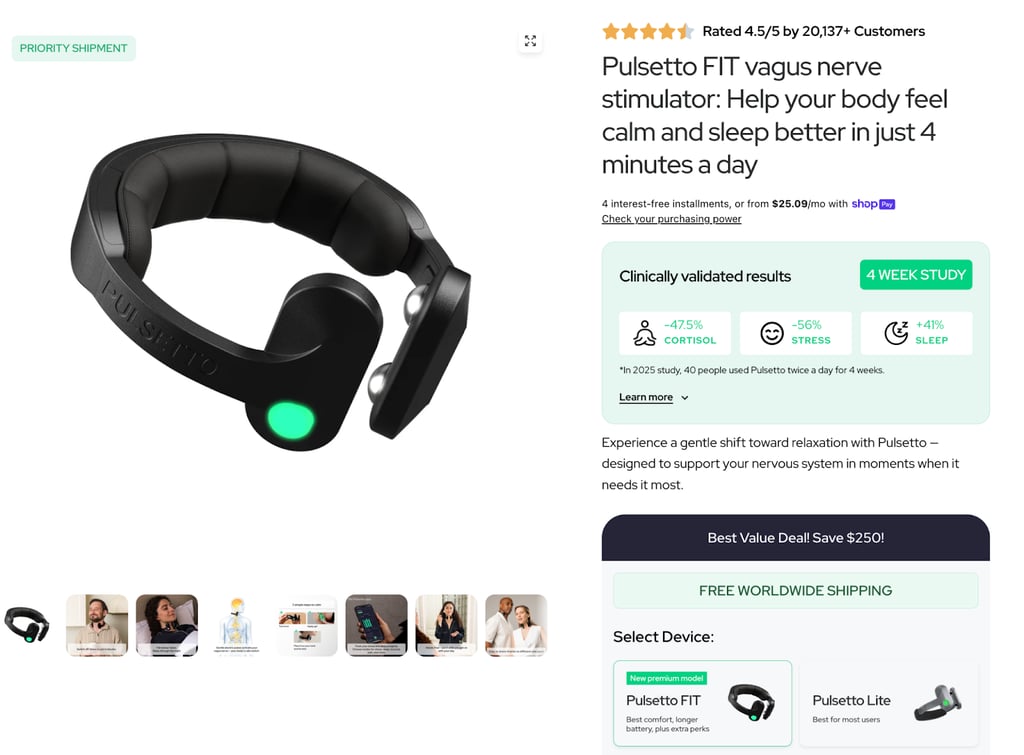
Pulsetto is a non-invasive vagus nerve stimulator that sends gentle electrical currents to the wearer’s neck. These currents are proposed to activate the parasympathetic nervous system by stimulating the vagus nerve, which, in turn, may help users to feel calmer.
The idea behind Pulsetto comes from the emerging research on vagus nerve stimulation. While this specific device has not been evaluated in any independent clinical trials yet, this form of stimulation has been studied for potentially supporting stress management, sleep, relaxation, and other aspects related to the nervous system.
Keep in mind that while these and similar studies have shown that vagus nerve stimulation may benefit one’s well-being, consistency is crucial for this type of stimulation to bring about any changes. In addition, the effectiveness can vary from person to person.
About Sensate
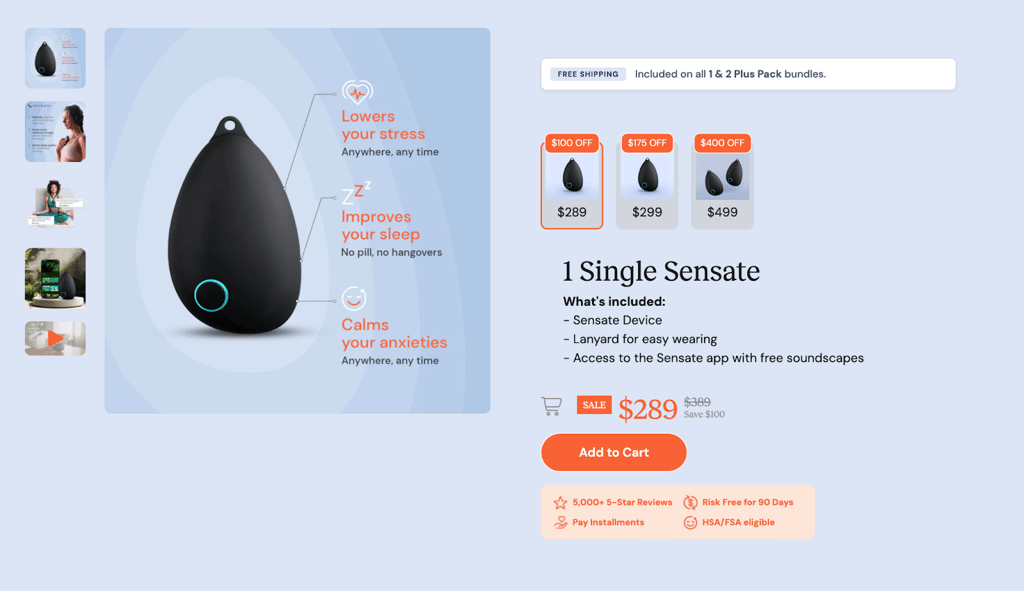
Sensate is a pebble-shaped sensory device placed on the sternum. It is not a vagus nerve stimulator like Pulsetto. The brand positions it as a vagus nerve toning device. Instead of delivering electrical stimulation, the device uses low-frequency infrasonic vibrations paired with soundscapes played through the mobile app.
Sensate claims that their product may help soothe the vagus nerve; however, it has not been tested in any independent clinical trials. One company-funded study found that their product may help manage stress, support sleep, and reduce anxiety. That said, the scope of this study was extremely small (25 people participated), and it relied on self-reported questionnaires.
From my perspective, Sensate seems like a structured relaxation tool rather than a wellness device like a vagus nerve stimulator. It may be a suitable alternative for those who find the electrical pulses from neuromodulation devices like Pulsetto uncomfortable.
Sensate vs Pulsetto: features compared
To understand which product offers more value, I compared their key features side by side with the Cybernews research team.
| Pulsetto | Sensate | |
| Device type: | Non-invasive vagus nerve stimulator | Vagus nerve toning device |
| Primary focus: | Stimulation via gentle electric currents | Sensory relaxation experience via low-frequency infrasonic vibrations |
| Audio: | Doesn’t use audio | The user can listen to a wide range of soundscapes |
| Wearability: | Hands-free, placed on the neck | Hands-free, placed on the chest while lying down or on a neck-worn lanyard |
| Convenience: | Doesn’t require staying still | Requires staying still |
In short, both aim to support nervous system regulation but through different mechanisms. Pulsetto focuses more on physiological stimulation, while Sensate focuses on relaxation and sensory feedback.

Pulsetto vs Sensate: technology and application
Pulsetto and Sensate both aim to support nervous system regulation, but they use distinct underlying technologies.
Pulsetto uses transcutaneous vagus nerve stimulation (tVNS). That means the device delivers mild electrical impulses through electrodes that rest on the side of your neck, near where the vagus nerve runs. This is proposed to trigger the vagus nerve for the potential benefits associated with vagus nerve stimulator devices.
By contrast, Sensate relies on vibroacoustic stimulation. Rather than electrical currents, it produces gentle vibrations paired with audio soundscapes you can choose via the app. Because it doesn’t rely on electrical pulses, Sensate can feel less technical and more like a sensory relaxation ritual.
Essentially, Pulsetto targets nervous system modulation, and Sensate leans into guided, sensory-based relaxation.
HRV benefits
Heart rate variability (HRV) is a measure of the variation in time between each heartbeat. Higher HRV may suggest better health and potentially better stress resilience.
Both Sensate and Pulsetto mention HRV optimization in their marketing campaigns. Sensate focuses on sound therapy to help reduce stress and enhance relaxation, potentially leading to improved HRV. Meanwhile, Pulsetto uses targeted vagus nerve stimulation, which may directly influence HRV by activating the parasympathetic nervous system.
Keep in mind that while the research on vagus nerve stimulation shows that it may increase HRV, HRV is influenced by many other factors, such as individual variance, lifestyle habits, and physical activity, so it is important to approach HRV holistically. So while both brands reference HRV, it’s not a direct or guaranteed outcome of using either device.
Sensate vs Pulsetto: effectiveness and goal
Whether Sensate or Pulsetto is more suitable for you will depend on which type of sessions you prefer.
Pulsetto is a vagus nerve stimulation device, while Sensate is a vagus nerve toning device. Pulsetto is placed on one’s neck and delivers gentle electrical pulses, while Sensate delivers vibrations on the chest.
Toning via vibrations may be an alternative for those who don’t tolerate electrical stimulation. However, this method has been studied less extensively than vagus nerve stimulation.
Sensate seems to cater to those who are looking for guided meditation sessions, while Pulsetto may be more interesting for biohacking enthusiasts.
Pricing and subscription
Pulsetto and Sensate are priced similarly. Below, I collected the basic information about their pricing models:
| Pulsetto | Sensate | |
| Device’s price: | $278 (Lite) or $296 (FIT) | $289 |
| Bundle pricing available? | No | Yes, two for $499 |
| Is a subscription required? | No | No |
| Subscription per month: | $17.99 (Via App Store for iPhone) | Not available |
| Subscription per year: | $99.99 (Via App Store for iPhone) | $49.99 |
As Pulsetto comes in two versions, users can choose between a lower-priced option (Lite) or their newest model (FIT). The main difference lies in the design, as FIT was created to cater to a wider range of users, including those with smaller frames. FIT also has a slightly better battery (20% longer lasting than Lite, according to the manufacturer) and includes lifetime updates.
Both of the devices can be used without any additional subscription.
Pulsetto Premium unlocks a wider range of features. For example, Premium users have 8 types of stimulation to choose from, while basic users have only 5 options. The unique features include CNS Tap Testing, which measures nervous system fatigue, various insights (e.g., on sleep), and positive affirmations.
Sensate Plus unlocks additional content for your relaxation sessions. In addition, users of Sensate Plus get improved synchronization between soundscapes and infrasound technology.
In the long term, Sensate offers a slightly cheaper package for those who want to use their subscription. For example, using Pulsetto with their premium plan for 3 years would cost around $577, while Sensate and Sensate Plus would total approximately $439.
What do users think about each device?
For this section, I headed to Trustpilot.
Both Sensate and Pulsetto have similar overall rankings, with Pulsetto slightly higher at 4.1 and Sensate at 4.0.
Both of these devices are praised by their users for improving sleep and reducing stress. While both Sensate and Pulsetto reviewers mention potential pain relief, Pulsetto has gathered far more users reporting this benefit. The same could be said for HRV improvements. Both products are praised as a good addition to a relaxation toolkit.
When it comes to negative feedback, Sensate’s customer support seems to be lacking. Users report long wait times, with some reviewers claiming that they never received a reply. Other common problems reported included long shipping times and issues with refunds.
Pulsetto also has received complaints about its customer service. Another major drawback seems to be the companion app, which was described as glitchy by some. Users also report issues with premium subscriptions, claiming they were charged without clear consent.
Safety considerations and who should avoid these devices
While Pulsetto and Sensate are generally considered safe, some precautions should be taken.
As mentioned on the official Pulsetto website, some contraindications to using Pulsetto include people with implantable medical devices, such as pacemakers. As per the brand, you should also not use Pulsetto while simultaneously using another electronic device, including a mobile phone.
Safety of Pulsetto has not been evaluated in some users, including pregnant people and children.
Regarding Sensate, its official website does not list contraindications. If you are unsure whether you can use Sensate, consult your healthcare provider.
Our methodology
During the comparison of Pulsetto and Sensate, the Cybernews research team and I used this scoring model:
- Feature innovation (25%). I examined the products’ technologies to determine their level of innovation.
- Scientific credibility (20%). I analysed scientific papers and compared their results to what is proposed by these brands.
- Safety transparency (15%). I gathered all the information regarding certifications and other safety measures mentioned by the brands.
- Ease of use (15%). When comparing Pusetto and Sensate, I kept user experience in mind. As both devices require consistency, ease of use may help users to seamlessly integrate them into their routines.
- Pricing and long-term value (15%). I considered the pricing of both products in relation to their value propositions. I also checked for any hidden costs and compared their optional subscription plans.
- User sentiment consistency (10%). Lastly, I went through the customer reviews to identify potential disadvantages or general sentiments.
Pulsetto vs Sensate: which one to choose?
The effectiveness of wellness devices can vary from person to person, so the best choice for you will depend on many factors.
Pulsetto is a better choice if you are interested in trying out vagus nerve stimulation technology. While the device itself has not been tested in any independent clinical trials, it was designed to provide a similar experience to other non-invasive vagus nerve stimulators.
That being said, Sensate is a better fit if you are looking to introduce more mindfulness into your life. I see Sensate as a tool for relaxation, with a wide range of soundscapes and soothing vibrations that may create moments of calm throughout the day. Moreover, since Pulsetto relies on electrical stimulation and Sensate uses infrasonic vibrations, some users might find Sensate less uncomfortable.
However, I personally found Pulsetto to be a better option as its approach is more innovative. Additionally, while the prices of both of these devices are about the same, Pulsetto offers a better value for money in my eyes.
Other health tech device reviews:
Sona vagus nerve stimulation review: how it works and who it’s for
The best Pulsetto alternatives: top VNS devices worth trying
Pulsetto vs Truvaga: which vagus nerve stimulation device is better?
Pulsetto vs Apollo: which wellness wearable is a better fit?
FAQ
What is the difference between Pulsetto and Sensate?
Pulsetto is a device that stimulates the vagus nerve, while Sensate is designed to tone the vagus nerve. Pulsetto is placed on the neck and delivers electrical pulses, whereas Sensate provides vibrations to the chest.
Do vagus nerve stimulation devices really work?
Yes, they may have a positive effect on certain individuals. However, whether vagus nerve stimulation would work for you will depend on multiple factors, such as your expectations, goals, and consistency. In addition, the effects vary from person to person.
Can Pulsetto or Sensate improve sleep?
It may. Pulsetto may support better sleep quality by stimulating the vagus nerve, while Sensate may promote relaxation and reduce stress and, in turn, make it easier to fall asleep.
Are vagus nerve stimulation devices safe to use daily?
They may be, but it will highly depend on the selected device. Unregulated gadgets may pose risks. If you are unsure if your selected device is appropriate for you, it is best to discuss with your healthcare provider.
Which device is better for anxiety and stress?
It depends. Pulsetto may be better in the long term, as it is a neuromodulation device designed to support the function of the nervous system, while Sensate may be better for immediate relaxation during more stressful moments.
-
Brain Sciences.
Transcutaneous Vagus Nerve Stimulation Could Improve the Effective Rate on the Quality of Sleep in the Treatment of Primary Insomnia: A Randomized Control Trial.
-
Psychological Medicine.
Non-invasive vagus nerve stimulation boosts mood recovery after effort exertion.
-
Psychiatry Investigation.
Stress and Heart Rate Variability: A Meta-Analysis and Review of the Literature.
-
Comprehensive Psychoneuroendocrinology.
Effect of transcutaneous cervical vagus nerve stimulation on the pituitary adenylate cyclase-activating polypeptide (PACAP) response to stress: A randomized, sham controlled, double blind pilot study.
-
Current Cardiology Reviews.
Analysis of Heart Rate Variability and Implication of Different Factors on Heart Rate Variability.
-
Cold Spring Harbor Perspectives in Medicine.
Vagus Nerve Stimulation and the Cardiovascular System.
-
Biomedicines.
The Acute Effects of Varying Frequency and Pulse Width of Transcutaneous Auricular Vagus Nerve Stimulation on Heart Rate Variability in Healthy Adults: A Randomized Crossover Controlled Trial.