Pulsetto vs Apollo: which wellness wearable is a better fit?
Being behind major reports like The Mother of All Breaches and RockYou2024, our in-house cybersecurity experts and journalists provide unbiased, real-world testing and in-depth analysis.
We maintain complete transparency by openly sharing our testing methodologies with our audience.
Learn more

Pulsetto and Apollo are some of the most popular gadgets designed to support calm, relaxation, and sleep, but they take very different approaches. Pulsetto uses non-invasive vagus nerve stimulation (VNS), whereas Apollo relies on touch therapy technology. So, how do they compare in practice, and which is the better option?
My Cybernews team and I have compared Pulsetto vs Apollo to find that out. We’ve looked into their official specs and features, core technology, everyday use, customization, and recurring user feedback to see how they differ in everyday use and long-term value. You can find everything we’ve concluded in the article below.

Pulsetto vs Apollo overview
Here’s a brief Apollo vs Pulsetto summary to give you a sense of what is ahead.
| Brand | Pulsetto | Apollo |
| Rating | ||
| Key features | Neck wearable | Wrist/ankle wearable |
| Battery life | Up to 12 days | Up to 8 hours |
| App integration | Yes | Yes |
| Best for | Vagus nerve stimulation for sleep and relaxation in short sessions | Longer personalized sessions for stress, relaxation, sleep, focus, energy, and other wellness areas |
| Price | $242 | $448 |


Our team of in-house researchers, writers and editors reviews and analyzes health tech products using a research-driven approach. We gather data from multiple sources, fact-check all information, and conduct our research based on peer-reviewed studies, expert opinions, consumer ratings, and regulatory approvals.
You can learn more about how we test health tech products here.
About Pulsetto
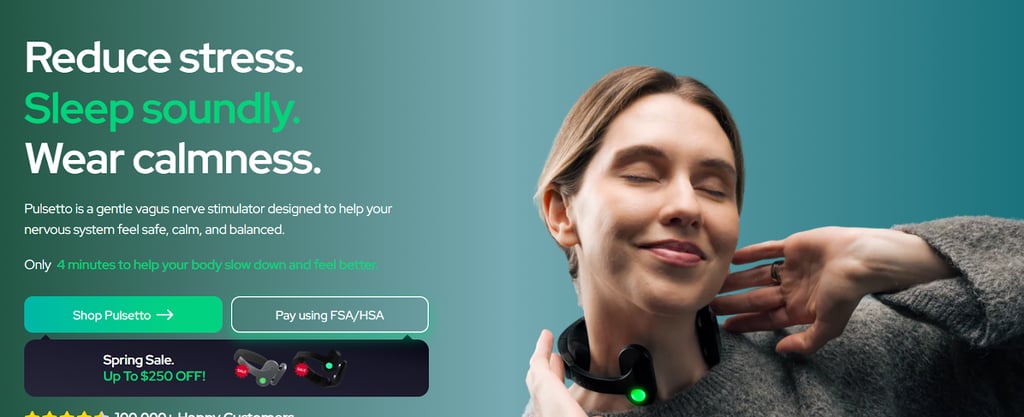
Pulsetto is a wellness device designed to support stress relief and sleep management through vagus nerve stimulation.
It looks like a pair of headphones, but it goes on your neck, not your head. Its ends or clamps sit where you’d feel your carotid pulse, delivering gentle electrical pulses to stimulate the cervical branch of the vagus nerve in this area.
By doing so, Pulsetto is meant to activate your parasympathetic nervous system, which is involved in many bodily functions, including your heartbeat, digestion, and mood, and aims to promote relaxation.
The Pulsetto app helps control these sessions. There are five built-in programs, with different intensity levels and durations. You may also have access to a sound library, meditations, breathing exercises, and more, depending on which version of the app you’re using.
About Apollo Neuro

Apollo Neuro is a device that aims to support calm, focus, sleep, recovery, and resilience to stress through touch-vibration therapy, not electrical nerve stimulation.
It’s designed as a band that wraps around your wrist or ankle to deliver low-frequency vibrations to mechanoreceptors in your skin. These sensations, called Apollo Vibes, are supposed to engage the autonomic nervous system and support a calmer, more relaxed state.
Like Pulsetto, Apollo also connects to a native app that lets you choose from seven programs or vibration patterns for relaxation, focus, sleep, or energy. You can also choose the intensity level and set durations to meet your needs.
The device comes in several styles, so it can also easily match your aesthetic.
Apollo vs Pulsetto: features compared
To understand which product offers better value, I reviewed the key features of Pulsetto vs Apollo Neuro with the Cybernews research team. You can see everything we’ve found in the table below.
| Feature | Pulsetto | Apollo | Why it matters |
| Core mechanism | Focused non-invasive vagus nerve stimulation | Low-frequency vibration touch therapy | It shows how the device works |
| Wear location | Neck | Wrist or ankle | It affects comfort and portability |
| Main use goals | Stress relief, relaxation, and sleep support | Active energy, focus, relaxation, and sleep improvement | It determines whether the device suits your needs |
| Session structure | 4-10 minutes per session, 2-3 times a day with breaks | 3+ hours a day, 5 days a week, day and night | It shows whether the device would fit into your lifestyle and routine |
| App-based programs | Five, for stress, anxiety, sleep, burnout, and pain management | Seven, for energy, focus, socializing, meditation, exercise recovery, sleep, and relaxation | It determines the customization and level of guidance you can expect in use |
| Membership/subscription | Free version and Premium app version, with extra programs, meditations, and breathing exercises | Free version or SmartVibes AI membership version, different in program availability and personalization | It determines long-term costs or addorability |
| Battery/charging expectations | Charges in around an hour, lasts up to 12 days, depending on the model (Fit or Lite) | Charges in up to 4 hours, lasts up to 8 hours of continuous use | It affects convenience and everyday use |
| FSA/HSA eligibility | Yes | Yes | Qualify as medical expenses (tax-free) |
Pulsetto takes a more direct approach, aiming to support relaxation and sleep. It’s built for focused vagus nerve stimulation over shorter sessions.
On the other hand, Apollo is meant for broader wellness support. Programmed to target everything from focus to social confidence, it offers more gentle vibration patterns. Its discreet design and longer wear factor also make it suitable for use during normal activities or while resting.
Pulsetto vs Apollo Neuro: technology and mechanisms
The Apollo Neuro vs Pulsetto differences are most noticeable in their underlying technology and core mechanisms.
Pulsetto relies on direct transcutaneous vagus nerve stimulation, aiming to support relaxation. It sends mild electrical impulses through the pads located on its clamps to the nerve endings in the areas of your carotid pulse in your neck. It’s supposed to work best over repeated shorter sessions.
Apollo, on the flip side, uses vibration therapy to interact with touch receptors in the skin. That’s why it can be worn around either wrist or ankle for a longer time, with the same effect.
These differences are reflected in use. While both Apollo Neuro and Pulsetto apps feature different programs, Apollo’s various vibration patterns target a wider range of goals, from relaxation and improved focus to better social confidence. Pulsetto’s five programs all center on promoting calm, whether they aim to support sleep, ease anxiety, or help with burnout.
Apollo vs Pulsetto: Design and ease of use
Comparing Pulsetto vs Apollo in terms of design and convenience was much easier.
They both offer a hands-free experience, so you can multitask without an issue. However, as a vagus nerve stimulation device, Pulsetto isn’t as discreet or flexible as Apollo. The neck is the only place you can wear it.
Apollo is a band that goes on your wrist or ankle, so it blends with your outfit well and fits into any context. But users still seem to find Pulsetto much simpler to use, based on the reviews we’ve read.
Pulsetto’s fewer programs and customization options make it much simpler to configure, especially for someone completely new to this type of wellness gadget. Its shorter charging time (~1 hour) and longer-lasting battery (up to 12 days) also add to its convenience.
Apollo’s seven core vibration patterns make it more versatile, but they can be harder to navigate if you’re not tech-savvy. Its longer recommended sessions also don’t align well with its 8-hour battery life, especially when a full charge can take up to 4 hours.
Pulsetto vs Apollo Neuro: Customization capabilities
It became clear early on in our Pulsetto and Apollo research that the latter offers a more tailored experience.
In addition to the Apollo Vibes intensity and duration options, this device offers seven goal-based programs. You can choose between them depending on what you’re trying to improve: focus, energy, socializing, meditation, exercise recovery, relaxation, or sleep. You can also learn about the science behind each.
Its SmartVibes AI membership, an optional annual subscription ($99), uses machine learning to learn about your body and personalize the Vibes to its needs. You can also use the app to schedule a program or set up a reminder for your optimal bedtime.
Pulsetto’s five programs also offer some customization in areas such as stress, anxiety, sleep, burnout, or pain. The narrower use case seems limiting at first, but it’s also much more structured and simpler in the long run.
For those who seek a little more, Pulsetto Premium (paid subscription) adds three stimulation programs, 54 breathing exercises, 11 meditations, and advanced data insights.
What do users think about each device?
This Pulsetto vs Apolo Neuro comparison wouldn’t be complete without a glance at what real users think.
The feedback was largely positive for both, although Pulsetto holds a slightly higher rating across major review platforms. Users highlight its simple setup and ease of use the most. They also mention seeing improvements in sleep and anxiety. The only recurring complaint we’ve seen in Pulsetto reviews was about customer support, which wasn’t always helpful with shipping delays or app subscriptions.
As for Apollo, users report the device delivers on its promises. They seem to like its versatile programs and the way it supports relaxation and sleep. The most common concern is price, which is higher than that of many competitors, especially with the SmartVibes AI membership subscription.
Disclaimer: Keep in mind that this summary reflects the aggregated user sentiment we’ve gathered from online reviews and comments. It’s not representative of all buyers and does not necessarily reflect the scientific evidence regarding the effects of non-invasive VNS and touch therapy, so your experience may be different.
How to choose the right vagus nerve stimulator for you?
If you’ve read my full Pulsetto vs Apollo Neuro comparison and are still unsure which option to choose, the guide below may help. Here are the factors that can assist you with making the right decision:
- Intended use. Do you need help with stress, sleep, mood, or something else? Consider this to see which of the two reviewed brands aims to target those areas more directly.
- Preferred design. Think about whether it would be more comfortable and convenient to wear the device on your neck or wrist/ankle.
- Budget. Calculate how much money you can spend on a wellness gadget to see which brand fits your budget, with and without a subscription.
- Session customization options. Weigh up how much control you want over your sessions and whether extra customization is worth a slightly more complex app.
- App ecosystem preference. Decide whether you’d like a simple-to-use, basic app and how important ongoing app updates, subscriptions, or integrations are to you.
- Portability needs. Choose between Pulsetto and Apollo based on whether you’d wear the gadget around the house or plan to wear it out and travel with it.
Our methodology
For full transparency, here’s how my team at Cybernews and I compared Pulsetto vs Apollo during our research.
- Feature innovation (25%). We looked into the features both devices offer, compared standard and innovative ones, and assessed their value in practice.
- Safety transparency (20%). Our team double-checked how clearly each brand presents its safety information, including guidance, warnings, and usage limits.
- Ease of use (15%). My colleagues and I also made sure to check the ease of use of each device. We compared them and assessed similar options on the market.
- Pricing & long-term value (15%). We analyzed where the price sits relative to the industry average and whether it makes sense, given the device's value.
- Scientific credibility (15%). The team and I also checked the research behind each device, including published and publicly available studies, evidence, and science-backed claims.
- User sentiment consistency (10%). We wrapped up our analysis by reviewing user feedback to see whether the official claim and promises align with the real-world experience.
Disclaimer: Remember that results with wellness devices vary from person to person. If you struggle with relaxing, mood, sleep or experience any other health concerns, talk to your healthcare provider.
Pulsetto vs Apollo: which one to choose?
While Pulsetto has won more categories than Apollo in our research, your choice should be based solely on your needs and preferences. Answer these questions:
- Do you want electrical stimulation or vibration-based support?
- Are you comfortable wearing a device on your neck?
- Do you want the simplest possible routine or greater program variety?
- Does membership/subscription cost matter to you?
If you’re after a non-invasive vagus nerve stimulator device designed to potentially support relaxation and sleep and prefer shorter sessions, Pulsetto is the one for you. However, if you’d like a wellness device that aims to cover a wider range of goals, from stress to social confidence, and don’t mind paying a slightly higher price, then Apollo is the better pick.
Of course, you can also consider Pulsetto alternatives or compare Pulsetto vs Truvaga or Neurosym, so you can make an even more informed decision.
Other health tech reviews:
Pulsetto vs Apollo: which wellness wearable is a better fit?
Pulsetto vs Sensate: which vagus nerve stimulation device works better?
Pulsetto vs Truvaga: which vagus nerve stimulation device is better?
Pulsetto Lite vs Pulsetto Fit: which vagus nerve device is better for you?
FAQ
Is Pulsetto a vagus nerve stimulator, while Apollo is not?
Yes, Pulsetto is a non-invasive vagus nerve stimulator, while Apollo uses low-frequency vibration therapy to stimulate mechanoreceptors in the skin.
Which is better for sleep support: Pulsetto or Apollo?
Both Pulsetto and Apollo have programs or vibration patterns for sleep support, but Pulsetto generally receives higher praise from users in this area.
Does Apollo require a membership to get full value from the app?
Yes, Apollo’s SmartVibes AI version, which offers personalized programs, does require a paid subscription. After the first 12 months, it’s free, but the membership fee is $99/year.
Is Pulsetto better for short daily sessions?
Yes, the recommended session length for Pulsetto is 4-10 minutes and 3+ hours for Apollo, which makes the former a better fit for structured daily routines.
Which device is easier to wear throughout the day: Pulsetto or Apollo?
Apollo might be easier to wear throughout the day because it can go around your wrist and ankle for prolonged periods. In contrast, Pulsetto’s neck-mounted design is less discreet and recommended for shorter sessions.
4 resources
- College of Public Health and Health Professions, University of Florida Does vagus nerve stimulation really work?
- StatPearls/National Library of Medicine Vagus Nerve Stimulator
- ResearchGate Vibrational therapy for chronic pain and stress reduction
- Harvard Health Publishing Harvard Health Ad Watch: Can a wearable device reduce stress?