uTorrent not working with a VPN in 2026: 11 quick fixes
Our in-house cybersecurity experts and journalists, renowned for major reports like The Mother of All Breaches, conduct transparent, unbiased VPN testing and in-depth analysis.
With 750+ articles crafted based on real-world research, we empower readers to make informed purchasing decisions through first-hand expertise.
Learn more

Is uTorrent not working with a VPN? The problem is usually related to compatibility, connection settings, or how the VPN handles P2P traffic. Some VPNs allow P2P traffic only on specific servers, while firewall settings, outdated software, or incorrect configuration can also prevent downloads from starting or connecting to peers.
At Cybernews, we regularly test VPN services in real torrenting scenarios to see which ones deliver stable speeds, reliable connections, and proper P2P support. Based on our latest testing, we’ve identified the most common reasons uTorrent may not work with a VPN and the practical fixes that usually resolve the issue.
This article is intended for informational purposes only. While torrenting itself is legal in many countries, downloading or sharing copyrighted material without permission may violate local laws. Always make sure you're using uTorrent and any VPN service in accordance with applicable laws and the terms of the services you use.
NordVPN is my top recommendation for uTorrent, thanks to its reliable P2P support and consistently fast speeds proven in our testing. That said, if you're facing issues even though you are using a premium VPN, my 11 troubleshooting steps should help you fix these problems.
Why is uTorrent not working with a VPN?
You may find uTorrent not working with a VPN for several reasons. One of the most common ones is that your VPN doesn’t support torrenting at all. But there are a few other reasons why the VPN may not work with uTorrent:
- No P2P-optimized servers. Some VPNs allow torrenting only on specific servers. If you’re not connected to a torrenting-optimized server, you might face issues. VPNs like NordVPN offer such servers, which are designed for torrenting and can help provide stable performance and strong security.
- The ISP throttles your connection. Torrenting requires an excessive amount of data usage. Some ISPs may throttle high-bandwidth connections, including torrenting traffic. While a VPN encrypts your traffic and may help reduce traffic-based throttling, it doesn't guarantee that throttling won't occur.
- uTorrent and VPN are not configured to work together. It might be the case that you haven’t configured your torrenting client with your VPN-given IP address.
- Firewall or antivirus software is interfering with your VPN connection. Even if you’ve installed a VPN compatible with torrenting sites, your firewall or antivirus software may interfere with it. This is because firewalls and antivirus software may block your VPN connection or the uTorrent app, preventing them from working together properly.
uTorrent not working with a VPN: 11 ways to fix
Now that you know the most common reasons why uTorrent might not work with a VPN, I compiled a guide with the most effective solutions.
1. Change your VPN server
Some VPNs only allow torrenting on specific servers. If you're connected to a server that doesn't support P2P traffic, try switching to a P2P-optimized server if your VPN offers one. Overall, it’s best to use a P2P-optimized server if your torrenting VPN offers it.
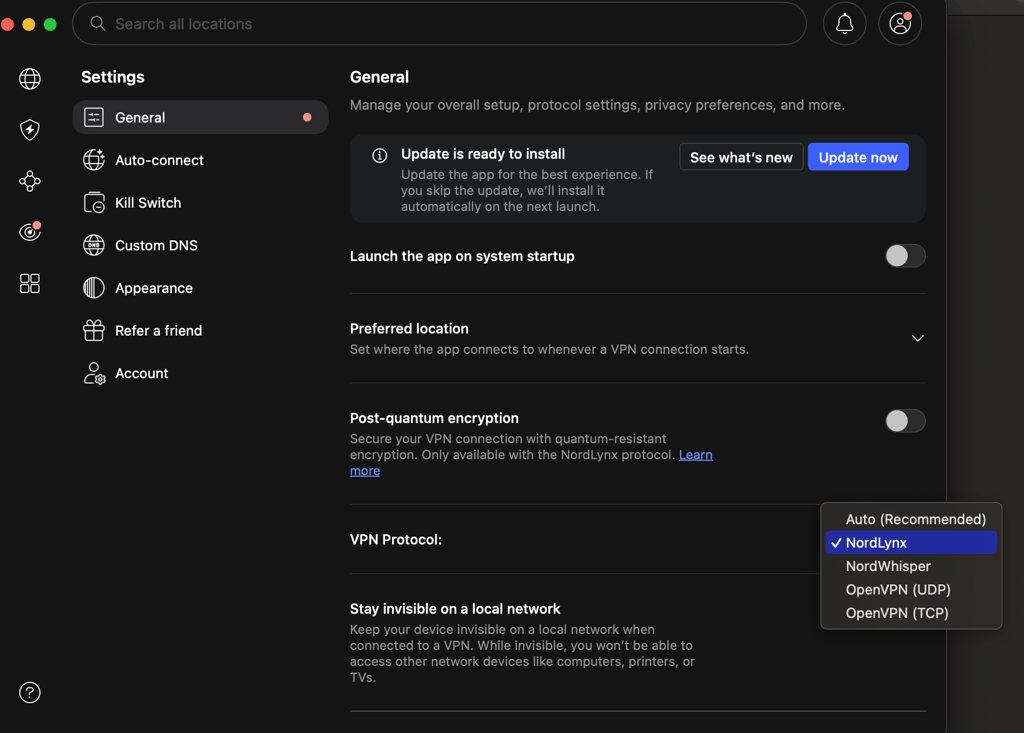
2. Try a different VPN protocol
Some VPN protocols are better than others for certain activities. Experiment by changing protocols and see if that works for you.
3. Make sure your OS and apps are up to date
It’s essential to keep applications and operating systems up to date. Sometimes, outdated software may not work as expected, leading to compatibility issues.
4. Check for IP and DNS leaks
If your VPN leaks your IP address, DNS requests, or WebRTC information, your real IP address or DNS requests may become visible while torrenting. You can check for leaks using websites like ipleak.net or dnsleaktest.com.
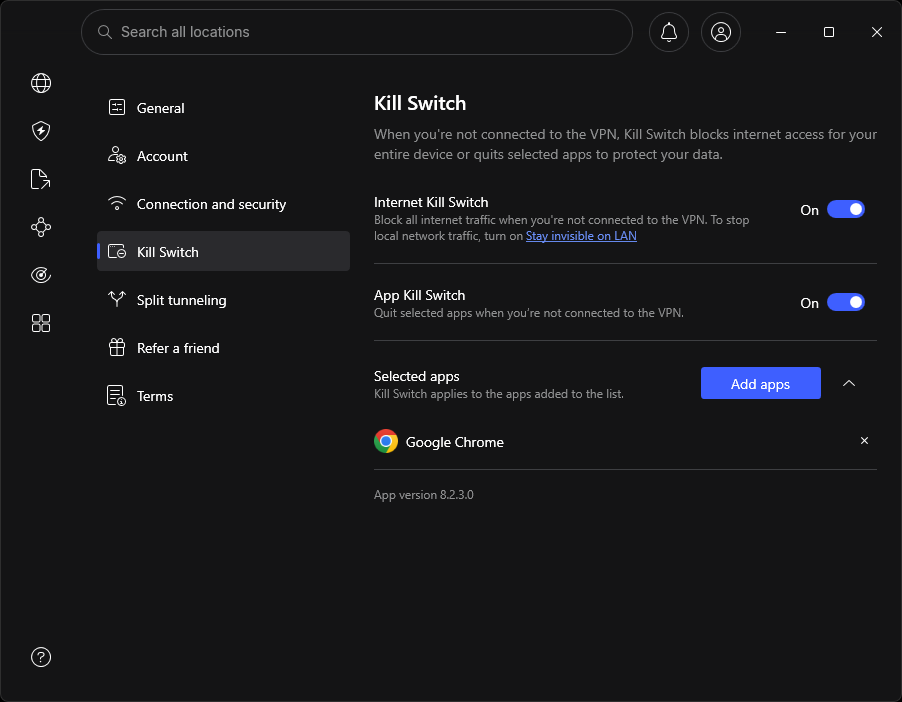
To prevent IP and DNS leaks, enable the kill switch in your VPN app before torrenting. As soon as a VPN connection fails, the kill switch will disconnect you, preventing leaks.
5. Flush DNS
Sometimes, outdated or corrupted DNS cache entries can cause connection issues. Flushing your DNS cache may help resolve these problems. Here are the steps to flush your DNS cache:
- Find the Terminal using the Search bar or Start menu and launch it as administrator (right-click, choose Run as administrator, and confirm)
-
In the Terminal window, type in these commands one after the other:
- ipconfig /flushdns
- ipconfig /registerdns
- ipconfig /release
- ipconfig /renew
- netsh winsock reset
- After the last command, restart your device, and your DNS cache will be cleared
6. Disable IPv6
IPv6 is the latest version of the Internet Protocol, designed to provide a much larger pool of IP addresses than IPv4. This feature helps with overcoming the limited number of addresses that were available on the previous version of the Internet Protocol, IPv4.
Some VPNs don't fully support IPv6 traffic, which can result in IPv6 leaks. If your VPN doesn't protect IPv6 connections, disabling IPv6 can help prevent your real IP address from being exposed while torrenting. You can fix this on your Windows and macOS devices.
Disable IPv6 on Windows:
- Go to the Control Panel and click Network and Internet
- Open the Network and Sharing Center
- Click Change adapter settings
- Right-click the internet connection that you’re using
- Click Properties
- If the Internet Protocol Version 6 (TCP/IP v6) box is checked, uncheck it
Disable IPv6 on macOS:
- Open System Preferences
- Click Network
- Select your active connection
- Click Advanced
- Choose TCP/IP
- Select Link-local only from the drop-down menu that will appear beside Configure IPv6
7. Make sure the antivirus or firewall doesn’t block uTorrent
Firewalls and antivirus programs are designed to prevent suspicious or potentially harmful connections from entering your device. However, they can sometimes block uTorrent or your VPN, preventing both from working properly. As a result, I recommend whitelisting the uTorrent app in your firewall and antivirus settings.
8. Restart your device
Sometimes, changes take effect only after a restart. Therefore, I suggest you restart your device, reopen your VPN app, reconnect, and try opening uTorrent again.
9. Bind the VPN IP with the torrenting app
You might need to bind your VPN’s IP address with the uTorrent app for it to work properly. Here's how to do it:
- Connect to your chosen VPN server and launch your browser
-
In the search bar, type in What is my IP address or visit dnsleaktest.com and note your IP address from there

- Launch the uTorrent app and click the Options tab in the top left corner
-
Click Preferences and go to the Advanced tab

- In the filter menu, type in IP and click on the net.bind_ip option when search results come back
-
In the value field, paste in your noted IP address, click Set, and do the same with net.outgoing_ip

- After you set everything, click OK and restart the uTorrent app


10. Contact the VPN customer support
If you’re still having trouble, you should contact your VPN’s customer support. They should guide you through the process and explain step by step what you should do to use uTorrent with your VPN. They might also advise you on any ongoing server maintenance.
11. Switch to a more reliable VPN
The VPN that you choose might have a negative impact on your torrenting experience, or simply isn’t capable of supporting uTorrent. Most of the time, weak or free VPNs cause such issues. The main reason for this is that free VPNs lack optimized servers, have limited bandwidth, and offer slower speeds. All of this contributes to a bad torrenting experience.
If the issue is caused by your VPN, switching to a provider with reliable P2P support, such as NordVPN, may help. As described in our NordVPN review, the provider offers unlimited bandwidth, thousands of VPN servers, and consistently fast speeds. On top of that, it has robust security features, like strong encryption, a kill switch, obfuscation, and a no-logs policy.

Conclusion
If you want to use uTorrent in combination with a VPN, it can be very irritating to realize that something’s not right. uTorrent may not work with a VPN for different reasons, including an ineffective tunneling protocol, outdated software, or IP address leaks. Fortunately, most of these issues are easily fixable, and the 11 tips I’ve prepared for you in this guide should, hopefully, help.
If you’ve tried everything, and uTorrent is still not working, perhaps it’s time to look into a different VPN. In-house testing and research, NordVPN is our top recommendation for uTorrent in 2026. This provider offers P2P-optimized servers, great performance, and a variety of features to explore.
FAQ
How do I get uTorrent to work with a VPN?
Choose a VPN that supports torrenting, like NordVPN. Also, you can try turning off your firewall and antivirus, enabling a kill switch, disabling IPv6, changing the VPN server, or checking whether there are IP or DNS leaks.
Why doesn’t uTorrent work with a VPN?
uTorrent may not work with a VPN because it lacks essential features to support torrenting, like P2P-compatible servers. The ISP might also throttle your connections, or your connections may be blocked by an antivirus or a firewall. If your current VPN doesn't support torrenting well, consider switching to a provider with dedicated P2P support, such as NordVPN.
Why is NordVPN not working with uTorrent?
NordVPN might not work with uTorrent because you are either connected to a server that is not specialized for torrenting, or your VPN-given IP address is not bound with uTorrent. If these aren't the cause, contact NordVPN's customer support for further assistance.