Aura vs Experian: features, pricing, and identity protection compared
Our in-house experts test identity theft protection services themselves, using real-world scenarios and established testing methods. We look at how well each service monitors personal information, how quickly and clearly it sends alerts, what recovery support it offers, and how it handles customer data.
We assess every provider using the same criteria and explain our testing process clearly, so readers can compare services and make a more informed choice.
Learn more

Comprehensive data collection is simply how the internet works these days, so it’s no wonder that cybercrime is thriving. Of all the types of data being collected, personal information holds the number one spot risk-wise, and tools like Aura and Experian can help nip ID theft attempts in the bud.
These two are regarded as the gold standard in ID protection, but they each fit a different user profile. That’s why I’ve taken the time to weigh their protection methods, insurance policies, and coverage, so you don’t have to.
With a bit of help from the Cybernews research division, I’ve done an all-around comparison to help you pick what suits your needs. Scroll through the overview details below to make a confident choice.
Aura vs Experian overview
Before we get into the nuances, take a look at how these two tools compare in key categories:
| Aura Identity Theft Protection | Experian | |
| ⭐ Rating: | ||
| 🥇 Overall rank: | #2 out of #20 | #12 out of #20 |
| 💵 Price: | From $8.00/month | - |
| ✂️ Free version: | Yes, 14-day free trial | Yes, basic free plan |
| 🖥️ Platforms: | Windows, macOS, iOS, Android | Web, iOS, Android |
| 💰 Credit monitoring: | Yes (3-bureau credit monitoring) | Yes (1 or 3 bureaus depending on plan) |
| 🔒 Insurance: | Yes, up to $1M/adult | Yes, up to $1M (Premium) |
| 🔥 Coupons: | Aura Identity Theft Protection coupon 66% OFF! | - |

About Aura
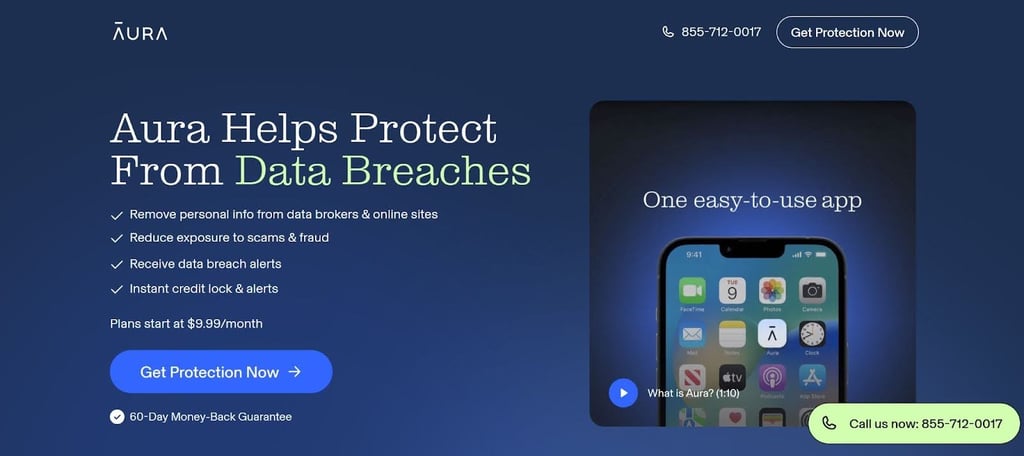
Aura is one of my favorite tools, and that’s not just personal bias speaking. Most other tools only focus on a single service, while Aura handles ID theft protection, secure password management, and online browsing safety.
It comes with lots of extras, including a VPN service and personalized alerts when your sensitive information appears on the dark web. For instance, you can set it up to track your SSN and report back every time it appears without your authorization.
I also liked Aura’s approach to subscription plans. It focuses on two user demographics: personal and family use. The plans vary accordingly, so you can pick the option that works best for you and your loved ones at a fair price.
About Experian IdentityWorks
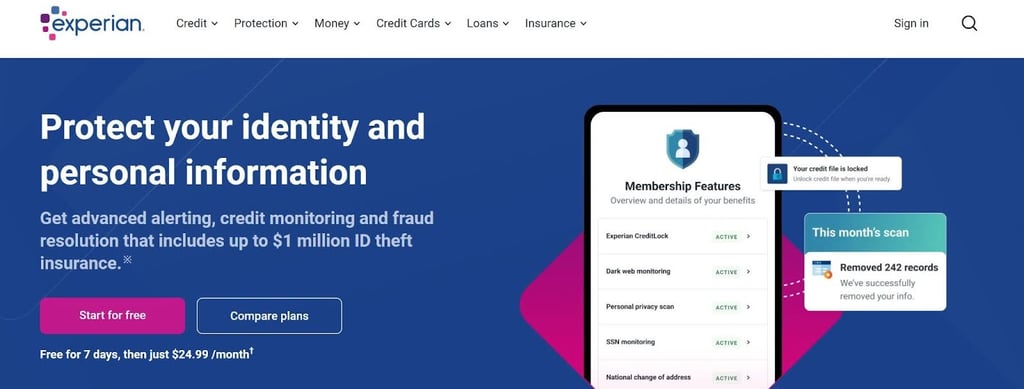
Experian’s IdentityWorks is designed for those who wish to blend credit monitoring with identity protection. Unlike Aura, it offers a free plan, but it’s not a full-scale showcase of its features.
Instead, it’s just a basic tool for free credit reporting, FICO score reviews, and score tracking/alerts. However, you do get a free personal privacy scan, along with a free dark web surveillance report.
Other plans are capable of more. They come with advanced security features like monthly privacy scans, 3-bureau reporting, dark web reports, SSN trackers, and ID validation alerts. It’s the fastest way to be notified of any unauthorized credit activity, and I especially liked the CreditLock feature, which lets you instantly unlock your credit file.
Aura vs Experian: features compared
The first thing I wanted to see was how the two tools differed in features. Here’s a quick overview before I take a deep dive:
| Feature | Aura | Experian IdentityWorks |
| Credit monitoring | ✅ Yes | ✅ Yes |
| Dark web monitoring | ✅ Yes | ✅ Yes |
| Social Security number tracking | ✅ Yes | ✅ Yes |
| ID theft insurance | ✅ Yes (up to $1 million) | ✅ Yes (up to $1 million) |
| Data broker removal | ✅ Yes | ❌ No |
| VPN service | ✅ Yes | ❌ No |
| Antivirus service | ✅ Yes (via Norton) | ❌ No |
| Secure password manager | ✅ Yes | ❌ No |
| Credit lock and file checks | ❌ No | ✅ Yes (Experian files only via CreditLock) |
| Change of address monitoring | ✅ Yes | ✅ Yes |
| Fraud resolution support | ✅ Yes (via personal case managers) | ✅ Yes (via ID restoration specialists) |
For those who require constant credit score tracking and frequent changes to their files, Experian offers a better bundle overall. However, it lacks some personal security and privacy features, as well as anti-malware or VPN extras. It does bring the data removal service to the table, clearing your data from more than 140 brokers, which is a huge plus.
All things considered, here are my biggest takeaways:
- Aura offers a broader ID protection bundle with a dedicated data removal tool.
- Experian has better credit report and score tracking capabilities.
- Aura keeps your personal information safe while browsing the internet.
Aura vs Experian IdentityWorks: pricing and plans
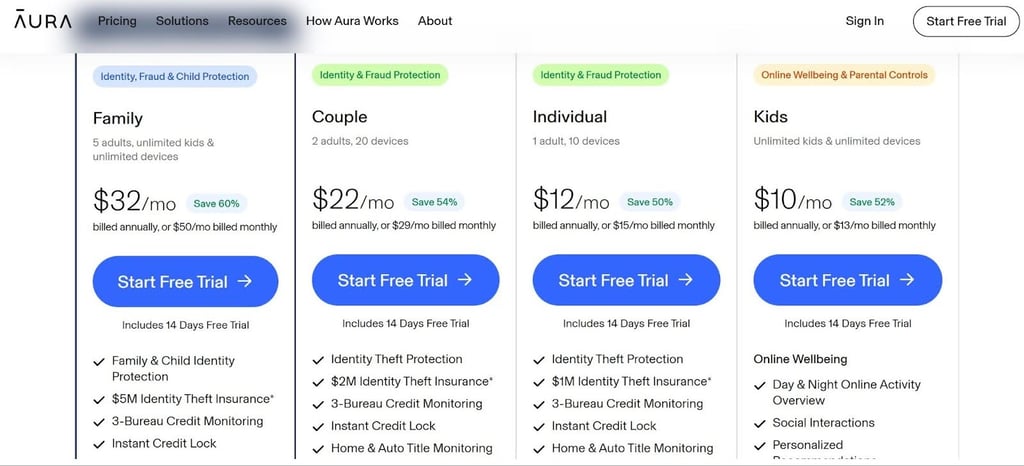
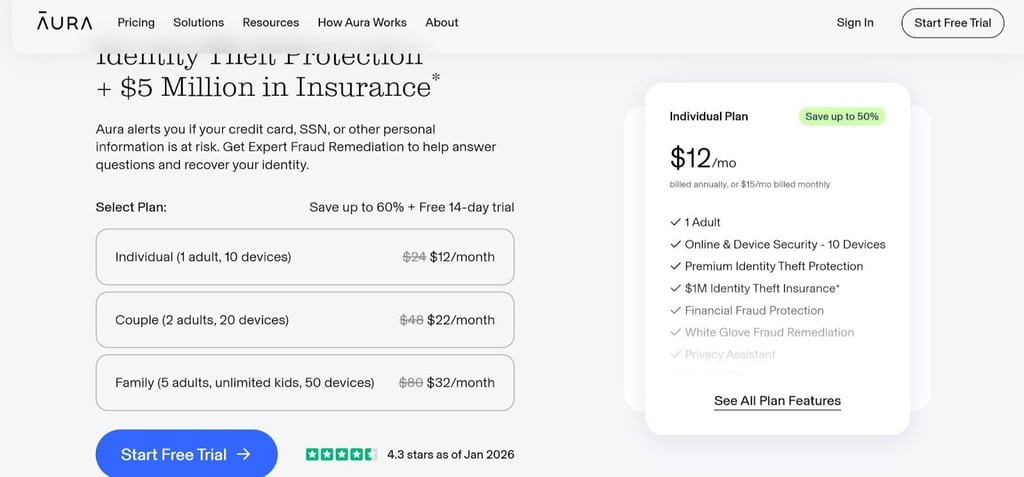
A huge chunk of any Aura vs Experian IdentityWorks review is related to pricing, and I have to give a shoutout to Aura in this context. It boasts a much more convenient pricing structure as of January 2026, with the Kids plan being the most affordable at $13 per month.
You can also get the Individual plan for $15 per month, or the Couple or Family plans for $29or $50 per month, respectively. With an annual subscription, you can also get a discernable discount.
On the flip side, I have to give Experian props for its free Basic plan. It doesn’t cover ID protection to the extent of Aura’s starter pack, but it still delivers FICO score tracking and credit monitoring features.
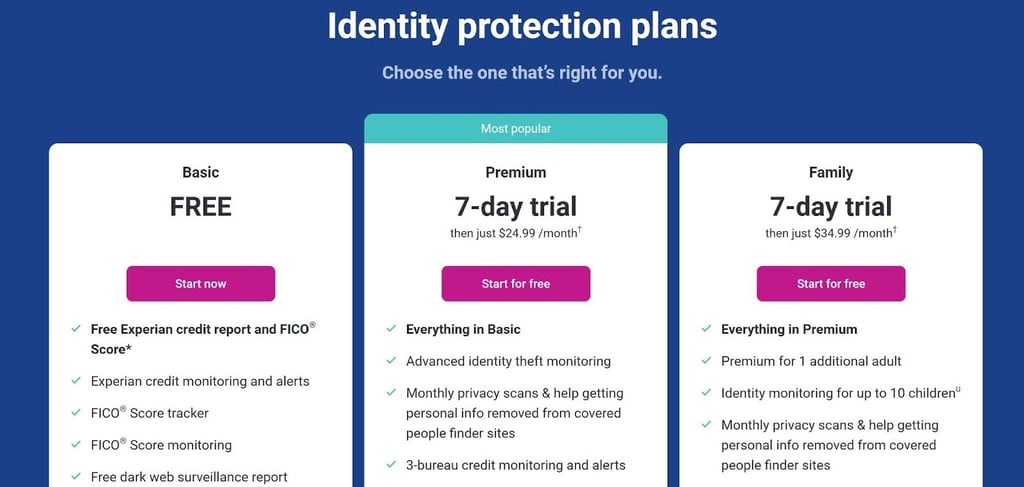
There are no discounts here, though, so the Premium Experian IdentityWorks cost is $24.99 per month. It is considerably more expensive than Aura’s Individual plan, but it includes more credit monitoring features.
Aura vs Experian: core identity protection capabilities
For my Experian vs Aura comparison guide, I primarily focused on all the ID protection tools and features. Aura sets the bar high in this regard, with public records checkups, dark web scans, and secure password management for sensitive accounts.
On the other hand, Experian’s IdentityWorks covers court records, as well as booking, non-credit loan, and identity validation alerts.
Here’s an overview of the core ID protection features:
- Credit monitoring. Aura features a tri-merge checkup that includes data from all three major credit bureaus, but it primarily displays VantageScore ratings. On the other hand, Experian has built-in credit file checkups with real-time FICO score updates from all three bureaus.
- Identity monitoring. Both tools take different approaches in identity monitoring, with Experian’s IdentityWorks focusing on misuse of personal details in credit applications and government records. Aura oversees financial applications, dark web, court records, and even the sex offender registry, looking for any discrepancies or misuse.
- ID theft insurance. Aura includes $1 million in identity theft insurance from AIG, with no deductible. Similarly, IdentityWorks offers $1 million in coverage on Premium and Family plans, primarily to cover expenses during identity restoration.
- Resolution support. Aura assigns a dedicated fraud resolution specialist to each ID protection case. Support is available 24/7, which is not the case with Experian and its business-hours-only support.
Aura vs Experian IdentityWorks: security and privacy
While both Aura and Experian IdentityWorks take security and privacy very seriously, there are slight differences in their approaches. Both get all the data necessary to provide the service, but Aura collects more information.
It’s not a big surprise, though, considering it also provides a more comprehensive service than Experian’s IdentityWorks. However, it’s all backed up by a detailed privacy policy. It’s also GDPR-compliant and follows the latest privacy regulations in countries where it operates.
Experian’s privacy focus is primarily on US-specific laws and regulations, with a strong emphasis on securely collecting your identity and credit information.
On that note, Experian has a more detailed opt-out policy, and you can choose to delete information the service has previously collected about you. Most importantly, such requests won’t affect your credit report in any way.

Aura vs Experian: compatibility and customer service
In terms of platform compatibility, Aura takes the top spot with more intuitive and optimized mobile and desktop apps. It’s available on iOS, Android, Windows, and macOS, with additional VPN and antivirus features conveniently laid out.
As for Experian, you can use most key features on both mobile and web platforms, including CreditLock, but I’d still rate Aura higher for sheer usability. Aura’s customer support team is also more available, as their representatives work 24/7 across all time zones. You can reach out to Experian’s team during the US business hours.
There’s also a difference between how Experian and Aura handle ID theft remediation assistance. While Aura assigns a qualified expert to do all the work on your behalf, Experian has more hands-on support by providing expert guidance to help you figure things out.
How we tested the software
With the expert research team over at Cybernews, I made a unique ranking methodology that helped me compare these tools:
- Functionality (30%). The first thing I did was compare the base ID protection and security functions of these tools. I also focused on additional features, such as VPN services, antivirus software, and overall usability.
- Pricing & value (20%). I then cross-referenced the pricing plans to see which one brings more value in terms of bundles, discounts, and shared access.
- Privacy policy (20%). Before reaching my final verdict, I read the privacy policies of both tools. This helped me figure out how and why a certain type of data is stored, as well as how each platform handles opt-out requests.
- Ease of use (15%). I focused on in-app usability (particularly with newbies in mind), platform compatibility, and the overall convenience of specific features such as Experian’s CreditLock.
- Reputation & feedback (15%). I also checked online reviews, user feedback from forums, and Better Business Bureau rankings.
Aura vs Experian IdentityWorks: which one should you choose?
I’d recommend Aura to anyone who wants to access their tri-merge report without paying top dollar for a premium plan. It also offers great value when bundled with VPN/antivirus services, and it’s perfect for protecting your children’s identities while browsing online.
On the other hand, Experian’s IdentityWorks is perfect for those who prefer real-time FICO score updates to Aura's Vantage Score reviews. It’s also a decent option for those who’d like a free plan with basic dark web surveillance and personal privacy scans.
My overall winner is Aura, though, as one of my top-rated identity theft services in 2026, with quality support assistance available 24/7.
Other reviews from Cybernews:
Aura vs IDShield: which is better?
Identity Guard vs LifeLock: features, pricing, and my verdict
Aura vs IdentityForce: which identity protection service is worth your money?
LifeLock vs IDShield: which identity theft protection is better?
FAQ
Is Aura or Experian better for three-bureau credit monitoring?
Aura is a better option for three-bureau reporting without a premium subscription; however, keep in mind that it mainly displays Vantage Score results. Experian makes a better choice for FICO score tracking.
Does Experian IdentityWorks include a credit lock, and how is that different from a credit freeze?
Yes, Experian’s IdentityWorks includes a credit lock feature, which is different from a federally regulated credit freeze because you can only lock your Experian file, not files from all bureaus.
Which is better for families and child identity monitoring: Aura or Experian?
Aura is better for families and child identity monitoring due to affordable Kids and Family plans, as well as a higher focus on parental controls.
Do Aura and Experian offer data broker/people-finder removal, and what’s the difference?
No, only Aura offers dedicated data broker removals, covering over 140 broker websites. Aura only handles direct opt-outs for collected information on select websites.
Can I use Aura or Experian outside the United States?
While you can technically use both outside the US, with Aura, you’d need to use its VPN for full functionality. In addition, Experian’s customer service doesn’t work outside US business hours.