OmniWatch vs Aura: which identity theft protection tool is right for you?
Our in-house experts test identity theft protection services themselves, using real-world scenarios and established testing methods. We look at how well each service monitors personal information, how quickly and clearly it sends alerts, what recovery support it offers, and how it handles customer data.
We assess every provider using the same criteria and explain our testing process clearly, so readers can compare services and make a more informed choice.
Learn more

According to the Federal Trade Commission (FTC), in 2024, more than 1.4 million identity-related incidents were reported. And since that number keeps increasing, you can bet that the situation will be even worse in the future.
Fortunately, we’ve also seen services like Aura and OmniWatch hit the market, promising to safeguard our digital identity. But how do these 2 tools stack up? More importantly, which one should you opt for?
To answer that, I gathered my trusty Cybernews research crew, and we thoroughly analyzed both tools to help you find the right fit. So, let’s see who comes up on top in this Aura vs OmniWatch showdown, so you know which tool to go with.
OmniWatch vs Aura overview
Before we get into the details, it’d be a good idea to look at the differences and similarities between OmniWatch and Aura, so you’ll know exactly what to expect from each tool:
| Aura Identity Theft Protection | Omniwatch | |
| ⭐ Rating: | ||
| 🥇 Overall rank: | #2 out of #20 | #8 out of #20 |
| 💵 Price: | From $8.00/month | From $7.99/month |
| ✂️ Free version: | Yes, 14-day free trial | No, 30-day money-back guarantee |
| 🖥️ Platforms: | Windows, macOS, iOS, Android | Web, iOS, Android |
| 💰 Credit monitoring: | Yes (3-bureau credit monitoring) | Yes (3-bureau on Elite) |
| 🔒 Insurance: | Yes, up to $1M/adult | Yes, up to $4M (Elite) |
| 🔥 Coupons: | Aura Identity Theft Protection coupon 66% OFF! | Omniwatch coupon 33% OFF |

About OmniWatch
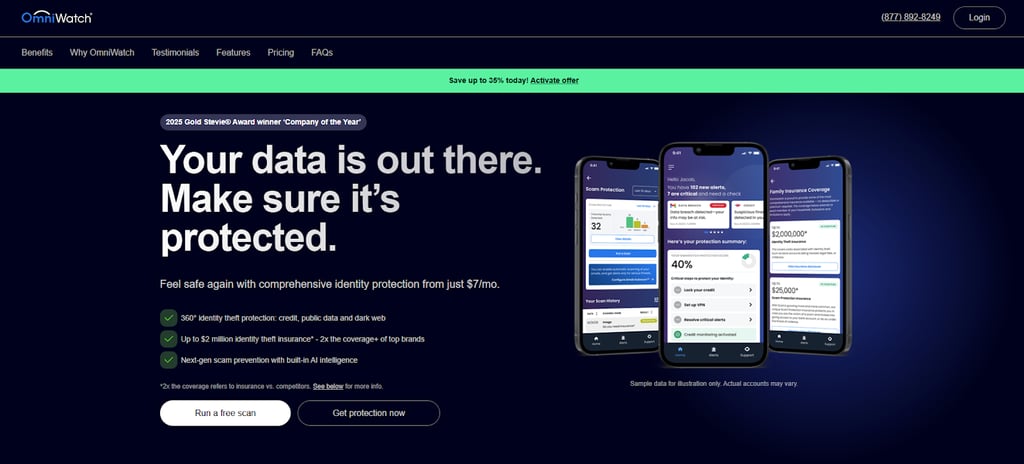
OmniWatch is a fairly new player in the cybersecurity game. It was founded in 2022 and launched its identity theft protection tool the following year. Nonetheless, it has already managed to make a name for itself in such a crowded space.
That’s likely due to the fact that all of its plans include dark web monitoring, instant credit lock, and up to $2 million in identity theft insurance. AI-based scam checks for emails and texts, as well as auto-scam detection for emails, are also present across the board.
Add a user-friendly dashboard and add-ons like a VPN and antivirus into the mix, and you can immediately see why OmniWatch stands out.
About Aura

Aura has been around for almost a decade now. It was founded under the name iSubscribed in 2017 but rebranded as Aura in 2019 when it launched its feature-packed identity theft protection tool, which goes far beyond basic monitoring.
This all-in-one security suite offers real-time identity and credit monitoring, dark web surveillance, financial fraud protection, data breach alerts, AI-powered protection against scam calls and texts, a VPN, antivirus, password manager, and comprehensive parental controls.
Over time, Aura has managed to build quite a reputation. While more expensive than OmniWatch, it offers a broader range of features and is one of the top-rated identity theft protection services for securing both personal and financial information.
OmniWatch vs Aura: features comparison
To help you get an idea of which service offers what, the Cybernews crew and I compared their key identity theft protection features. Take a look at them side by side below, and see which service offers more value and fits your needs better:
| Feature | Aura | OmniWatch |
| Identity monitoring | ✅ Yes (including both home and auto title monitoring) | ✅ Yes (with home title monitoring) |
| Credit monitoring | ✅ Yes | ✅ Yes (Basic users only get TransUnion monitoring) |
| 3-bureau credit monitoring | All plans | Elite and Family plans only |
| Credit reports | ✅ Yes (all 3 bureaus) | ✅ Yes (all 3 bureaus) |
| SSN monitoring | ✅ Yes | ✅ Yes |
| Dark web monitoring | ✅ Yes | ✅ Yes |
| Social media monitoring | ❌ No | ❌ No |
| Identity theft insurance (per person) | Up to $1 million | Up to $2 million |
| Family protection | ✅ Yes (5 adults and unlimited kids) | ✅ Yes (2 adults) |
| VPN | ✅ Yes | ✅ Yes |
| Antivirus | ✅ Yes | ✅ Yes |
| Mobile app | ✅ Yes | ❌ No (antivirus app only) |
While OmniWatch’s focused identity coverage is excellent, especially for the price, Aura’s ecosystem is broader.
OmniWatch vs Aura: pricing and plans
Both Aura and OmniWatch offer a lot for the price, but one of these services provides better value for your money.
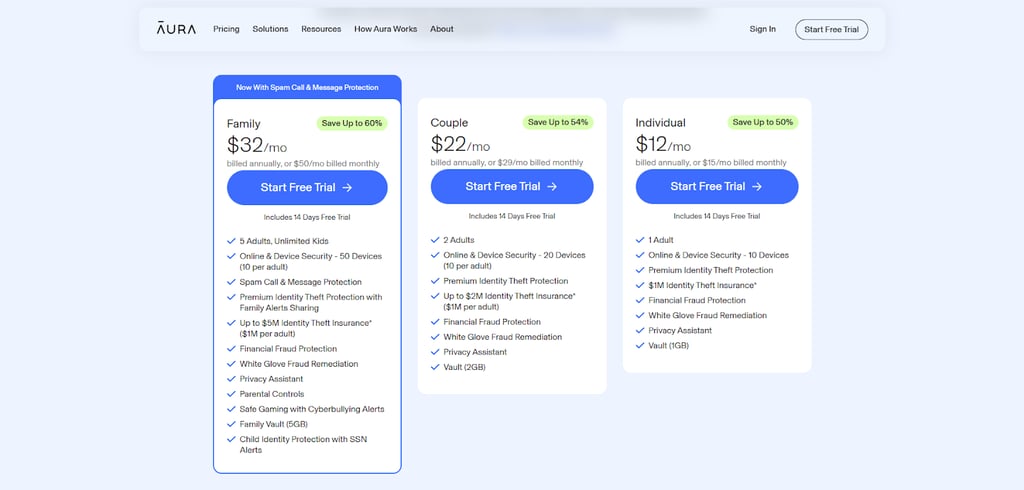
Aura has 3 distinct plans with annual billing-based discounts and a 14-day free trial, with each covering up to 10 devices and up to $1 million in insurance per adult:
- Individual ($8.00/month). This plan comes with comprehensive identity theft and financial fraud protection, white-glove remediation, privacy assistant, and 1GB of vault space.
- Couple ($18.00/month). This package offers everything from the Individual plan, but for 2 adults.
- Family ($29.00/month). Here, up to 5 adults and unlimited kids are supported and parental controls, safe gaming features with cyberbullying alerts, child identity protection with SSN alerts, and AI-based spam call and message protection are included.
On the other hand, OmniWatch’s plans, which also include discounts for annual billing, have a few more differences between them:
- Basic ($7/month). OmniWatch’s cheapest plan includes dark web monitoring, instant credit lock, up to $2 million in insurance, email and text scam checks, AI-based scam detection, VPN, and antivirus.
- Elite ($13/month). This package builds upon the Basic plan with $50k in scam and ransomware protection, 3-bureau credit monitoring, home title monitoring, and payday loan alerts.
- Family ($25/month). This one is similar to the Elite plan, but for 2 adults.

While families with kids can’t go wrong with Aura’s Family plan, all 3 of OmniWatch’s plans offer outstanding value, even if there’s no free trial.

OmniWatch vs Aura: security
Both OmniWatch and Aura offer excellent security features, but one of these services takes it a step further.
On the one hand, OmniWatch is SOC 2 and SOC 3 certified, as well as compliant with PCI DSS. It also encrypts your data both in transit and at rest. Moreover, it doesn’t store your SSN; instead, it only passes it to TransUnion for confirmation.
That said, OmniWatch does collect more of your personally identifiable information (PII), which means there’s a higher risk of it getting exposed.
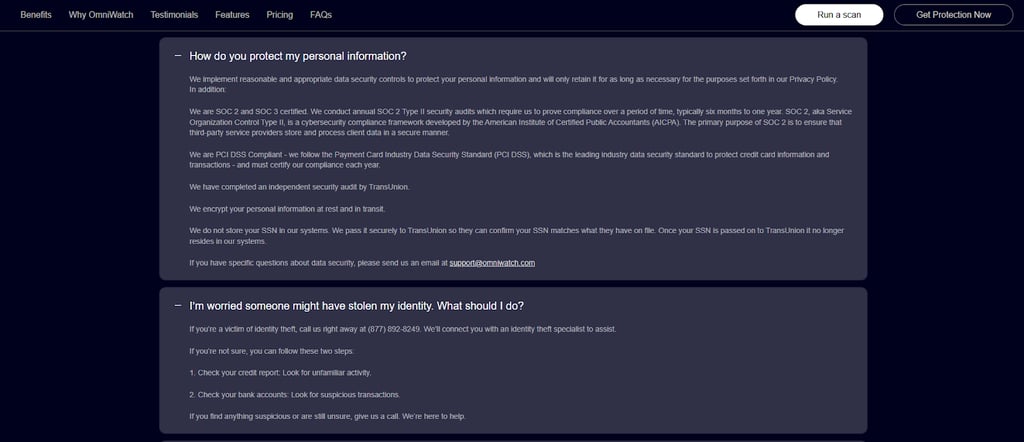
Aura, on the other hand, is more restrained in its approach to collecting data and sharing it with third parties, as outlined in its privacy policy. End-to-end encryption is also present, and the service undergoes regular third-party security audits.
Aura also offers more advanced security features, including two-factor authentication (2FA), which can further enhance your data protection.
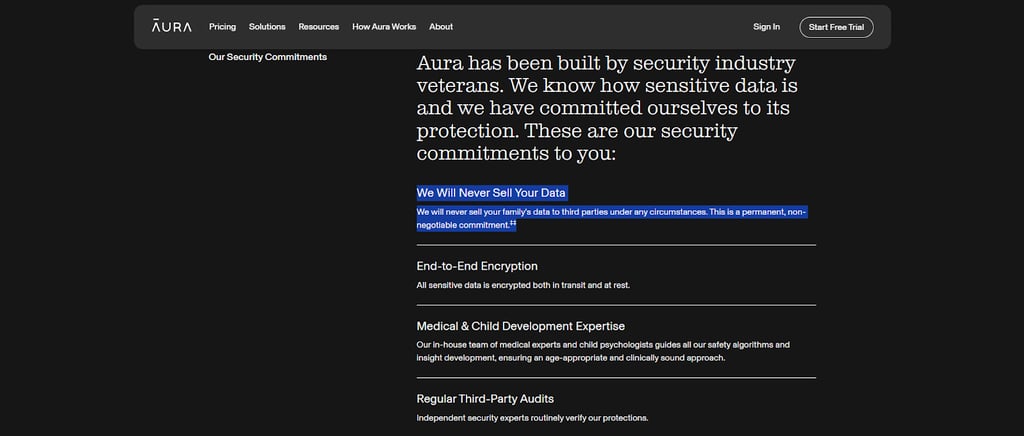
At the end of the day, security is paramount for any identity theft protection service, and Aura simply excels in that department.
OmniWatch vs Aura: customer service
When it comes to identity theft, remedying the situation as quickly as possible is crucial for preventing damage. In such scenarios, responsive and reliable customer support can make all the difference.
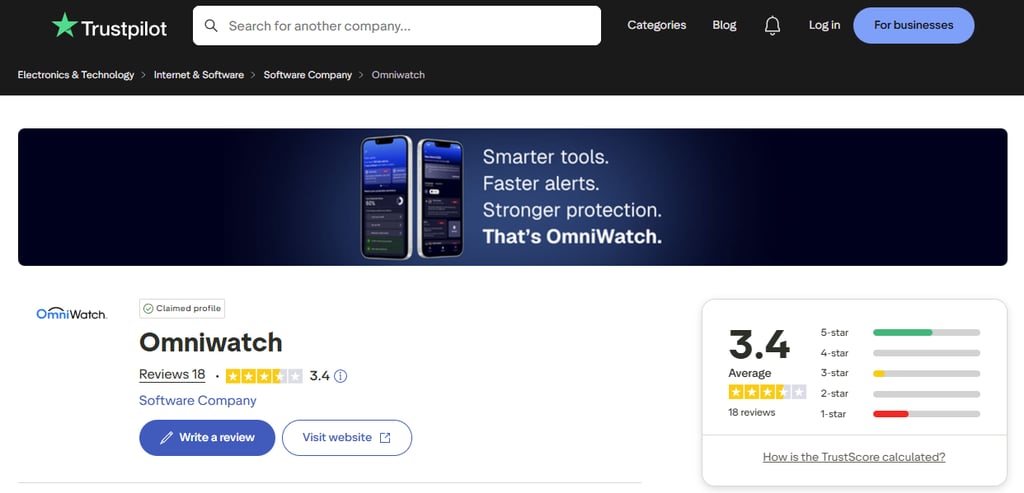
OmniWatch gets you that standard 24/7 email support, while phone support is available Monday through Friday, from 10 a.m. to 7 p.m. Unfortunately, there’s no live chat option.
On another note, there have been a few negative comments regarding the responsiveness of OmniWatch’s customer support team, so keep that in mind.
Meanwhile, Aura supports live chat, email, and phone communication, with 24/7/365 availability across the board. You’ll also be able to take advantage of a comprehensive help center with dedicated sections for each service the provider offers.
Aura also enjoys a better reputation. While you’ll still find comments from dissatisfied users, most of the feedback praises the company’s representatives, with some going as far as to call it the best support experience they’ve had.
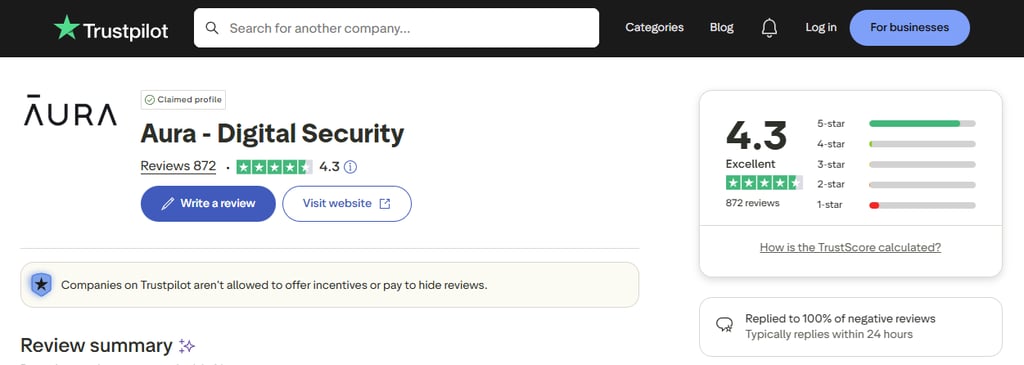
As its customer support team is more responsive and available through more channels, Aura gets a clear win here.
How we tested these tools
Although no hands-on testing was involved here, the Cybernews research team and I thoroughly examined both services for the Aura vs OmniWatch showdown. We then evaluated each based on the following criteria:
- Functionality (30%). First, we assessed how comprehensive each tool’s monitoring features were and ranked them based on the range of data they tracked.
- Pricing and value (20%). Online privacy and data safety shouldn’t break the bank, so we also explored what each subscription plan offers to determine the tool’s value.
- Privacy policy (20%). From there, we examined Aura and OmniWatch’s data protection and collection practices, reviewing the transparency of their privacy policies.
- Ease of use (15%). Next, we looked at each service’s dashboard and setup processes to evaluate how easily beginners can master these tools.
- Reputation and feedback (15%). Lastly, we looked at professional reviews and real user feedback across multiple platforms to gauge customers’ opinions about these tools.
OmniWatch vs Aura: which one should you choose?
While OmniWatch and Aura are both excellent identity theft protection tools, Aura will, in most cases, be a better fit for your needs. Yes, it’s more expensive than OmniWatch, but it also offers a more comprehensive security suite.
Aura can secure up to 10 devices per person and supports up to five adults and an unlimited number of children with its Family plan. As such, it’s ideal for multi-tenant households and parents who are equally concerned about the safety of their children’s data as they are about their own.
Conversely, as one of the most affordable identity theft protection services in the business, OmniWatch is an excellent choice for budget-conscious users.
At the end of the day, you should choose Aura if you want an all-in-one tool with comprehensive monitoring capabilities. Alternatively, OmniWatch will be the better option if you don’t need all the bells and whistles and want solid protection on a budget.
FAQ
What makes Aura different from OmniWatch?
Of the 2 identity theft protection services, Aura is, beyond a doubt, the more comprehensive one. For instance, it offers financial account monitoring, address change alerts, and even child safety-focused features, all of which OmniWatch lacks.
Which service, Aura or OmniWatch, offers better identity theft insurance?
While OmniWatch’s $4 million in identity theft coverage is smaller than Aura’s $5 million, its per-person policy is simply better. Namely, OmniWatch offers identity theft insurance of up to $2 million per adult, whereas Aura caps it at $1 million per person.
Can I use Aura or OmniWatch for family protection?
Yes, you can, since both services offer such tiers. However, OmniWatch’s Family plan covers only 2 individuals, whereas Aura supports up to 5 adults and an unlimited number of children. That makes Aura the better choice in this regard.
How secure are these platforms when handling personal information?
Both services offer end-to-end encryption that’ll keep your PII safe. They also undergo regular audits. Thus, you have nothing to worry about here. That said, Aura also offers 2FA, and that’s certainly worth a bonus point.
Which is more affordable in the long run: Aura or OmniWatch?
Whether you’re paying on a month-to-month basis or getting a yearly subscription, OmniWatch is cheaper of the 2. In fact, at just $7/month for its Basic plan when billed annually, OmniWatch is one of the most affordable identity theft protection services out there.