“Non-terrestrial officers:” the UFO files Gary McKinnon says he found, hacking NASA
In the early 2000s, Gary McKinnon breached US military and NASA networks in what prosecutors called “the biggest military computer hack of all time.” He says he stumbled onto evidence of a hidden space fleet, including a cigar-shaped UFO floating above Earth.
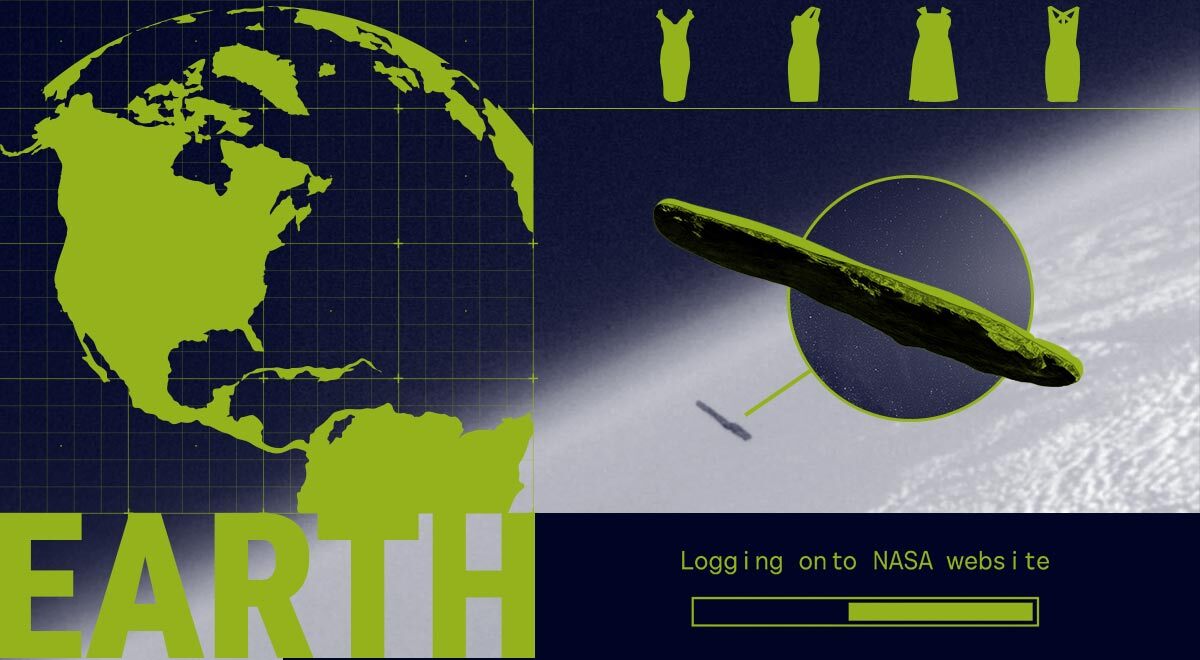
Image by Cybernews

 Follow us
In the early 2000s, Gary McKinnon breached US military and NASA networks in what prosecutors called “the biggest military computer hack of all time.” He says he stumbled onto evidence of a hidden space fleet, including a cigar-shaped UFO floating above Earth.
In an interview on American Alchemy with Jesse Michels, the Scottish hacker frames the moment less like a spy thriller and more like a messy, late-night obsession spiraling into history: “I was in my dressing gown up until like four in the morning, smoking weed, drinking beer.”
At the time, US prosecutors called it “the biggest military computer hack of all time,” and faced 70 years in prison. However, the UK blocked his extradition.
“I was just a normal guy interested in UFOs… nothing genius level,” McKinnon told Michels, positioning himself as a curious civilian who stumbled into something bigger than him.
At the time, US prosecutors called it “the biggest military computer hack of all time.” Court bail conditions barred McKinnon from using the internet, with reporting at the time describing restrictions that made normal life and IT work difficult or nearly impossible.



No hacking background
McKinnon says he was a lifelong UFO enthusiast with enough IT skills to exploit weak passwords on US government systems.
“No hacking background… I was good with computers.” He portrays his skills as practical networking knowledge rather than elite cyber tradecraft.
He was able to enter NASA’s systems with easy access.
Curious what others think about this story? Contribute your thoughts to the debate below.
“I wrote a Perl script to find blank passwords or the word ‘password.’ he describes, showing the weak organizational infrastructure back then. His method, as described, was wide scanning for weak logins, then entering through the easiest doors.
Once inside, he claims he escalated privileges and used network search tools to comb through large volumes of files across connected machines.
“Some of these… sites had blank passwords big time,” he said, believing that the most shocking part was how basic the security failures were.
Has your password leaked?
He describes the scale as huge for one person, but manageable through automated searching and long, late-night sessions.
“The largest I did was 5,000 at one time.”
He says he could search thousands of machines at once, which helps explain why US authorities treated it as major exposure.
UK government summaries of the case say US authorities accused McKinnon of unauthorized access to 97 government computers, and alleged he deleted critical data that forced a US Army network to shut down.
Slow dial-up downloads
McKinnon says his most famous “proof” wasn’t a file he could easily share – it was an image he watched slowly render on his screen in low-color blocks.
“All they had was like two folders, raw and processed,” he says, describing a NASA desktop that looked like a dedicated imagery workstation.
Because the image format was in a locked-in organizational format (not the regular JPEG you can normally save), he says he had to run NASA software remotely over dial-up, lowering the display quality just to make it load.
“I was on a 56k dial-up… it came… almost line by line,” he says, noting that the slowness is part of why the moment felt so unreal, and why he never got a clean copy. The shape was “a big straight kind of silvery line… cigar-shaped object… smooth… no lines.”
He also describes a manufactured-looking cylinder above Earth with no obvious seams, rivets, or antenna-like features. For the process he mentioned:
I see the mouse move… they right-clicked, disconnect… boom.
He claims a live user noticed the session and terminated the connection before he could finish viewing it. In other words, from an institutional perspective, NASA had to disconnect McKinnon there and then. But from a whistleblower, perhaps it was a case of what needed to be revealed.
“I wanted it from the horses mouth”
McKinnon also says he downloaded an Excel sheet titled “non-terrestrial officers,” which he interpreted as suggesting an off-Earth assignment or program.
“This spreadsheet was titled non-terrestrial officers, so not on the Earth,” he says. As the wording looks confusing at first – “non-terrestrial” means “not Earth-based,” not necessarily “alien.”
“It had ship names… and… fleet-to-fleet transfers” describes McKinnon suggesting multiple ships suggests organized operations, claiming the spreadsheet contained tabs for names, ship names, and material transfers, implying logistics rather than a one-off anomaly.
McKinnon further claims that he downloaded an Excel spreadsheet file, which he saved on his drives, but authorities seized them and he never recovered the data.
And why did he do all this? “I wanted it from the horse’s mouth. I didn’t want to just believe. I wanted to know,” McKinnon tells Michel.






“We want to see him fry”
The UFO claims are what people remember, but the extradition battle is what made McKinnon a global symbol at the time, because the threatened punishment was so extreme.
“We want to see him fry,” McKinnon says his lawyer relayed this as the attitude from the US side, language that intensified public outrage.
He describes years of legal struggle where the punishment threat felt like deterrence and humiliation layered on top of prosecution.
“Using a hammer to crack a nut” was how the fear of extradition pushed him toward suicidal planning.
“I bought potassium chloride… I was just going to swallow it… and die,” he said, describing his reaching a point where death felt preferable to a US prison outcome.
In October 2012, Britain’s home secretary at the time, Theresa May, withdrew the extradition order, saying the suicide risk was so high that extraditing him would breach his human rights.
The case ultimately ended with the UK blocking extradition on human-rights grounds, and the saga became a benchmark example of how cyber cases can turn into diplomatic conflicts.
McKinnon has stayed in the UK for years, with reports suggesting an outstanding US extradition warrant makes travel abroad legally risky.