Novo Nordisk hackers turn to private sale after Ozempic maker refuses $25M ransom demand
FulcrumSec, the hackers behind Novo Nordisk's recent cyberattack, claim the GLP-1 drugmaker refused a $25 million ransom demand and say they are now “exploring private sales” of 1.3TB of allegedly stolen data.
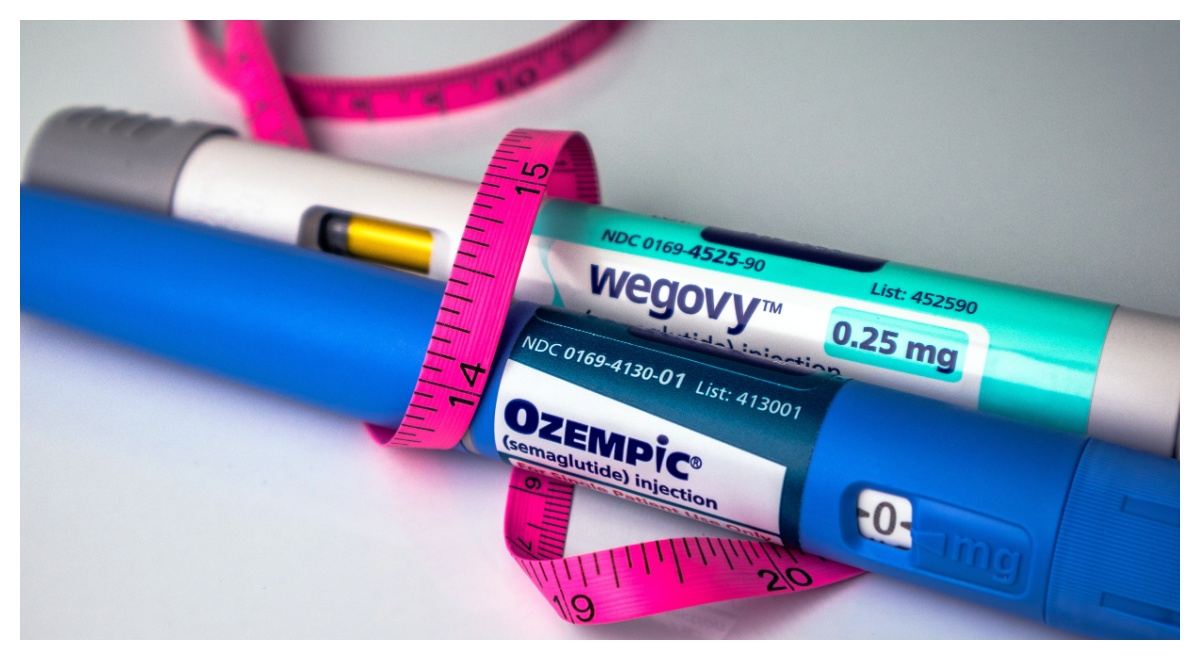
Image by KK Stock | Shutterstock

 Follow us
Novo Nordisk hackers say they are now “exploring private sales” after the Ozempic and Wegovy maker reportedly declined to fork over a $25 million ransom to recover 1.3TB of clinical trial data allegedly stolen from its systems in March.
The announcement by cybercriminal group FulcrumSec comes just days after the pharmaceutical giant began notifying patients and healthcare providers (HCPs) of the massive data breach on June 11th.
- Hackers claim Novo Nordisk refused to pay a $25 million ransom after they allegedly stole 1.3TB of company and clinical trial data.
- The cybercriminals now say they are exploring private sales of the data, which allegedly includes drug research, source code, employee records, and AI assets.
- The threat comes days after Novo Nordisk disclosed a cybersecurity incident and began notifying affected patients and healthcare providers.
Key Takeaways by nexos.ai, reviewed by Cybernews staff.
Novo Nordisk confirms patient data breach
Without listing the exact date of the breach, Novo Nordisk said it had recently discovered “unauthorized access to certain personal data” in a lengthy statement posted on its website last Thursday.






Labeling the leak an “IT Security Incident,” the Denmark‑based pharmaceutical company revealed that an unknown third party had “copied the non-public data externally without authorization.”
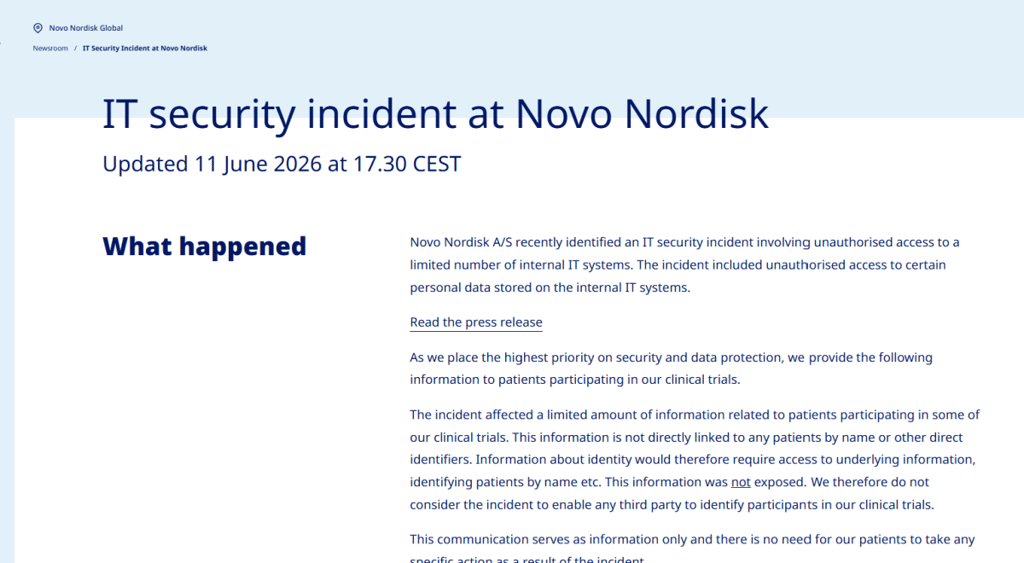
"The incident affected a limited amount of information related to patients participating in some of our clinical trials," the drug company said, although it did not disclose what type of trials.
Core business operations were not impacted and remain up and running, it said.
Hackers turn to private sales after $25M ransom refusal
Founded in 1923, Novo Nordisk markets its products – including the widely popular weight-loss drugs Ozempic and Wegovy – in more than 170 countries and employs 67,000 people worldwide. Its annual revenue in 2025 was about $47 billion.
Meanwhile, FulcrumSec, the threat actors claiming responsibility for the attack, say they spent more than two months inside Novo Nordisk's network before allegedly exfiltrating roughly 1.3TB of data spanning clinical trials, drug development programs, source code repositories, employee records, and proprietary artificial intelligence assets.
The attackers’ claims also extend far beyond the limited clinical trial data acknowledged by Novo Nordisk, with FulcrumSec alleging the cache includes information about secret drug programs and what it describes as "confidential recipes,” including manufacturing details tied to the company's GLP-1 pipeline.
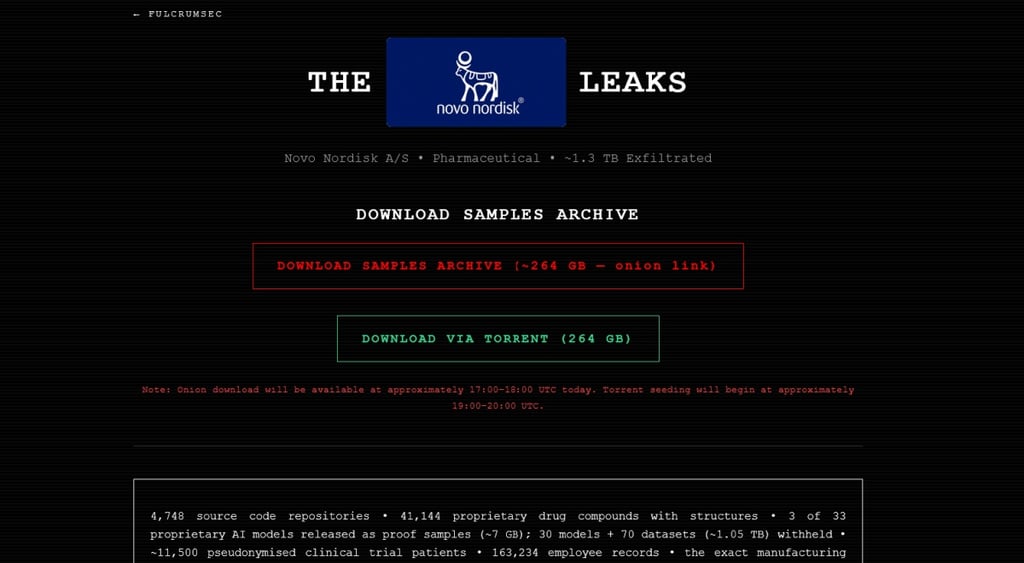
After weeks of alleged communications with Novo Nordisk, FulcrumSec claims the pharmaceutical giant ultimately declined to pay a $25 million ransom demand to prevent the release of the stolen data.
The group says it had originally offered to withhold portions of the data and refrain from publicly releasing certain records if the company agreed to negotiate. According to the hackers, Novo Nordisk later confirmed it would not pay.
In response, FulcrumSec says it is now "exploring private sales" of some of the information purportedly taken during the breach.
The group claims the stolen data could be valuable to competitors because it contains proprietary drug research, internal AI models, manufacturing information, and details related to Novo Nordisk's future development pipeline.
Cybernews could not independently verify the group's claims, and Novo Nordisk has not publicly confirmed the scope of the data allegedly stolen by the attackers.
Ross Filipek, CISO at Corsica Technologies says the business and reputational fallout on Novo Nordisk could be extensive.
“Clinical trials depend on confidence from patients, providers, regulators, and research partners. Even a limited breach can create hesitation. If attackers had dwell time inside the environment, the concern shifts from data exposure to data integrity,” Filipek explains.
Check if your data was exposed
Find out if your email and related personal information have appeared in known data breaches.
Besides the exposure of intellectual property, Filipek says pharmaceutical organizations may also need to determine "whether research data was altered and if regulatory obligations were triggered."
“Active trials could also face delays while the incident is investigated,” he added.
What the attackers claim to have stolen
According to a more than 4,000-word leak manifesto published on its victim blog, the group claims to have obtained more than 700,000 files, including data tied to approximately 11,500 pseudonymized clinical trial participants, 163,000 employee records, thousands of source code repositories, and dozens of internal AI models and datasets.
The hackers also claim to have accessed information related to unreleased drug programs, proprietary manufacturing processes, and more than 41,000 experimental drug compounds.
Besides listing the hordes of data it allegedly exfiltratred from Novo Nordisk, the hacker gang also took time to explain its motivation while taking cheap shots at the company’s so-called lax cybersecurity measures.
Novo Nordisk spends “more on R&D in a quarter than most biotech companies raise in a lifetime. It remains astonishing to us that a $400 billion corporation with a dedicated cybersecurity division cannot be bothered to monitor their frontend bundles,” the group wrote.
The attackers then revealed what they claim are the rudimentary, once-encrypted plaintext passwords to the company's “pharmacovigilance middleware — the system that processes reports of patients dying, having strokes, going into comas, or attempting suicide while on their drugs.”
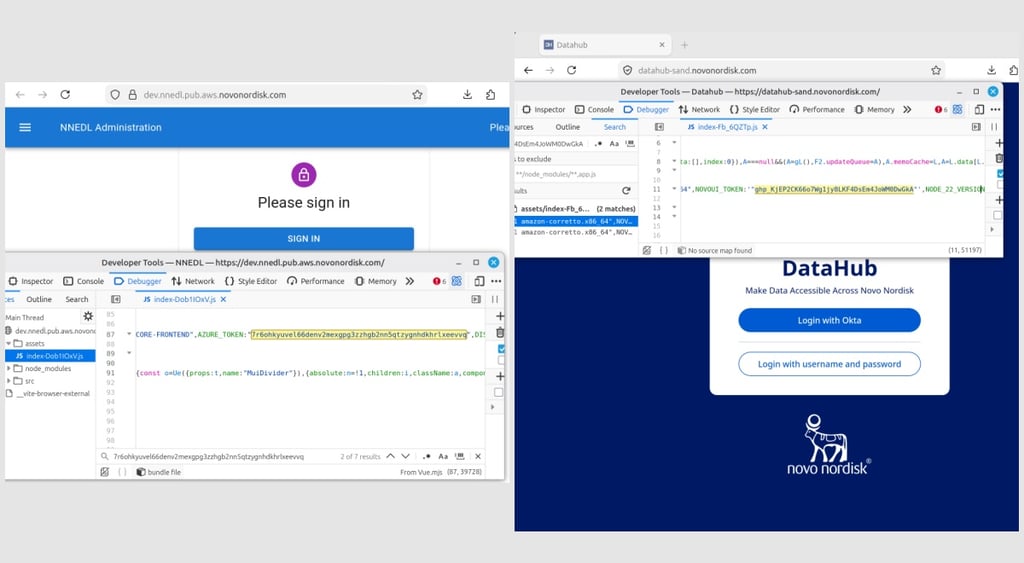
"From those two credentials, we moved laterally through Novo’s Azure DevOps, GitHub, AWS, and HuggingFace environments over a period of over two months," they wrote, referring to the seemingly unfettered access to the drug maker's cloud environment.
FulcrumSec did say it is withholding some of the most sensitive information – including healthcare provider records, certain patient-related data, and operational technology information tied to manufacturing systems – as part of what it describes as a "harm-reduction strategy."
Novo downplays patient data risk
Novo Nordisk stressed that the risk to patients is limited as the data was pseudonymized, meaning there are no direct personal identifiers linking patients to the trial information.
The global GLP-1 manufacturer said the exposed patient data may include the following:
- Patient ID (random alphanumeric string) and information on trial participation
- Sex
- Year of birth
- Biomarkers
- Health/immunogenicity data
- Lifestyle factors, e.g. smoking, alcohol use, BMI
Still, even without usable identifiers, Filipek points out that health data can still carry long-term value when combined with other stolen information.
“When an ePHI breach does not include patient names, attackers may try to reverse-engineer identities by pairing details like birth date, postal code, or gender with outside data sources,” he said.
Additionally, Filipek says, “Attackers can use partial medical details to build convincing phishing messages, impersonate trusted organizations, or pressure people with information that feels deeply personal."
The company said it is now working with outside cybersecurity experts who have implemented “multiple security measures,” including temporarily taking the affected systems offline to prevent further damage while restoration continues.






Copies of the notice Novo Nordisk began sending out to patients and healthcare providers (HCPs) were also available for review on its website.
Who is FulcrumSec?
FulcrumSec – apparently short for Fulcrum Security – is a relatively new cyber extortion crew that first surfaced in October 2025.
Unlike traditional ransomware gangs, some threat-intel trackers list FulcrumSec as a “data broker” style actor, meaning it primarily leaks or sells stolen datasets rather than deploying ransomware to encrypt victim systems.
Known for targeting “multimillion-dollar global corporations, who simply could not be bothered with basic security practices,” the self-proclaimed “threatspians” in March claimed responsibility for a major breach of the US-based legal and data analytics giant LexisNexis.
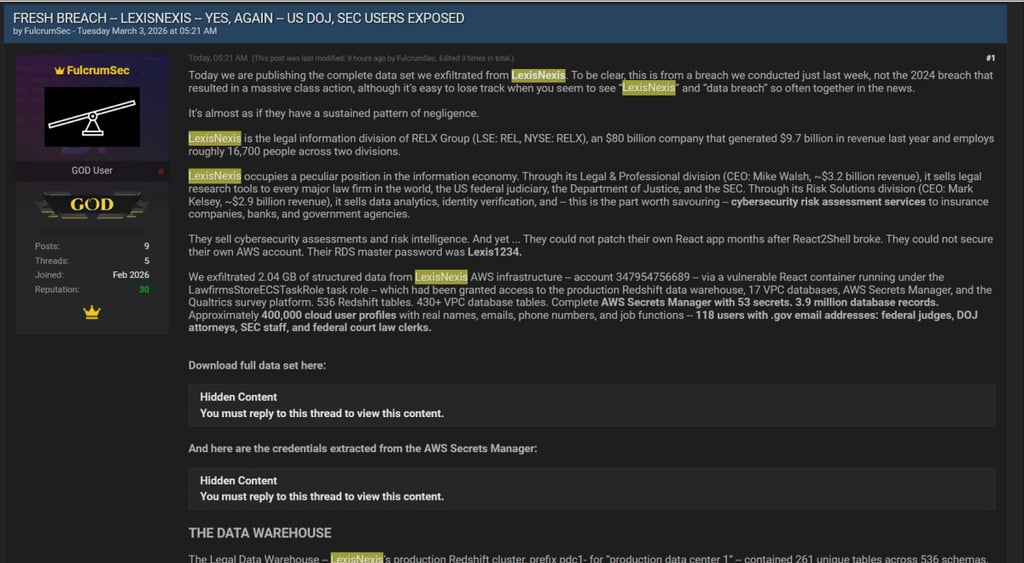
The hackers allegedly exfiltrated roughly 3.9 million records from LexisNexis cloud environments, including profile data exposing 400,000 users, as well as a massive dataset of .gov email accounts linked to courts, federal agencies, and other public-sector institutions.
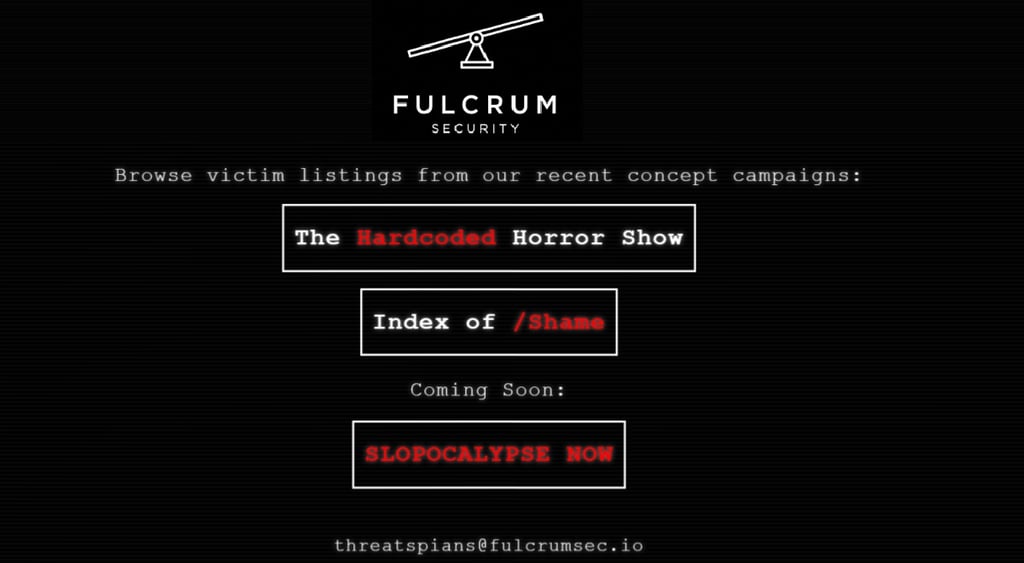
The FulcrumSec dark web leak site appears to favor a dramatic flair, mocking its victims by posting them under what it labels as “concept campaigns,” including “Index of Shame” and “Hardcoded Horror Show,” as well as the soon-to-be-functional emerging category for AI companies, “Slopocalypse Now.”
Researchers tracking the group have also said its claims should not be dismissed outright.
Thomas Willkan, head of research at cybersecurity firm Lab-1, told Reuters that FulcrumSec is "usually quite legit in terms of both their capabilities and also their claims."
Unlock more exclusive Cybernews content on YouTube.