Canadian lender TD tells some employees it will use software to monitor their work
Toronto-Dominion Bank told some employees working in its financial crimes and risk management team that it would run software to track their work, prompting questions around consent and privacy in the workplace as the Canadian lender tries to increase productivity, according to a recording of a team call reviewed by Reuters and a document TD shared with employees.
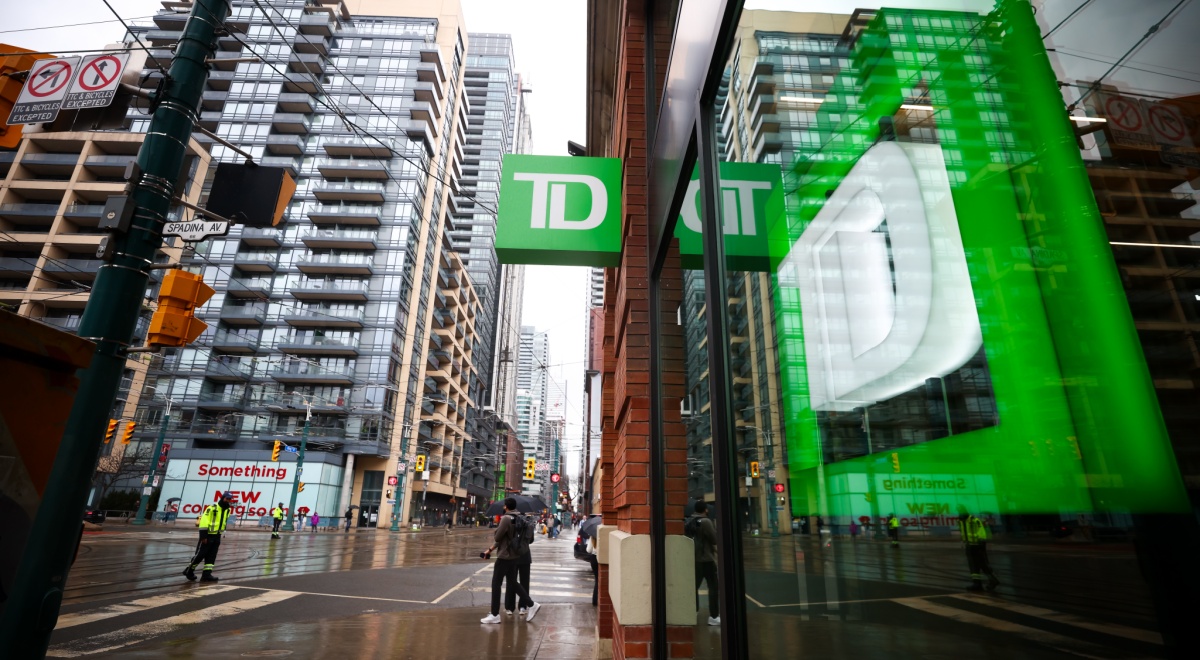
Toronto-Dominion (TD) bank branch in Toronto, Ontario, Canada. Cole Burston/Bloomberg/Getty.
 Follow us
TD Bank is rolling out software that tracks how some employees spend their workday, including time spent on browsers, chat platforms and meetings, in what the bank describes as a "standard practice across the industry." The monitoring program has sparked questions about workplace privacy, with staff asking whether they can still browse the internet during their lunch break and how the collected data will be used.
- TD Bank employees questioned how a new monitoring system will track their work activity, including browser, chat and meeting usage.
- Internal documents raised questions about whether staff can use the internet during lunch and how “unaccounted-for time” is defined.
- The bank says the tool is intended to improve workflow transparency in a hybrid work environment.
- Employees raised concerns about privacy, consent and how the data could be used for performance management.
Key Takeaways by nexos.ai, reviewed by Cybernews staff.
The program will track the time employees spend on browsers and internal chat and meeting applications, according to the recording.
Companies are increasingly facing employee pushback over the deployment of software to monitor their work.
TD said in a statement to Reuters the deployment is "standard practice across the industry."





"In various parts of our business, we use automated solutions to improve insights and better allocate resources," the company said.






"This is not AI and not specific to any business or matter, the tool allows managers to more accurately manage workflows, team capacity and performance. Where deployed, colleagues are informed about where they are used and for what purpose."
TD said it has safeguards in place to protect colleagues' privacy.
ActiveOps, the company providing the software, describes WorkiQ as a tool for "employee and wellbeing intelligence" on its website. ActiveOps did not immediately respond to a request for comment.
"The idea is it's going to show pain points, where do we spend too much time ... We know we have a lot of pain points across our systems," Deanna Pacitti, TD's associate vice president of high-risk investigations, told her team on the call on Thursday.
"It is running in the background and it did go through privacy review," Pacitti said of WorkiQ in response to employee questions about privacy concerns.
The tool will not listen to conversations if employees are in a meeting, but will show if the employee is active, she said. She subsequently clarified that being active referred to an employee being in a meeting.
In another example, Pacitti said the tool will capture the employee working in Excel, but will not track what they are doing in the spreadsheet application.
Employees question privacy and lunch-break browsing rules
TD has expanded its financial crimes and compliance unit in recent years, following a record fine for money laundering violations in the US and the largest such fine paid by a major bank in Canada.
Most TD employees have worked on a hybrid basis between the office and home since the pandemic.

Check if your data was exposed
Find out if your email and related personal information have appeared in known data breaches.
In an undated Frequently Asked Questions document shared with Reuters, TD told employees that WorkiQ will help managers regain transparency lost in a remote work environment.
The document responded to questions such as "Can I use the internet during my lunch hour?" and "How much time is a colleague expected to have accounted for during the day?"
TD said in the document that there is an acceptable amount of unaccounted-for time, and the company is working to determine those time expectations.
Reuters could not determine how many employees would be affected or if they would only be in Canada. A source who spoke anonymously because of the matter's sensitivity said 90 to 100 people were on the call, which Reuters could not confirm.
TD employees raised further questions on the call about privacy, what the tool would track, and if it could be used for performance management. They also inquired if they would be asked for consent and how the data would be used.
One employee said it would be more helpful if the resources used to monitor how workers use their time were instead used to alleviate manual processes.
"I totally agree with you. We have way too much manual stuff," Pacitti said.
"We're spending way too much time on that manual effort. I can only hope that this will further prove that point."
The Financial Times reported in March that JPMorgan, the biggest US bank, was starting to monitor the hours of its junior investment bankers, saying it was for their own well-being. The bank could not be immediately reached on Juneteenth, the US holiday marking the end of slavery in the US.
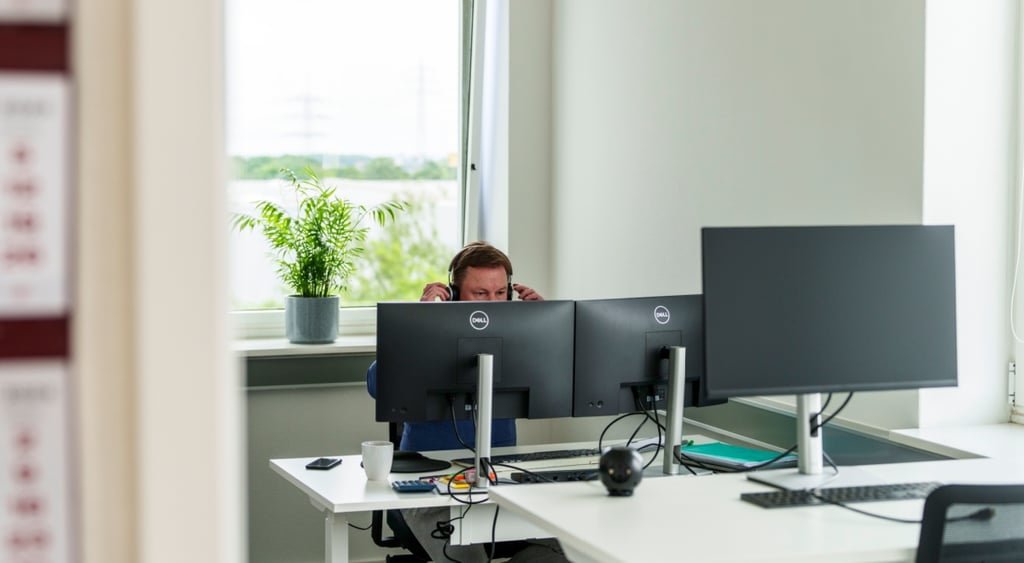
Meta has also faced similar scrutiny over internal monitoring practices. Now, the company is dialing back elements of its plan to collect employee mouse movements, keystrokes, and other actions for use as AI training data, according to an internal memo seen by Reuters this month, following weeks of pushback from staffers.
Cybernews previously reported that Meta’s staff had raised concerns over their privacy and working conditions. Some even organized internal protests and initiated petitions.
At the time, Meta claimed that the data would have been used to improve AI agent work by modeling their behavior on real company employees.
Unlock more exclusive Cybernews content on YouTube.