Mass surveillance has become the norm, Signal CEO warns
Why do we give a handful of tech companies so much power over our privacy? Privacy isn’t a luxury, but a fundamental human right. To keep it that way, we need a different ecosystem within which to build our core technical infrastructure that respects our right to privacy.

Meredith Whittaker by Getty/Chesnot

 Follow us
Why do we give a handful of tech companies so much power over our privacy? Privacy isn’t a luxury, but a fundamental human right. To keep it that way, we need a different ecosystem within which to build our core technical infrastructure that respects our right to privacy.
- Signal CEO Meredith Whittaker challenges the "nothing to hide" argument, emphasizing that everyone values privacy when they consider their private messages and online activity being exposed.
- The tech industry has built its business model around collecting and monetizing vast amounts of user data, with know-your-customer policies incentivizing maximum personal information collection.
- Personal details shared online can be exploited by hackers to access accounts and infiltrate privacy, making it important to limit what you make publicly available.
Key Takeaways by nexos.ai, reviewed by Cybernews staff.
That’s what Meredith Whittaker, CEO of message platform Signal, says in an interview with Dutch news outlet VPRO Tegenlicht.
Privacy is for those who have something to hide, a lot of tech companies and governments seem to think nowadays. In reality, it’s the ad industry that wants to keep its hands on the steering wheel as much and as long as possible, profiting as much as it can from data collection.
Know-your-customer policies, originally implemented to detect fraud and combat financing of terrorism, have only incentivized the collection of as much personal information of people as humanly possible.


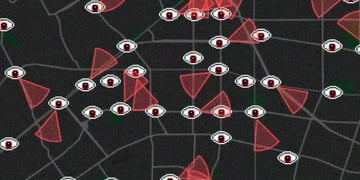



If you have nothing to hide, then why are you so concerned about your privacy? It’s an argument that’s been voiced frequently over recent years, primarily by tech companies, political entities, and intelligence agencies all over the world.






Meredith counters that argument with a simple thought experiment.
“Imagine every DM you’ve ever sent, every heart you’ve ever put on some Instagram baddy’s story, every Grindr swipe you’ve ever done, every weird little message you’ve sent to your friend, everything you’ve ever said to your coworker over text. Everything you’ve ever sent is dumped in a database (…) What would you be willing to do to prevent that information from being sent to all of your loved ones?” Whittaker wondered out loud.

The CEO of Signal admits she doesn’t speak publicly about her private life because she chooses not to.
“Why is it important that I share personal details about who I am, where I come from, who my people are, what I like, what my consciousness does when I shut my eyelids in the dark. That’s me, that’s not my public image. I think it’s strange that it has become an expectation that we somehow bear some of our personal lives, that we need to become influencers and brands.”
Sharing these kinds of personal details is dangerous because they are widely used to authenticate someone’s identity online and can be used by people wanting to infiltrate your privacy or to hack into your bank accounts. Therefore, Whittaker recommends that people shouldn’t give away too much personal information for others to read online.
According to Whittaker, the tech industry is built around the monetization of data. It collects vast amounts of user data and uses it to generate as much revenue as possible, for example, by selling access to user profiles to data brokers, training an AI model integrated into a company’s platform, or licensing it via an API on a company’s cloud server.
Signal is the opposite of this business model.
“We aim to collect as close to no data as possible. We go around rewriting key components of the stack so that we can do things privately that most people would just plug-and-play to do in a data-collecting way, a privacy-undermining way, a surveillance way,” Whittaker says, explaining that avoiding the pressures of an economic model is the very reason Signal is a non-profit organization.
Whittaker concludes by emphasizing that privacy isn’t a luxury or individual hobby, but a fundamental human right. The system that has destroyed privacy was created by people, and can therefore also be changed by people. Signal is not the end goal, but proof that a different technological path is possible.
“For the future, I hope we build a livable future in which people have access to resources and opportunity. People are able to have full, rich lives. In order to get to that future, privacy is an absolute necessity,” Whittaker ends the interview.
Unlock more exclusive Cybernews content on YouTube.