Russia’s VPN crackdown starts hitting online retailers as shoppers abandon purchases
The Russian government’s attempt to crack down on VPNs is beginning to take a toll on the country’s economy. Online retailers are reporting lower traffic and lost sales as online shoppers struggle to navigate the increasingly restricted digital environment.
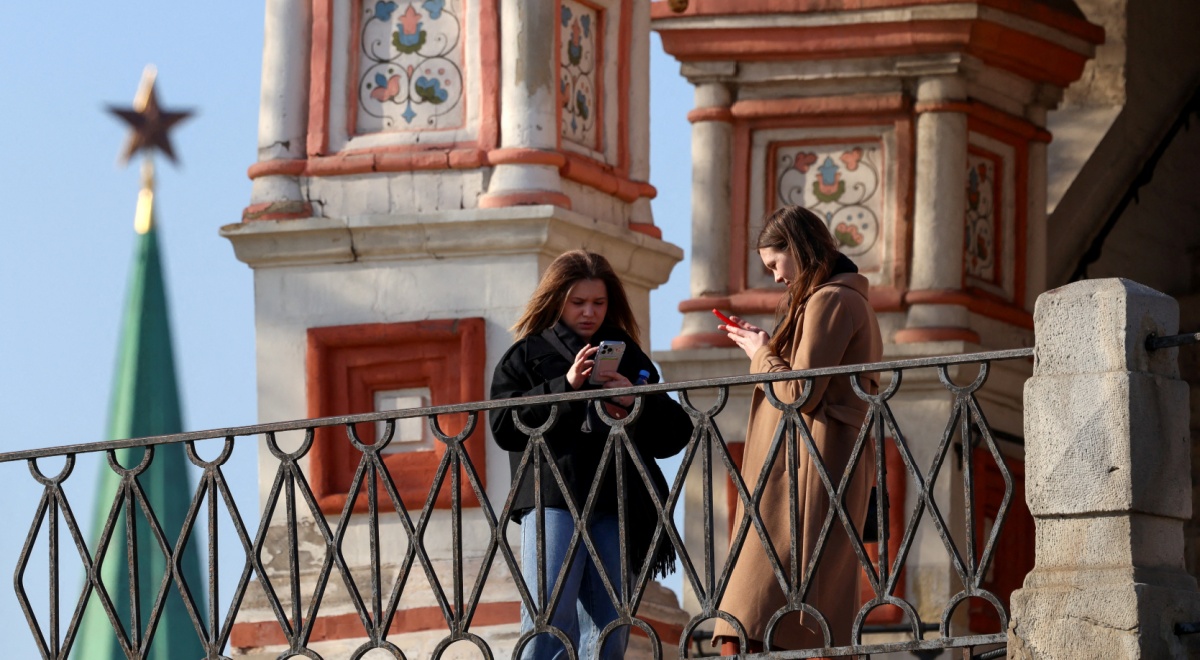
People use phones outside St. Basil's Cathedral in central Moscow. REUTERS/Anastasia Barashkova.

 Follow us
The Russian government’s attempt to crack down on VPNs is beginning to take a toll on the country’s economy. Online retailers are reporting lower traffic and lost sales as online shoppers struggle to navigate the increasingly restricted digital environment.
- Russia's efforts to restrict VPN use are beginning to affect major online retailers, with traffic and sales declining.
- Many shoppers using VPNs cannot access retail websites and abandon purchases rather than disable their VPNs.
- Internet and mobile service restrictions linked to wartime security measures have disrupted navigation, deliveries, and other everyday services.
- Demand for VPNs continues to surge as Russians seek access to restricted apps and websites despite tighter internet controls.
Key Takeaways by nexos.ai, reviewed by Cybernews staff.
In April, government offices, banks, and major online retailers started preventing people with VPNs from accessing their websites. This was in accordance with instructions from Roskomnadzor, Russia’s communications regulator.
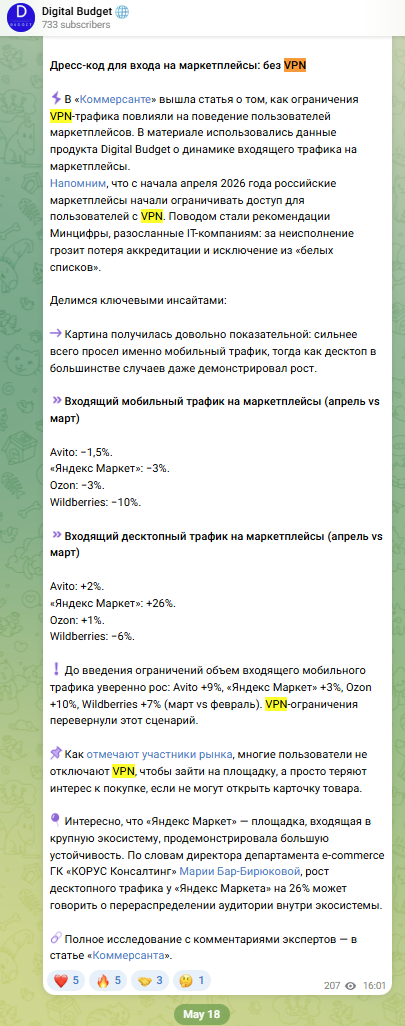
The move coincided with a 10% drop in internet traffic for Wildberries, Russia's Amazon equivalent, according to Digital Budget, a Moscow-based consultancy that tracks online behavior.
"As market participants note, many users do not switch off their VPN to access the site and simply lose interest in making a purchase if they cannot open the product page," Digital Budget said in a Telegram post.






Cybernews has previously reported that in March, the Russian government had introduced mobile internet limitations “to ensure safety during ongoing attacks linked to the war in Ukraine.” During that time, sales of paper maps, walkie-talkies, and pagers in Moscow doubled, according to Wildberries data.
When navigation apps stopped working in Moscow in March, delivery drivers for Flowwow, an online flower and gift marketplace, used vendors' WiFi connections to download directions to customers' addresses, said Yuri Semichastnov, the site's logistics head.
With frustration building, the Kremlin has softened its rhetoric in recent weeks, assuring the public that the mobile internet shutdowns are temporary.
For example, a plan to have mobile service providers charge customers extra for using more than 15 gigabytes of foreign data in a month was postponed in May, Russian media reported, saying the requirement targeting VPN users would probably be introduced after the election.
The Russian President Vladimir Putin has also asked the government and FSB to work together to ensure that critical services like healthcare platforms and online payment systems remain operational.
Russians continue to turn to VPNs as internet control tightens
Services like VPNs are becoming increasingly necessary for those who want to continue using Western apps. VPNs work by routing a user's internet connection through private servers outside Russia. This way, they bypass any online restrictions.
In March alone, 9.2 million downloads of the five most popular VPN services were recorded on the Google Play Store. That’s 14 times more than the same month last year, the Russian daily newspaper Kommersant reported, citing data from Digital Budget, a Moscow-based consultancy that tracks online behavior.
"We've never seen this kind of take-up rate before," Sarkis Darbinyan, a Russian internet freedom activist based in Lisbon, told Reuters.






Moscow has designated Darbinyan a "foreign agent," a term it applies to people it views as engaged in anti-Russian activity.
Kremlin spokesman Dmitry Peskov has said repeatedly that internet controls are necessary when Russia is locked in what officials cast as an existential clash with the West over Ukraine. But Putin instructed the government in April to tread more softly, telling lawmakers it was "counterproductive" to "focus solely on bans and restrictions."
Unlock more exclusive Cybernews content on YouTube.