Asking for a friend in Brussels: Can open source make EU tech independent?
The European Commission is asking people involved in the open-source community for their opinion on the European Open Digital Ecosystem Strategy.
Image by Cybernews.

 Follow us
The European Commission is asking people involved in the open-source community for their opinion on the European Open Digital Ecosystem Strategy.
Europe’s dependency on tech companies from the United States has been a hot topic for quite some time now.
For example, last year, US President Donald Trump signed an executive order to sanction officials working for the International Criminal Court (ICC) over arrest warrants for Israeli Prime Minister Benjamin Netanyahu connected to war crimes in Gaza.
In May, ICC’s Chief Prosecutor Karim Khan lost access to his Microsoft email account. A connection between President Trump’s executive order and the loss of access to his email account was quickly made. To be less dependent on American tech companies, Khan made the switch from Outlook to Proton Mail.
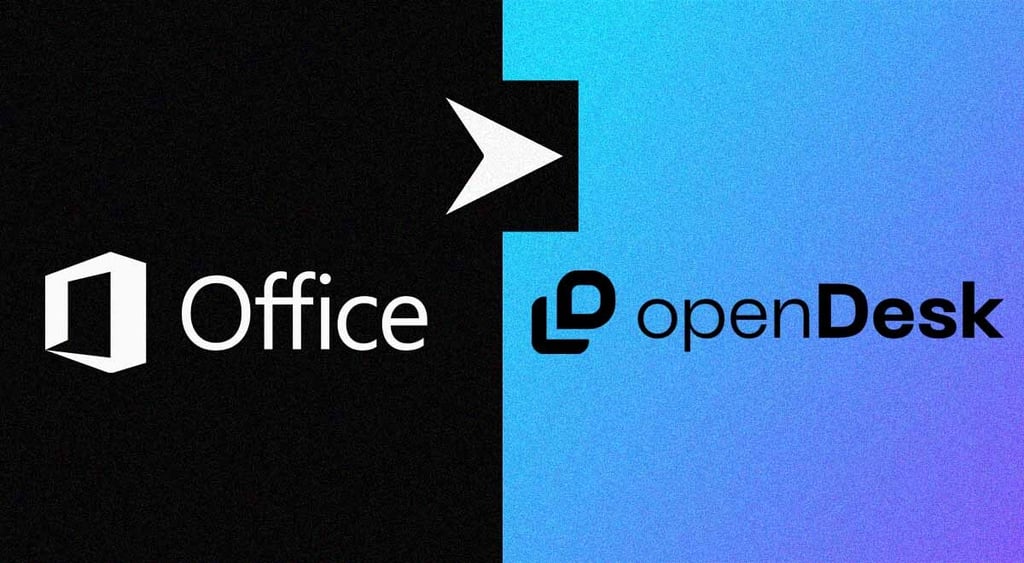
Brad Smith, Vice Chair and President of Microsoft, denied any involvement in the matter. However, the ICC decided to switch from Microsoft’s Office software to an open-source alternative, openDesk.


Similar concerns about Europe’s technological dependence were voiced by other entities, including Denmark, Germany’s Schleswig-Holstein region, and Spanish regions Andalusia and Valencia.
These cases raised some important questions. Can we, or should we, trust American tech companies with our data? Or should we opt for European alternatives to have greater control over our digital infrastructure and data, and protect our digital sovereignty?






That’s why the European Commission has come up with plans for Europe’s own technological sovereignty and digital environment. The answer, according to the EU’s executive branch, lies in open-source software.
“Open-source technologies have the potential to enable greater control over digital infrastructure and to reduce the EU’s dependencies, ensure greater supply chain transparency and support cybersecurity vulnerability management,” the European Commission writes in its European Open Digital Ecosystem Strategy, which is meant to offer advice to governments, businesses, and individuals on the implementation of open-source software.
The report describes the importance of Europe’s technological sovereignty, security, and competitiveness, and offers an operational framework to strengthen the use, development, and reuse of open-source software within the Commission.
The conversation on this topic is live. Join in the discussion.
The European Commission is asking the open-source community for feedback.
For example, the Commission seeks to gauge stakeholders' opinions on the current state of the European open-source sector, identify the advantages and disadvantages of open-source software, and determine the necessary steps for the EU to promote the growth of the European open-source sector.
Stakeholders have until February 3rd to submit their thoughts.
Unlock more exclusive Cybernews content on YouTube.