Trump’s H-1B blocks talent, so China’s K-visa rolls out the red carpet: Is talent mobility leaving America behind?
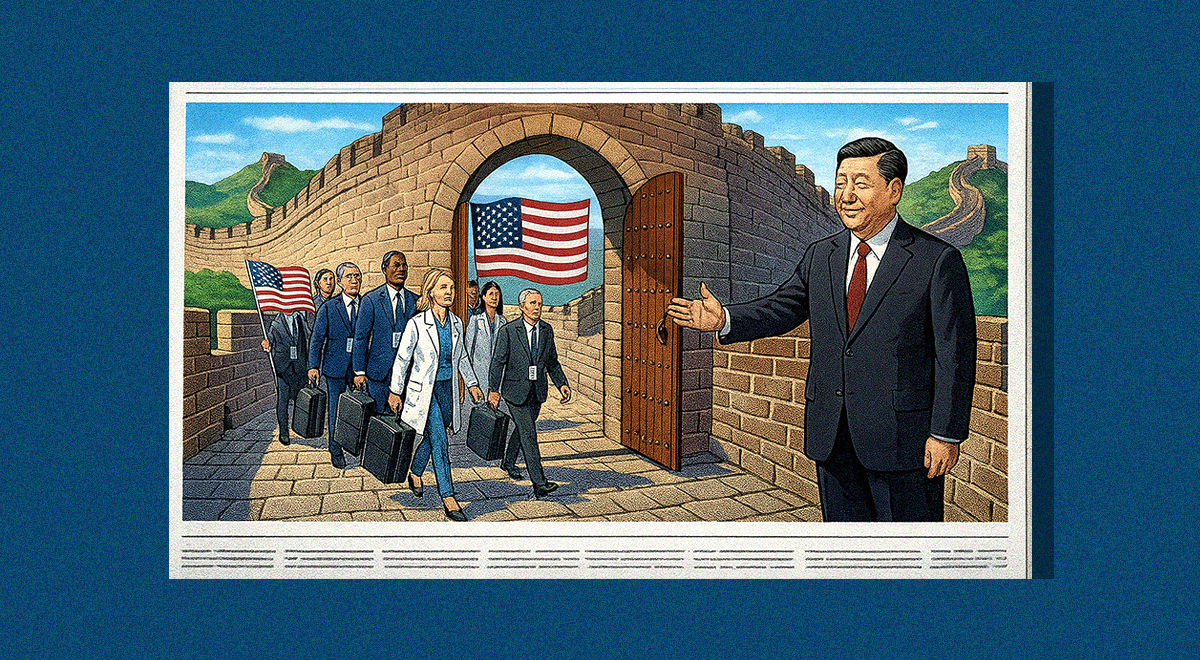
China’s K-visa offers greater flexibility than the US’s H-1 B visa. With countries already looking for ways to attract US-lost talent to their own markets, China is leading the way. And it’s not only helping its tech giants but also its small and AI businesses, experts say.

 Follow us
China’s K-visa offers greater flexibility than the US’s H-1 B visa. With countries already looking for ways to attract US-lost talent to their own markets, China is leading the way. And it’s not only helping its tech giants but also its small and AI businesses, experts say.
It was September 23rd this year when Donald Trump’s administration released a proposal to rework the H-1B visa selection process so that it would favour higher-skilled and better-paid workers.
For some specialists, this cost them their American dream. But for American companies, it would cost a one-time $100,000 fee for new H-1B petitions if they were to seek to hire talent from abroad.
The combination of higher visa expenses and additional administrative burdens has influenced potential immigrants and businesses in the US to reconsider their plans.
Reuters reports that the Trump administration’s plans have prompted the heads of companies in Silicon Valley to sit down and discuss the possibility of relocating more jobs overseas. That’s controversial, as this move is precisely the outcome the changes in the H-1B visa were meant to prevent.





“If the United States continues to limit access for skilled professionals through higher fees, tighter quotas, and persistent backlogs, we risk losing the very talent we’ve trained at our own universities to countries like China that are opening their doors instead,” says Divij Kishore, Founding Attorney of Flagship Law, who specializes in investment-based and high-stakes immigration law.
According to him, the real test is whether China will be able to create enough jobs to employ the talent that the US is supposedly missing out on.
“But in a world where mobility and innovation are closely linked, even the perception of openness can shift where the next wave of technological breakthroughs occurs,” he explained.
Talent mobility is a key factor in this story. As the US raises the barriers to a foreign workforce, China and other countries, such as Germany and New Zealand, see an opportunity to rethink their own immigration policies regarding the hiring of highly trained specialists, such as scientists or engineers from abroad.
For instance, in September, South Korea introduced the “Top‑Tier Visa” aimed at attracting foreign professionals in high‑tech sectors such as AI, robotics, semiconductors, and aerospace.
For the country, this meant a great opportunity, as, according to South Korea’s own Chamber of Commerce & Industry, the country’s tech giants such as Samsung and LG Electronics, “have been losing tech talent to countries such as the United States.”
“When competing economies offer faster, more transparent, or self-directed options, they’re not stealing talent – they’re absorbing the professionals the US system leaves waiting. The global competition for innovation isn’t only about technology. It’s about which nations make it easiest for talent to build a future. At this moment, America risks falling behind not because of ideology, but because of inertia,” Kishore said.
China takes advantage of the backlash of the H-1B visa and creates its own programme
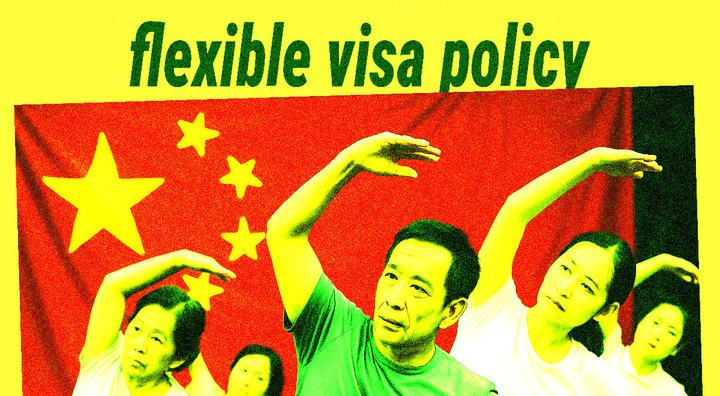
China has introduced a new K-visa to attract science and technology workers, aiming to hire more highly skilled IT professionals and researchers. It’s a part of Beijing's broader strategy to compete with the US for global talent and advanced technology.
According to Ajit B Shah, Managing Director of Global Teams AI, China’s move poses a challenge for high-tech and AI professionals. According to him, these talents will be increasingly expected to integrate across markets worldwide and have a deeper understanding of local cultural context. He calls this trend “ talent augmentation centered around cultural intelligence.”
“AI talent will slowly integrate across markets, thus demanding emerging talent to possess deeper local context, diverse cultural sensibilities, and adaptability,” Shah said.
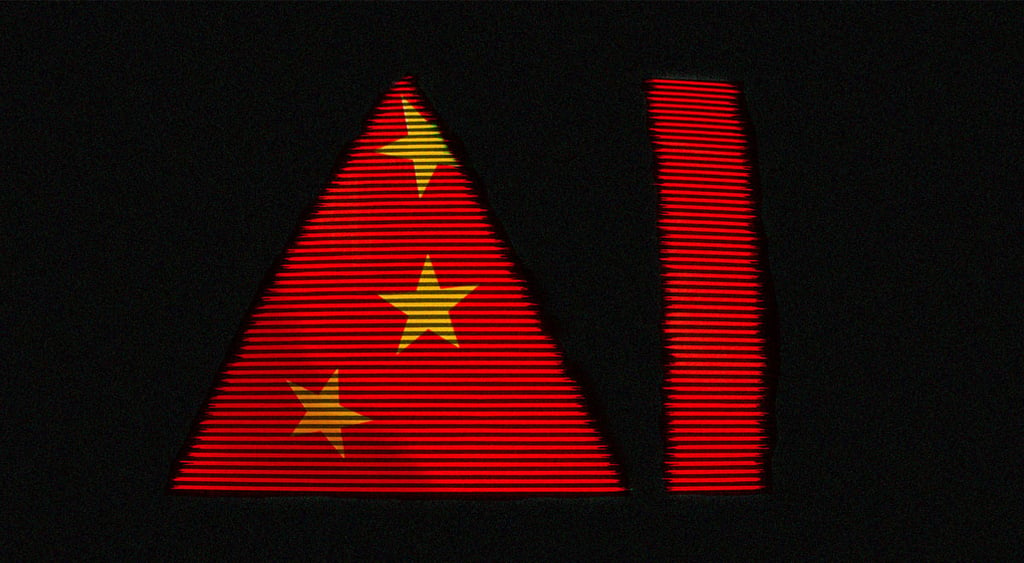
China already has a visa scheme for people who come to work in the country from abroad. The K-visa is designed to complement the previous program by introducing more flexible requirements than the American H-1B visa.
One of the things that makes it more attractive is that applicants are not obliged to secure a job offer before applying, unlike in the USA under the H-1B visa.
According to Shah, the visa flexibility that the Chinese visa offers might benefit smaller companies by giving them access to top-tier AI and technical talent. He calls it the “democratization of high-value skills.”
“Small and mid-sized companies will suddenly access top-tier AI and related talent at more competitive and economical rates,” Shah said.






Unlock more exclusive Cybernews content on YouTube.