Deutsche Telekom partners with Musk’s Starlink to close connectivity gaps across Europe
One of the world’s leading digital telecommunications companies is partnering with Elon Musk’s Starlink to close coverage gaps in Europe.
Image by Getty/NurPhoto

 Follow us
One of the world’s leading digital telecommunications companies is partnering with Elon Musk’s Starlink to close coverage gaps in Europe.
Deutsche Telekom is partnering with Starlink to bring internet to areas in Europe where traditional mobile towers can’t reach.
The telecom company will use Starlink’s satellite-based direct connectivity to bring mobile communications to disconnected areas, such as areas affected by nature conservation or challenging environments.
Starlink’s Mobile Satellite Service (MSS) will power the telecom’s connectivity, enabling future phones to connect directly to its satellites.
This is to ensure constant connectivity. So, when the phone loses cellular signal, it will automatically switch to Starlink’s satellite network.






Customers will then be able to access mobile data, video, voice, and text messaging services as normal.
The launch is planned for 2028, which is when Starlink’s next-generation satellite constellation is scheduled to launch.
Deutsche Telekom believes that this partnership will add an extra layer of safety in adverse conditions, such as power outages or natural disasters.
Deutsche Telekom promises its roughly 273 million mobile customers the “best available connectivity, anytime, anywhere,” with Starlink.
The German telecommunications provider isn’t the first mobile operator to strike a deal with Starlink.

In 2025, Virgin Media struck a deal with Musk’s Starlink, which aimed to provide a new service, O2 Satellite, to customers in the first half of 2026.
Virgin Media was the first in the UK to sign a deal with Musk to improve rural mobile coverage via Starlink.
The “landmark” multi-year partnership with Starlink aims to bring Virgin Media O2’s landmass coverage in the UK to over 95% within a year after launch, the company said in a statement.
While the Deutsche Telekom deal isn’t unique, it does come at a time when Europe is grappling with the consequences of relying on certain providers.
Europe’s reliance on Starlink poses a potential risk but works as a shortcut, Stirling Forbes, the CEO of Forbes-Space, a European space consultancy specializing in satellite communications, space security, and telecom infrastructure, told Cybernews.
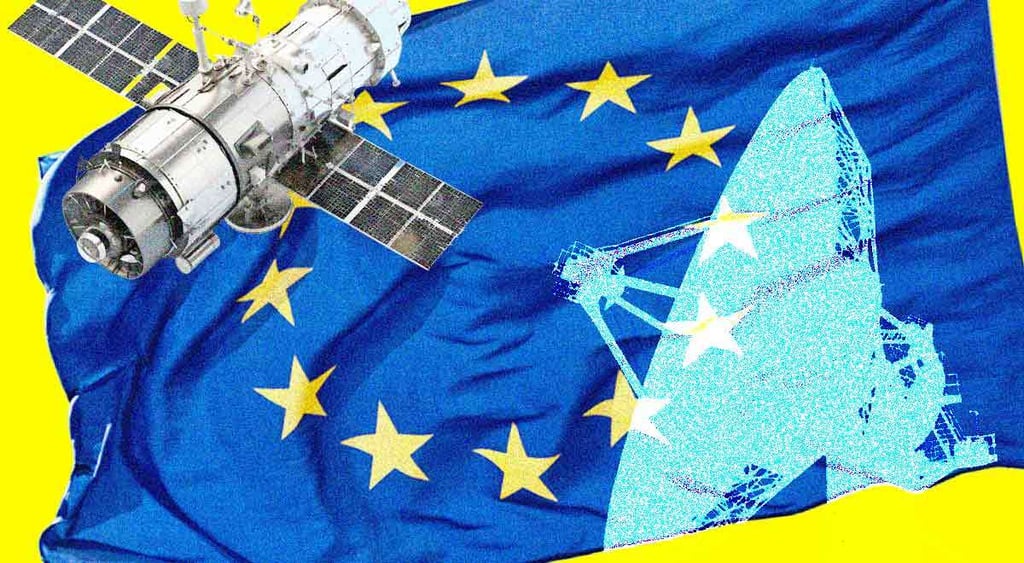
“Starlink is both a strategic vulnerability and a convenient shortcut as European countries did not invest in sovereign space infrastructure over the last decade until the problem materialized.”
Europe desires its own satellite infrastructure but hasn’t yet weaned itself off of Starlink’s services, as Europe’s sovereign satellites take multiple years to deploy and aren’t as effective as Starlink satellites.
The region does have alternatives to Starlink. However, they’re years away from being useful even once deployed, meaning that Europe’s systems won’t be competing with Starlink for years, or even at all.
While there has been some controversy surrounding Starlink, namely the Russian military misappropriating the tech to use in the war against Ukraine, many people have been pleased with Musk’s high-speed internet service.

MrBeast praised Musk for Starlink on The Good Guys podcast, citing moments in Antarctica and other remote filming locations that required quality internet connectivity.
Donaldson claimed that while in remote areas, his crew attached Starlink to the top of a car and they got a “perfect signal the entire car ride.”
As well as using it when filming in remote locations, Donaldson said that once Starlink WiFi is more widely used while on planes, he will only book flights with Starlink internet.






Unlock more exclusive Cybernews content on YouTube.