7 brutal terms that perfectly sum up today's bizarre tech world
From “clanker” to “AI slop,” more and more people are using terms to hate on tech. But do we actually know what they mean?

Image by Cybernews

 Follow us
From “clanker” to “AI slop,” more and more people are using terms to hate on tech. But do we actually know what they mean?
Whether it's the random production of images and videos generated using artificial intelligence (AI) or the peddling of tech products that promise innovation but don’t do the job, many words used in the media to describe tech have a specific meaning.
But more often than not, we find ourselves using these words in the context of AI innovation or new tech products, without actually understanding the terminology.
From “canaries in the coal” to “snake oil,” there are multiple words that negatively describe the endless amounts of tech and “innovation” going on these days.
Cybernews has compiled a list of some of our favourite words and phrases to describe the tech world. And none of them are good.






1. AI slop

We’ve all seen a bunch of content on the internet that could be regarded as “AI slop.”
One TikTok trend that went viral across social media was “Italian brainrot”, which most definitely falls into the category of “AI slop.”
Accompanied by the AI-generated videos of cannibalistic fruit or the famous Australian breakdancer from the Olympics, AI slop has taken over our feeds.
Facebook has been overtaken by AI slop, which is characterized as low-quality media, written or visual, that is generated using artificial intelligence.
AI slop has taken dirty word status after many people have criticized the use of such “revolutionary” technologies for the most asinine reasons.
The term generally refers to content that lacks effort and is created on such a scale that it slops all over the internet.
The next time you hear AI slop, just know that whatever you’re watching isn’t real and was created with little to no effort.
2. Brainrot
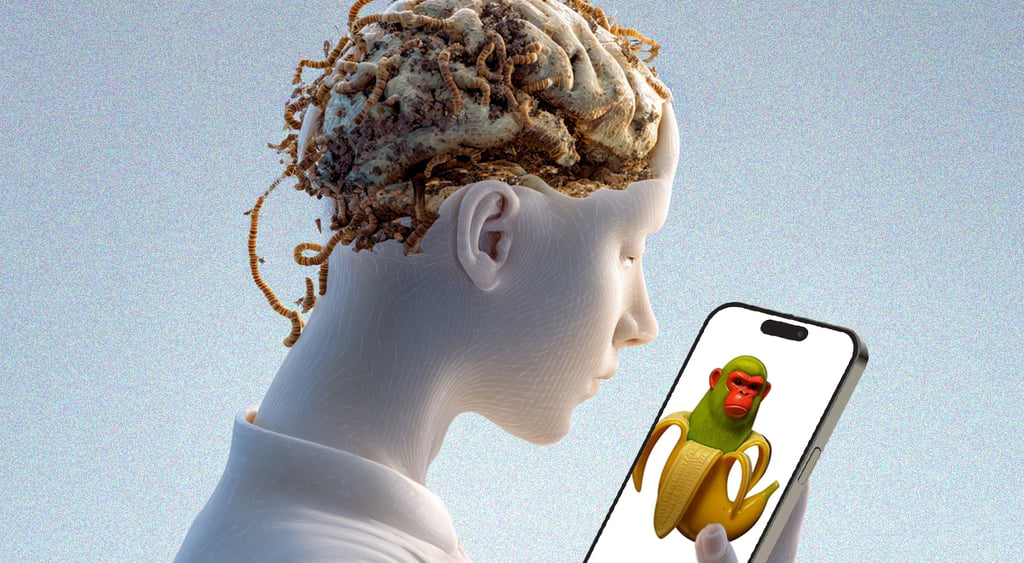
While brainrot isn’t necessarily a direct criticism of online media or technology, it's an aftereffect of pejorative terms like AI slop.
Brainrot, made popular by German Brainrot and Italian Brainrot, is the effect that low-quality media has on our brains.
The term has been described as “the supposed deterioration of a person’s mental or intellectual state, especially viewed as the result of overconsumption of material (now particularly online content) considered to be trivial or unchallenging.”
AI slop and brainrot go hand in hand as platforms like TikTok glorify this content and encourage endless scrolling, which is slowly killing critical thinking.
3. Snake oil

This term has been around forever; it’s nothing new. But it recently got a resurgence when AI came into the picture.
Snake oil is usually characterized as a deceptive product that has been marketed to do amazing things but ends up being run of the mill, baseless purchase.
It’s usually used to describe pharmaceutical or health products such as supplements that claim to improve brain function and a host of other benefits that aren't backed by science.
The original use of snake oil derived from people claiming that Chinese water snakes had anti-inflammatory properties due to the naturally occurring omega-3 fatty acids.
However, the "snake oil" sold in America wouldn't come from snakes but mineral oil, beef fat, and other ingredients.
When Sam Altman, the CEO of OpenAI, said that artificial general intelligence (AGI) will “solve all of physics” and will “elevate humanity,” many people lost faith in his vision.
This is because it sounded too good to be true, and considering AI and AGI are complete black boxes, it’s difficult to back these claims.
Princeton University professor Arvind Narayanan even co-authored the book “AI Snake Oil: What Artificial Intelligence Can Do, What It Can’t, and How to Tell the Difference,” which demonstrates how some AI tools used in everyday life don’t work.
Instead of AI underachieving, it just doesn’t work as well as its creators claim. Hence, snake oil.
4. Enshittification

Canadian-British blogger and journalist Cory Doctorow made history by creating a term that would encompass most of what we see on the internet today.
In 2022, Doctorow created the term “enshittification,” which sums up the basic disappointment in digital services.
This could range from a poor selection of media on Netflix to the proliferation of AI slop on platforms like Facebook and Instagram.
There are three stages to enshittification. First, platforms accommodate their users, then they abuse them, until finally they abuse their business clients to gain profit. “Then, they die,” says Doctorow.
The term gained so much notoriety that the American Dialect Society named it its Word of the Year, and this year, it won the laurels from Australia’s oldest dictionary of Australian English, the Macquarie Dictionary.
5. Staocastic parrot
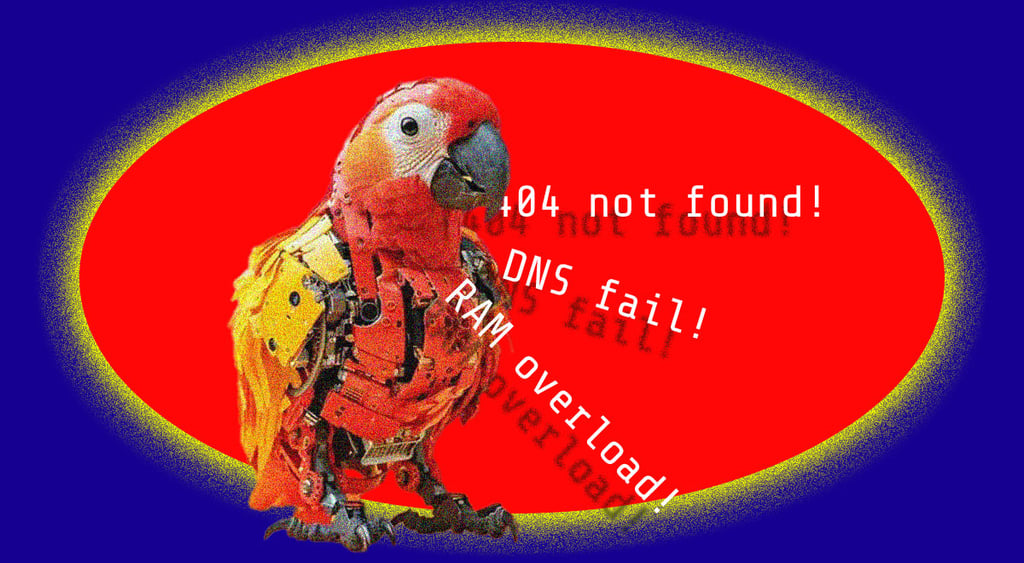
As the term suggests, a Staocastic parrot is something that randomly blurts out information repeatedly without having contextual or semantic knowledge.
Does that sound familiar in modern technology? Large language models (LLMs) that don’t have contextual awareness or semantic knowledge tend to just spit out information at random based on statistical probability.
Staocastic parrots in the context of LLMs are AI systems that draw from their massive amounts of data to produce human-like texts based only on patterns and statistics.
Instead of actually understanding the text and data it's trained on, LLMs just repeat phrases or words that seem probable based on the prompt provided.
This can make LLMs particularly dangerous as they can perpetuate various biases and present them as fact, which people then regurgitate, continuing the cycle of AI idiocy.
6. Clanker
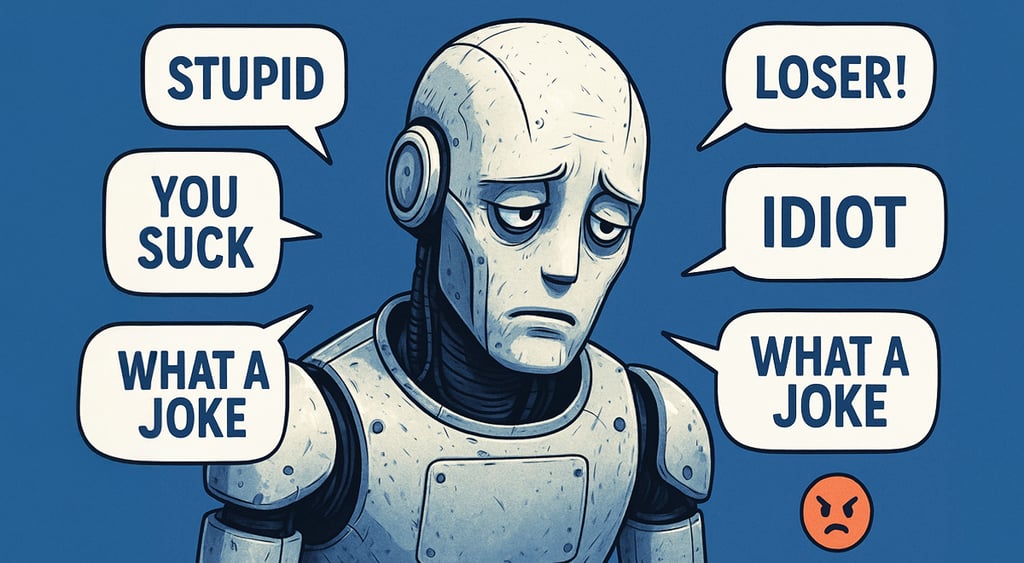
Popularized by the hit franchise Star Wars, the term “clanker” is increasingly being used to describe AI and robots.
Following the overwhelming success of chatbots like OpenAI and autonomous robots, people have begun revolting against this tech by using the term “clanker.”
In one viral video, found by The New York Times, a man is seen throwing insults at a robot he saw on the street. The man says, “Get this dirty clanker out of here.”
The 2000s hit TV series, Star Wars, is where Gen Z and Gen Alpha are getting the word from, according to The New York Times.
Characters in the TV series use clanker to describe android soldiers, and according to Wookipeedia, it’s a derogatory term used because the droids made noisy “clanking” sounds as they walked.
The word conjures up images of a useless piece of tech that is clunky and doesn’t really work. That’s why it’s being used as a negative term to describe AI and robots.
By calling AI or a piece of technology a clanker, you’re essentially saying that it doesn’t operate the way it should and is therefore useless.
7. Canaries in the coal mine
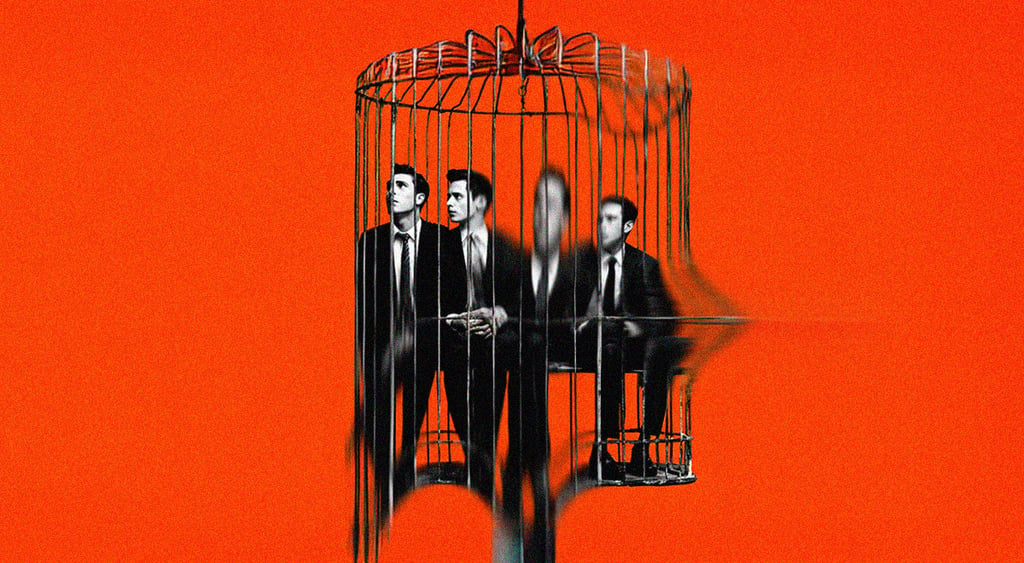
While this isn’t a modern saying, as it dates back to the coal mining days of old, it’s since had a resurgence when it comes to the impact of AI on the job market.
Canaries in the coal mine relate to the phenomenon of coal miners taking canaries down the mines to see if there are any noxious or fatal gases. The canaries would die, which would signal to the workers that it wasn’t safe to enter.
Similarly, people use this metaphor to discuss AI’s impact on the job market. Young people are taking the hit regarding AI adoption and seem to become the canaries in this context.
The Economic Times, when reviewing the Stanford University paper “Canaries in the Coal Mine? Early-Career Job Losses and AI Exposure,” said that young people are suffering due to AI adoption in the workplace, which presents a structural shift for other workers in the years to come.
By taking these young people down to the “mines” to essentially be slaughtered, it only reveals the dangers of the working environment, which may have a negative impact on senior members later on.