What Europe's heatwave debate really tells us about technology, climate, and the infrastructure we built for yesterday
Keeping data centers cool seems to be the priority for some.

Tourists and residents in Rome are braving the heat. Claudia Chieppa/Anadolu/Getty.

 Follow us
- Europe's heatwave exposes a collision between AI's surging power demands and aging infrastructure built for a colder climate, as both data centers and homes compete for scarce electricity.
- By 2030, AI is expected to consume 40% of global data center power, coinciding with peak summer cooling demand and stressing grids during their least flexible moments.
- European buildings face structural barriers to air conditioning – thick masonry, heritage regulations, and high electricity costs – while data centers receive billions in investment for advanced cooling systems.
- Heat pumps, liquid-cooled servers, AI-optimized energy management, and waste heat reuse are emerging as solutions that balance cooling needs with climate goals.
Key Takeaways by nexos.ai, reviewed by Cybernews staff.
Another week, another summer heatwave, and Americans are asking why Europeans still refuse to install air conditioning despite experiencing record temperatures. But it's a little more complicated than that.
In the UK, there’s a shortage of all types of air conditioners. Fans, evaporative coolers, and all types of air conditioners have been sold out for months. In France, several people got into physical fights as they rushed to buy the few remaining air-conditioning units. Many others are expressing concern that "air conditioning" can offer temporary relief from heat but also contribute to further warming of the planet.
Why America sees air conditioning as essential infrastructure






Across Europe, temperatures have increased faster than anywhere else. What was historically an unusual heatwave is now occurring with increasing frequency. In contrast, air conditioning has been standard in every American home for many years, and for good reason.
In Texas, Arizona, and Florida, cooling is not a luxury but a critical piece of infrastructure that protects vulnerable people. Aircon reduces heat-related illness, keeps businesses operating, and allows daily life to continue during months of high temperatures.
With that in mind, it's easy to see why Americans are scratching their heads in disbelief when they read that Europe lost 200,000 people to heat in 4 years, even though there’s a simple solution. Air conditioning is credited with reducing heat-related deaths by 75%, particularly among the elderly and those with existing health conditions.

From their perspective, Europe appears to be refusing a proven technology that saves lives. But many Europeans see the situation very differently.
Europe was built for a different climate
The difficulty with European houses is that they were developed over time for a different climate than the one we experience today. Houses were developed to provide insulation against cold weather through thick masonry walls, insulated roofing, and traditional construction methods.
These construction techniques may be suitable for extreme cold weather but not for prolonged periods of high temperatures.
Many millions of apartment dwellers also live in buildings of historical significance, which prevent the installation of exterior-mounted air conditioning equipment.

Unlike most of America's newer suburban areas, many older European cities have centuries-old buildings, narrower streets, and architectural heritage regulations. These factors make it both technologically complex and very costly to retrofit their existing housing stock with cooling systems. As a result, they are highly restricted under local land-use regulations.
Additionally, there’s an economic aspect. Much of Europe has significantly higher electricity costs than the US. The cost of running air conditioning through the entire home for weeks at a time during heat waves is something many households can't afford. Many would need to obtain landlord approval, a permit from city planning (if applicable), and/or complete extensive renovations before their new AC system uses any electricity.
There is also a public policy issue. Many Europeans see installing large amounts of air conditioning as an example of the "boomerang" effect. They argue that using air conditioning to address today's uncomfortable conditions will create future conditions with increased greenhouse gas emissions and will fail to address the root cause.
When cooling becomes public policy
Europe is not refusing air conditioning because people enjoy suffering through heatwaves. Nor are Americans reckless simply because cooling is common across much of the country. Both regions developed infrastructure suited to the climates they historically experienced.

The difficulty is that history is becoming a poor guide for future planning. Across Europe, portable air conditioners have sold out during recent heatwaves. Installation companies report months-long waiting lists.
Demand for air conditioning has increased in Europe, as extreme summer temperatures are no longer isolated events. At the same time, there is continued government interest in reducing greenhouse gas emissions through the broader development and adoption of renewable energy systems and improved building energy efficiency.
Where does this leave us? Whether we will be able to create the necessary resilient infrastructure to support both a warming climate and our rapidly expanding digital economies remains to be seen.
AI is turning cooling into a technology challenge
AI everywhere has increased the demand for computing power. Every large language model, AI assistant, image generator, and enterprise AI platform ultimately depends on data centers packed with increasingly powerful processors. Those processors generate enormous amounts of heat, and keeping them cool has become one of the industry's biggest engineering priorities.
Unlike traditional enterprise computing, AI workloads run continuously at very high densities. The latest graphics processing units consume significantly more electricity than previous generations while producing substantially more heat.
Some estimates indicate that by 2030, AI will account for 40% of the world's total data center power consumption, posing a timing problem because it coincides with an expected spike in electricity use due to the rising cost of cooling homes and businesses during summer heatwaves.
Increased electricity demand from homes, offices, and other public buildings turning their air conditioning units "on," along with high temperatures, is expected to reduce efficiency in both power generation and transmission.



Stay updated with our latest stories and follow us on social media
Be the first to discover new stories, ideas, and updates from our team.
In other words, the moment society needs the most electricity is increasingly the moment the grid has the least flexibility. Adding AI into that equation introduces another layer of complexity. Across Europe, governments are investing heavily in all things AI as part of broader economic growth strategies and pissing contests with other nations.
New hyperscale data centers continue to appear around Frankfurt, London, Madrid, and other digital hubs. Those facilities represent billions of dollars in investment and form part of Europe's ambition to strengthen digital sovereignty while reducing dependence on US infrastructure. But they are also becoming some of the largest consumers of grid electricity.
The irony is impossible to ignore. At the same time that policymakers encourage households to reduce their energy consumption, they are also encouraging investment in facilities that require enormous amounts of power and sophisticated cooling systems to operate efficiently. But this doesn’t mean that AI is the problem.
The increasing role of digital infrastructure in energy policy, climate adaptation, and public infrastructure development is evident, as heat waves have revealed vulnerabilities that extend far beyond power for cooling systems.

Heat waves are also causing increased stress on cooling system equipment. In addition, the importance of access to reliable water supplies will increase because most facilities use water-assisted cooling technology. Then there are potential grid instability issues that increase the likelihood of local service disruptions.
Finally, insurance underwriters are beginning to evaluate the potential impacts of climate-related events (in terms of cost) in relation to their decision-making process regarding new data center projects.
Technology is becoming part of the solution
Although naturally cooler temperatures will continue to keep cooling costs down for investors in Northern Europe's Nordic countries, these same naturally cool climates will also provide ample opportunities for continued investments into renewable electrical power.
On the other hand, those operating in warmer climate zones have been focusing their efforts on liquid-cooled servers (which eliminate many of the issues associated with traditional liquid-cooled systems), closed-loop cooling systems, and AI-based energy management systems to reduce electrical energy usage. Ironically, AI could be one of the solutions to address some of the challenges it creates.

Check if your data was exposed
Find out if your email and related personal information have appeared in known data breaches.
In addition to optimizing computer workloads within data center cooling systems, machine learning algorithms are also being used to continuously monitor temperature levels, airflow rates, and power consumption.
Machine learning algorithms enable the system to intelligently control cooling equipment so that, instead of continuously operating at full capacity throughout each working day, it can operate at varying capacities based on predicted thermal load, distribution of computing resources, and unnecessary energy consumption.
The same technologies are now starting to appear outside of data centers. Smart building technology enables buildings to automatically lower shades/blinds, adjust ventilation, manage battery storage, and coordinate heating/cooling systems based on occupancy, weather forecasts, and electricity pricing. Technology is creating new demands on existing infrastructure, but it’s also providing many of the tools necessary to mitigate them.
Why Europe's heatwave is really an infrastructure story
We shouldn't frame this conversation as simply adding tens of millions of traditional AC units or banning their installation for environmental reasons. We need to think about what modern cooling looks like – cleaner, more efficient, and better connected to overall energy systems.
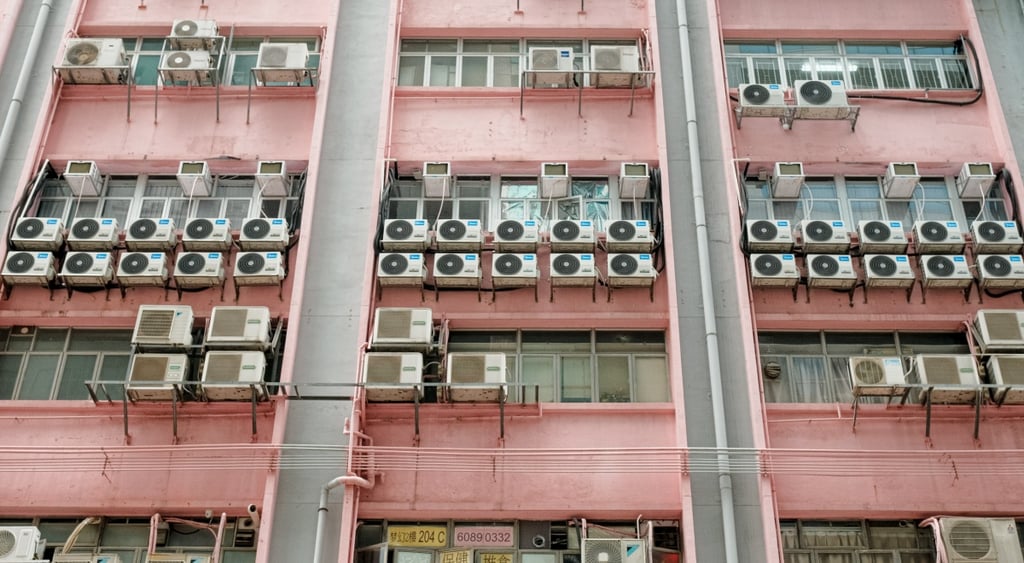
One example is heat pump technology. Heat pumps have become increasingly popular throughout Europe, providing heating during the cold months and cooling during the hot months, while using significantly less electricity than traditional cooling systems. Meanwhile, new generations of refrigerant technology will have lower environmental impacts than older generations, while renewable power continues to grow in many European grid systems.
The good news is that architects are beginning to reimagine how buildings are actually designed. The use of exterior shading, enhanced natural ventilation due to improved building design, incorporation of reflective elements in building envelope components, green roof construction, and enhanced building insulation are all strategies that will reduce interior temperatures before mechanical cooling is required.
There have been several examples across Europe where waste heat produced by data center operations has been used to heat residential areas immediately surrounding those facilities – these illustrate how infrastructure (in this case, a data center) can accomplish multiple objectives and uses rather than functioning independently.
These examples collectively show that, while the debate regarding air-conditioning has evolved beyond the issue of air-conditioning, there is a larger issue at hand. That's why we need to move away from binary thinking and polarization to collectively solve problems that impact the 8 billion people who share this planet we all call home.