Tech sovereignty could endanger Europe, military officials say
While Europe strives to reduce its technological dependence on the United States, its militaries warn that greater sovereignty may entail security risks.

Image by Cybernews

 Follow us
While Europe strives to reduce its technological dependence on the United States, its militaries warn that greater sovereignty may entail security risks.
European military officials worry that breaking up with American big tech could have consequences for the continent’s security, the Financial Times reports.
European armies rely on US software and networks to run critical systems, including for securing communications, intelligence gathering, and data storage.
For instance, many ships in the navies of Norway, Spain, and other European countries use the Aegis system, designed by Lockheed Martin.












One official told the Financial Times that “tech sovereignty” was neither realistic nor helpful, as most European platforms rely on American back-end services.
Europe has accelerated its efforts to achieve digital sovereignty amid rapidly deteriorating relations with the US under the Donald Trump presidency.
Over 80% of Europe’s digital technologies and infrastructures are imported, which, according to Brussels, creates “systemic vulnerabilities and limits EU-driven innovation.”
The bloc is flaunting the idea of EuroStack, which refers to building its own independent digital infrastructure, although it remains mostly theoretical. Nevertheless, the Union has already taken some steps, bringing it closer to sovereignty.
Curious what others think about this story? Contribute your thoughts to the debate below.
The European Commission has recently announced the launch of its own alternative to Starlink, Elon Musk’s satellite internet constellation.
The new “secure” and “encrypted” satellite communication system is now available for militaries and governments across all member states, according to the bloc's commissioner for defence and space, Andrius Kubilius.
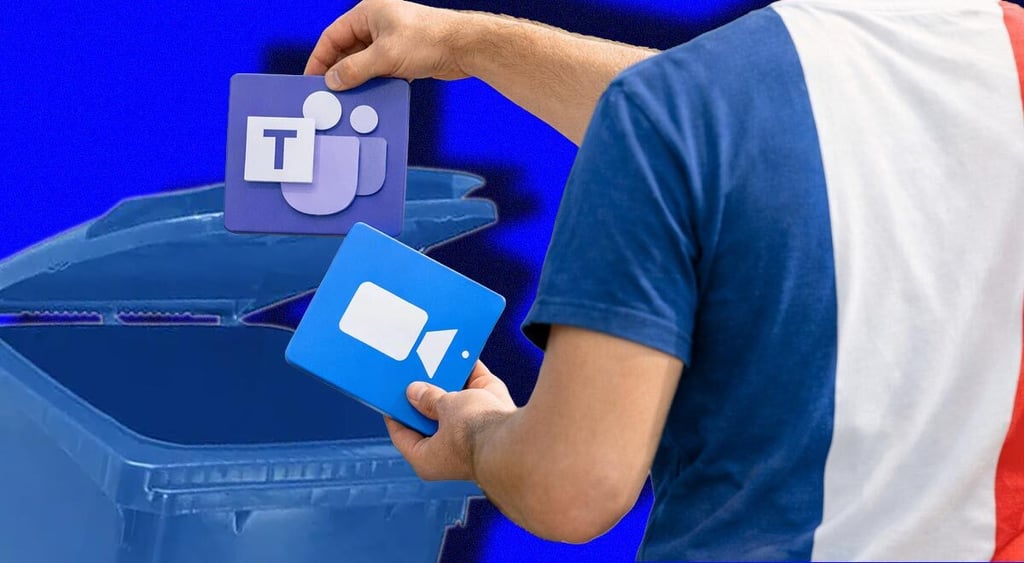
Some individual European countries and businesses are also moving in this direction. For instance, France’s civil servants have recently ditched video conferencing tools Microsoft Teams and Zoom in favor of its own platform, Visio.
Denmark’s Ministry of Digital Affairs announced it will switch from Microsoft to LibreOffice, while Germany’s state of Schleswig-Holstein is migrating from Microsoft software to free, open-source solutions.
Some European militaries appear not yet ready to entirely cut ties with US technology. The Financial Times notes that the German armed forces last year announced a deal with Google to provide secure cloud services.
However, Europeans don’t need to look far to see how tech dependence on the US can backfire. Starlink became the cornerstone of Ukraine’s military and civilian communications since Russia launched its invasion in 2022.
Understanding how vital the technology is for Ukraine’s survival, the US reportedly threatened to cut off access to Starlink if Kyiv doesn’t agree to sign a deal over critical minerals.
Most importantly, Europeans are now rethinking their dependence on American weapons.
The chairman of Denmark’s parliamentary defense committee, Rasmus Jarlov, said in 2025 that he regretted buying American stealth fighter jets, the F-35 Lightning II.
He was addressing rumors that the jets may have a “kill-switch” that allows Washington to remotely disable F-35s, allegations that the Pentagon has denied.
In addition, Spain announced it would abandon its plans to acquire F-35s and choose European alternatives instead, echoing concerns of its neighbor, Portugal.
Unlock more exclusive Cybernews content on YouTube.