Explained: Why underwater drones are making waves in global defense and seabed AI
Underwater drones are proving to be as useful as ever in replacing military submarines and conducting surveillance – a big leap from the traditional usage for ocean research, as more countries open their budgets for purchasing this expensive tech for their militaries. The world already knows Star Wars, but is there a chance that countries are gearing up for a war on the seabed?

 Follow us
Underwater drones are proving to be as useful as ever in replacing military submarines and conducting surveillance – a big leap from the traditional usage for ocean research, as more countries open their budgets for purchasing this expensive tech for their militaries. The world already knows Star Wars, but is there a chance that countries are gearing up for a war on the seabed?
Underwater drones become a core part of modern defense strategies, Ukraine’s experience stands as a stark reminder: the battles of the future may not only be fought in the skies or on the ground, but deep beneath the surface of the sea.
One of the biggest announcements about this came during China’s Victory Day parade - an event dedicated to introducing the country’s military force and attended by leaders from Russia, North Korea, and Iran.
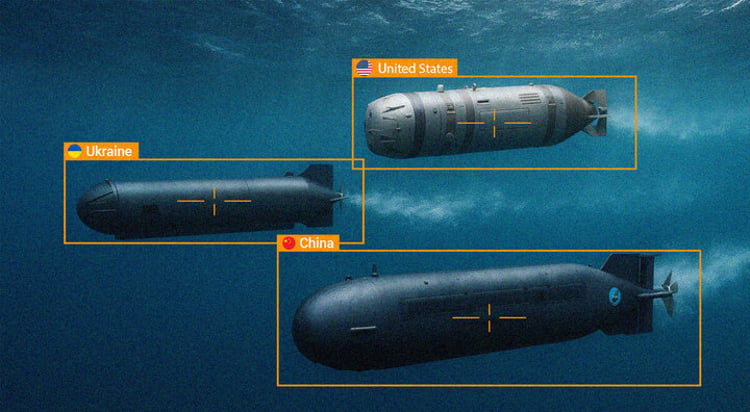
China has revealed massive new underwater drones, called XLUUVs - they’re truck-sized, carry no crew, and are specifically designed to destroy parts of the US’s undersea surveillance network. That includes a system of sensors, cables, and drones used to track submarines.
China’s military believes that if it can disable these networks, it could blindspot the US Navy and attack the country by surprise. In the meantime, the drones could almost freely move around the Pacific, spy, and transport missiles or lay mines.






In 2022, Ukraine became a prime example of the price a country at war has to pay for failing to detect or deter the enemy’s naval movements.
Because the Ukrainian marine fleet was old, Russia’s Black Sea fleet could operate almost freely in the early months of the war. One of the biggest losses to Ukraine came from a naval blockade that strongly limited grain exports from ports such as Odesa. One of Ukraine’s main exports is grains – a significant income to a country’s budget in the midst of a war.
With China parading its readiness for an underwater war, other countires aren’t falling short of the same. Take Australia, which is spending around A$1.7 billion to build a fleet of extra-large autonomous underwater attack drones, called Ghost Sharks. They are designed to perform strike, conduct surveillance, reconnaissance, and intelligence missions for the Royal Australian Navy.
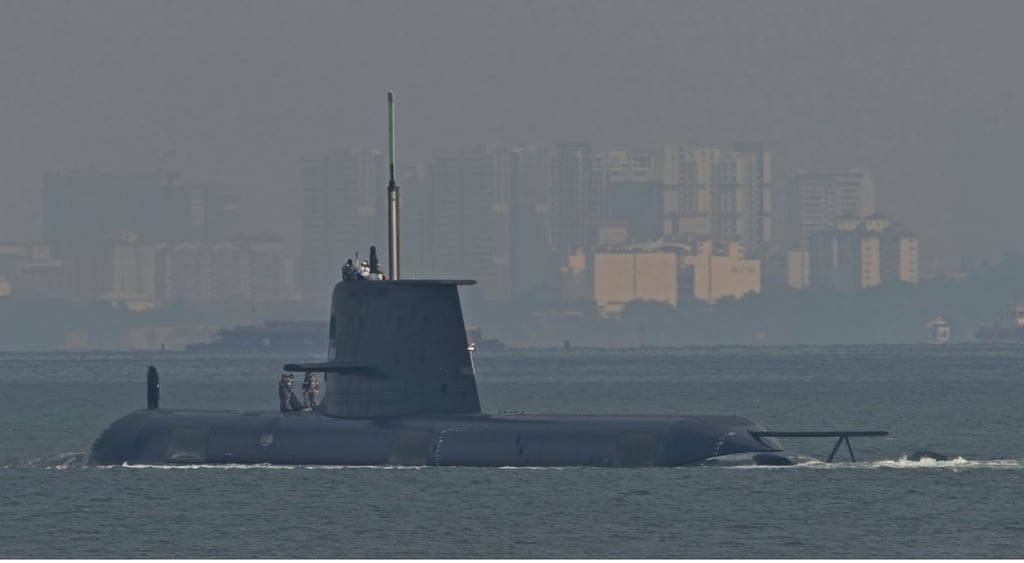
The first of the Ghost Sharks is expected to be delivered around January 2026.
The UK is not far behind either - the Royal Navy has also been purchasing underwater drones, with one of its latest acquisitions being 580 uncrewed underwater vessels, capable of operations at depths of up to approximately 1,000 feet, for mine-hunting and survey tasks.
So why are countries willing to spend so much money on these machines?
Underwater drones can do (at least) 3 things submarines can’t
Underwater drones are not your regular replacement for a good old-fashioned yellow submarine. While submarines have long been the go-to choice for underwater warfare and surveillance, underwater drones are showcasing features that are likely to leave submarines on shore.
1. Firstly, traditional submarines rely on human crews, which limits how deep and how long they can operate.
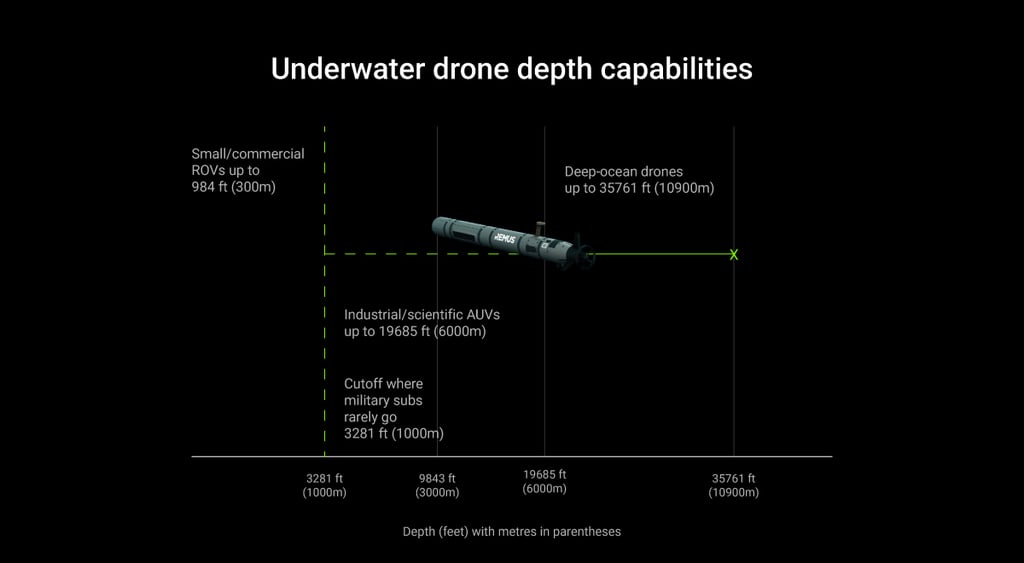
While military and research submarines are typically limited to depths of a few hundred meters to a few kilometers, drones can dive to the deepest parts of the ocean. However, it’s fair to say that in both cases, submarines and drones, the ones that can dive the deepest are research vehicles.
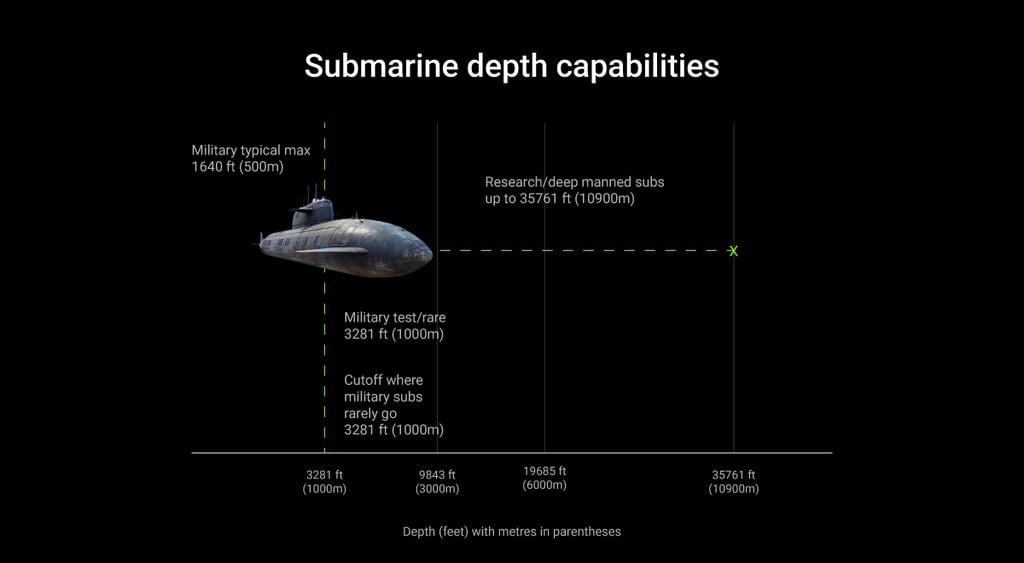
Because underwater drones do not carry a human crew, their design does not need to align with safety or comfort measures for people. This allows engineers to build vehicles capable of withstanding extreme pressures that would be fatal to humans. Human fatalities are an aspect that is also avoided, as no crew means no human error onboard.
The Kursk tragedy is one example to shows how multilevel human error can be.
In August 2000, the Russian nuclear-powered submarine K-141 Kursk had been the pride of the Russian fleet. It sank in the Barents Sea after a dummy torpedo, carried by people from the crew, exploded. The blast caused a domino effect - it ignited nearby warheads that tore through the forward compartments, thus becoming the final sentence for 118 sailors on board.
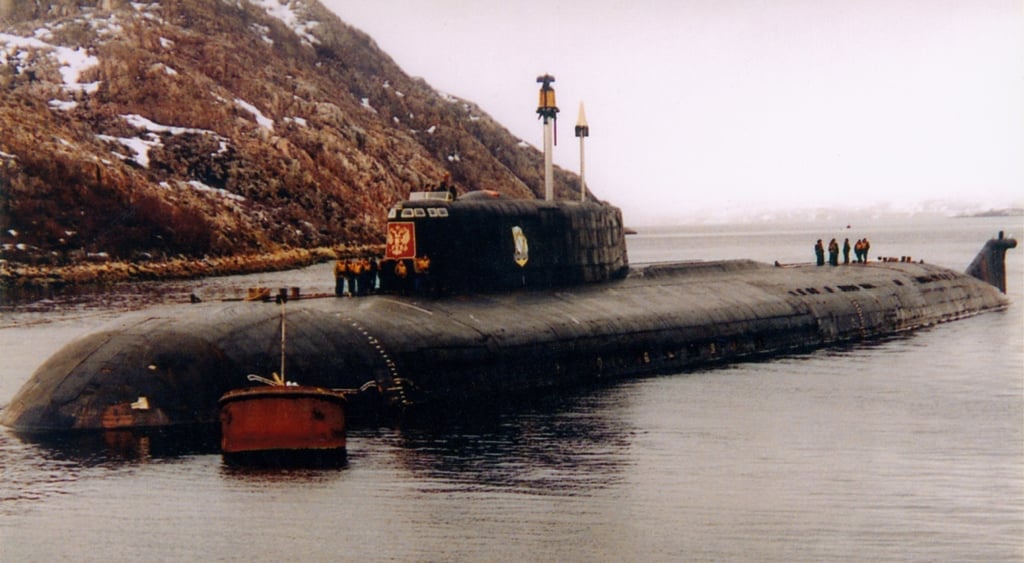
The disaster exposed critical flaws in Russia’s naval maintenance, communication, and rescue readiness. To this day, the history remains unclear whether the crew could have done something to cause the explosion, as the torpedo makers did not take any accountability.
However, other humans failed in communicating the tragedy, as for days it was not, and after it was, both Norway and the UK offered help, but President Putin, not returning from his vacation, accepted the offer just days later.
If you’re a European historic film junky, check out the 1981 German film “Das Boot” (The Boat) - a story that shows the mental toll that life on a submarine can have on a person.
2. Underwater drones are capable of staying underwater for extended periods without the need for oxygen, onboard life support, or crew rotation.
Crew rotation is a weak spot in submarines, as crews have to be replaces which means the submarine has to go back to the surface. For long, this issue has been solved with a submarine lifestyle called hot-bunking (or hot racking).
Submarines, especially military ones, are extremely cramped. The space is so limited that there aren’t enough beds (bunks) for every crew member. Therefore, the crew is divided into shifts, typically three – while one is working, another is resting, and the third might be on standby or performing maintenance tasks.
Unlike submarines, underwater drones with no crew can dive to extreme depths that would be unsafe or impossible for humans. They can also operate in hazardous or narrow environments, such as shipwrecks, deep-sea trenches – think nature documentaries where a tiny robot swims through maze-like corals, or Nereus – a robot that collected data about the Titanic by swimming around the ship’s ruins.
“I would say the ones that are like a UUV that are just like a torpedo-shaped vehicle, almost always, it's just information gathering, mapping, surveillance search missions... they're really just using all the sensors that they have on board. So usually those vehicles will be equipped with cameras with sonar, and they use those sensors to scan the sea floor, to do chemical sampling, monitor the health of the environment,” says Englot.
However, surveillance is also about security and military surveillance. These devices, once created to research the underwater world, are now of dual use.
The same drones that map coral reefs or inspect offshore pipelines can be refitted for military reconnaissance, mine detection, or anti-submarine operations.
“There’s always been a strong defense component to underwater robotics. A lot of the early funding for AUVs came from the Navy... they want systems that can perform long-duration missions, gather intelligence, detect mines – things that keep humans out of harm’s way,” Englot says.
3. Underwater drones are disposable assets.
Militaries can deploy them for surveillance or mine-hunting without risking human lives or billion-dollar vessels. Because they’re smaller and cheaper than submarines, fleets of drones can be used for swarming tactics, just like in the air.
Then, underwater drones can saturate an area with sensors to map or monitor large stretches of ocean in ways a single submarine never could.
However, it’s important to note that underwater drones are not just cannon fodders. Their true potential is within the intelligence systems. As AI begins to take control of navigation, mapping, and decision-making underwater, these drones are starting to think for themselves. But how does AI actually work in one of the most challenging environments on Earth – the bottom of the ocean?
When AI dives deep: how underwater drones learn to “see”
AI is rapidly transforming the way underwater drones perceive and react to their surroundings, and Professor Englot “uses artificial intelligence to improve the situational awareness of mobile robots operating in degraded conditions.”
In practice, this means teaching machines to navigate without relying on GPS and to make autonomous decisions in a world where visibility is often measured in meters and communication signals degrade almost instantly.
“You don’t have GPS, you can’t rely on radio communication, and you can’t really use light or cameras effectively because the water gets murky. So, we have to rely on sonar and acoustics, and that data is really noisy and hard for algorithms to interpret,” he explains.
Instead of light or radio, underwater drones depend on acoustic sensors and sonar technologies that allow them to “see” using sound waves. Think whale songs.
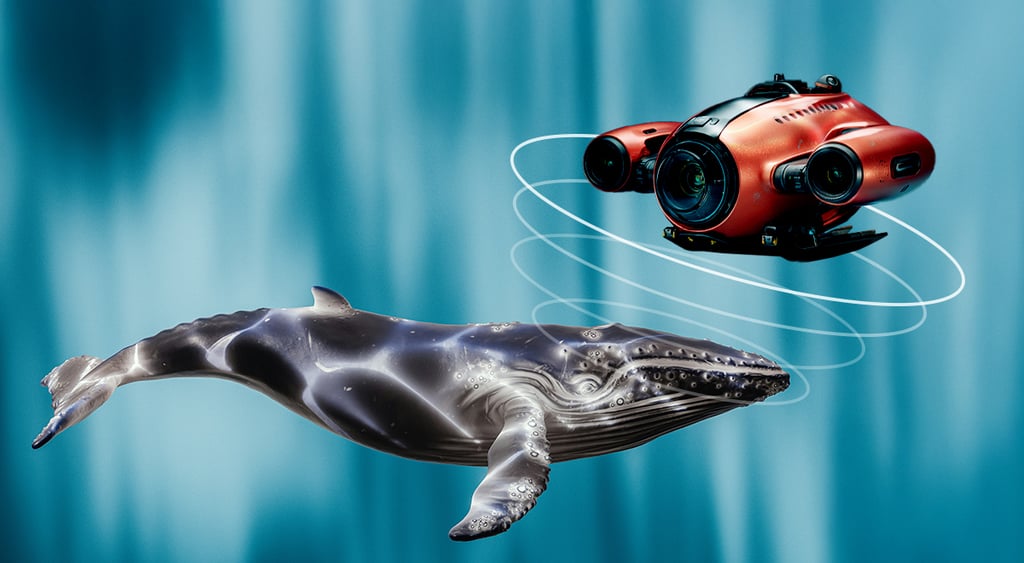
AI models process these complex sonar images to detect objects, avoid obstacles, and even recognize patterns like coral reefs, pipelines, or ship hulls. Over time, these algorithms become better at interpreting noisy, low-quality data, allowing drones to operate safely even in murky waters or during military missions where stealth is critical.
“What we’re trying to do,” he said, “is make these systems intelligent enough to keep performing their mission even if some of their sensors start to fail or the data starts drifting. You can’t just stop and call for help when you’re 3,000 meters underwater,” Englot clarifies.
According to him, the goal here is to create fully autonomous vehicles capable of continuing operations independently even when human operators lose contact.
“The ideal scenario is that these vehicles can adapt on the fly — if something goes wrong, if they encounter something unexpected, they know how to react without waiting for a command,” he explained.






As these systems evolve, AI may also allow underwater drones to cooperate, sharing data, coordinating formations, and responding collectively to threats or environmental changes. Englot hinted that this kind of collaboration could one day extend to defense operations as well:
“You can imagine fleets of underwater robots communicating acoustically, dividing tasks among themselves – that’s where autonomy gets really powerful. Whether for environmental monitoring or defense, that kind of coordination could change how we operate underwater.”
Unlock more exclusive Cybernews content on YouTube.