Flipper Zero makers launch Linux AI device for network analysis and security tools
The team behind the infamous Flipper Zero has unveiled a far more ambitious successor, pitching it as an open, pocket-sized Linux computer built for networking, hardware tinkering, and local AI tasks.
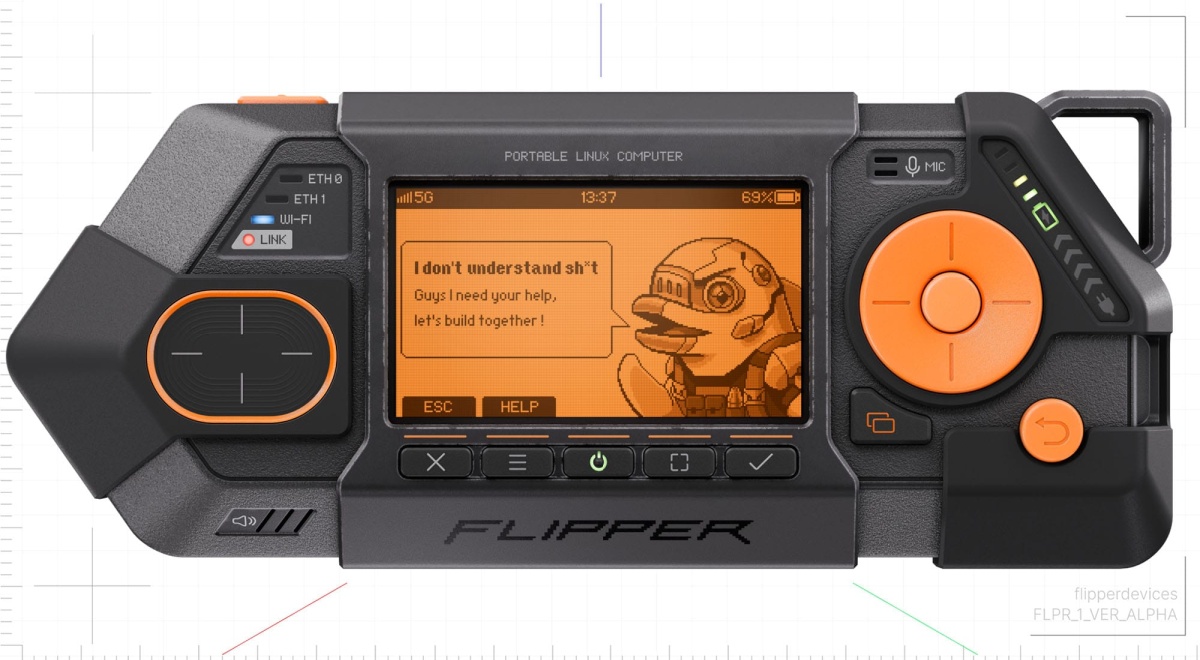
Flipper One device. Image by Flipper devices.

 Follow us
The team behind the infamous Flipper Zero has unveiled a far more ambitious successor, pitching it as an open, pocket-sized Linux computer built for networking, hardware tinkering, and local AI tasks.
- Flipper Zero makers unveiled Flipper One, a pocket-sized Linux computer that shifts focus from radio-signal replication to network analysis, hardware tinkering, and local AI processing.
- The device features an eight-core ARM processor, Mali-G52 graphics engine, dedicated AI processor with 6 TOPS performance, and 8GB of RAM. That's enough to run AI models locally without cloud servers.
- Unlike Flipper Zero, which was banned in Canada over vehicle theft concerns, Flipper One targets cybersecurity professionals with networking tools and modular expansion slots.
Key Takeaways by nexos.ai, reviewed by Cybernews staff.
The original Flipper Zero excelled at nearby physical interactions, such as replaying signals from older garage remotes or reading or emulating poorly secured building access badges. Its broad capability to quickly replicate wireless entry signals made it a target for lawmakers, leading to Canada officially banning the Flipper Zero over concerns about vehicle theft.
Even though critics debated whether Flipper Zero was truly a pocket-sized cyber-weapon or just a hobbyist tool, the new Flipper One shifts its primary focus from simple radio-signal tinkering to modern, high-speed IP networks and hardware modularity.
The Flipper One is not just a more powerful Flipper Zero. Unlike the toy-like design of the earlier device, the new model pitches itself as a miniature cyberdeck. It packs an eight-core ARM processor, a Mali-G52 graphics engine, a dedicated AI processor (NPU) boasting 6 TOPS of performance, and 8GB of RAM.












This gives it enough computing power to run AI models directly on the hardware itself. On top of that, the device offers multiple networking options and modular expansion slots.
The company says it wants the device to handle jobs ranging from portable networking and traffic monitoring to hardware experimentation and field diagnostics. It also plans to keep the project highly open, publishing design documents, development files, and firmware information online for contributors.
From hacker toy to portable AI machine
That openness may attract developers, but it will also revive the debate that surrounded the original Flipper Zero. In fact, the company appears ready to lean further into the cybersecurity and AI crowd rather than distance itself from that reputation.
The inclusion of local AI processing marks a major shift. For the average tech user, AI usually means sending data across the internet to remote cloud servers. The Flipper One breaks this dependency to some extent by running smaller AI models locally on the device.

Check if your data was exposed
Find out if your email and related personal information have appeared in known data breaches.
In the hands of a security researcher, this localized intelligence acts as a capability multiplier. The device could potentially help analyze captured network data or could allow researchers to run lightweight AI-assisted analysis locally.
While the original Flipper Zero focused largely on radio signals and wireless tricks, the new hardware positions itself closer to a tiny portable computer that can analyze data, automate tasks, and potentially even run AI-assisted security tools directly from a pocket-sized device.
That combination of open hardware, portable networking tools, modular wireless functions, and built-in AI capability could make the Flipper One one of the most closely watched hacker gadgets of the year.
FAQ
Does Flipper Zero haveWiFi?
The Flipper Zero does not have built-in Wi-Fi. However, it can be expanded with Wi-Fi capabilities using an official Wi-Fi Dev Board or third-party ESP32 modules that plug into its GPIO pins. Out of the box, it supports sub-GHz radio, NFC/RFID, infrared, Bluetooth Low Energy, and USB.
Is Flipper One legal?
The Flipper One has not been banned anywhere as of May 2026, and there's no indication it's illegal to own. Unlike the Flipper Zero, which was banned in Canada over vehicle theft concerns, the Flipper One is being marketed specifically to cybersecurity professionals for legitimate network analysis and security testing.
However, as with any security tool, using it to conduct unauthorized network intrusions, intercept traffic without permission, or perform illegal hacking activities is a crime regardless of where you live.
When will Flipper One come out?
The Flipper One does not have an official release date yet. The device was announced on May 21, 2026, but the company has stated it's still in development and not yet available for sale or pre-order.
FAQ by nexos.ai, reviewed by Cybernews staff.
Unlock more exclusive Cybernews content on YouTube.