Fed up with misinformation, this Ukrainian is launching European social media without bots
Ievgen Medvediev has a vision for social media that is free of advertising, infinite scrolling, and misinformation-peddling bots.
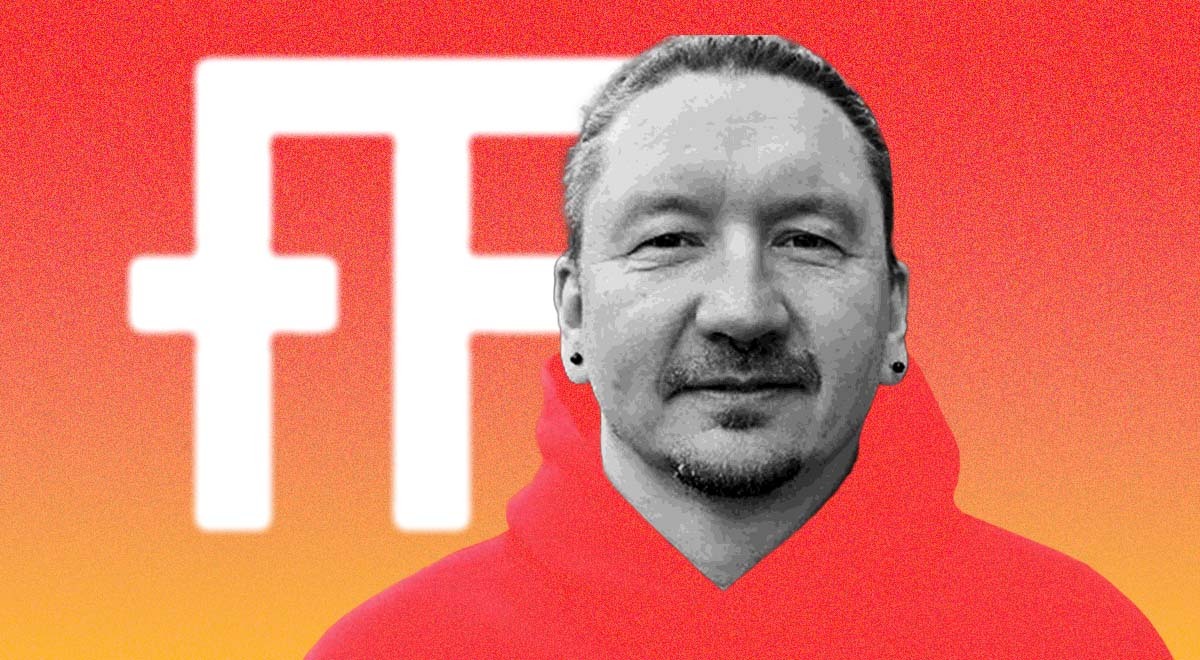
Ievgen Medvediev. Image by Cybernews

 Follow us
Ievgen Medvediev has a vision for social media that is free of advertising, infinite scrolling, and misinformation-peddling bots.
Soon after Ukrainian software developer Ievgen Medvediev moved to the Netherlands, the Revolution of Dignity, also known as Maidan, started in his home country in 2014.
He struggled to know what was true and what was false, as Ukraine was back then ruled by a pro-Russian government.
“I spent three years sitting in cafes trying to get real sources of truth and analyzing everything – it was exhausting,” Medvediev tells Cybernews.












As his fatigue grew, Elon Musk's acquisition of Twitter in 2022 was the last straw. Medvediev deleted his account on the network now called X due to privacy and surveillance concerns, realizing that Europe needs its own social media platform.
That’s why he is launching FolkPost, which he says will treat users as “clients, not products.”
Solution to bots and misinformation?
FolkPost rebels against bots, tracking and surveillance, and algorithmic manipulation, according to the network’s manifesto.
Preventing bots requires identity verification, which will be based on the European Union Digital Identity (EUDI) Wallet, which will start to be rolled out at the end of 2026.
Launched by European institutions, the app will connect to national ID systems and will allow EU citizens and residents to identify themselves with services and store their documents. Medvediev hopes that users will trust the official system.
“We want to use a trusted process. We don’t want to know more than we need – we just need to be able to uniquely identify the person, which will help eliminate bots,” he tells Cybernews.
A 2025 survey of the PolitPro community found that 47% of Europeans agree that social networks should only be allowed to be used with real names and proof of identity.
However, fewer than 10% of LinkedIn users are ID-verified through its third-party provider, Persona. So, it is yet to be seen how many users will be willing to use the EUDI wallet for that.
We want to use a trusted process. We don’t want to know more than we need – we just need to be able to uniquely identify the person, which will help eliminate bots.Ievgen Medvediev
Medvediev says the EUDI wallet will allow the use of aliases, or pseudonyms, meaning users could post without revealing their identity, but couldn't have multiple accounts.
Foreign adversaries and local political forces across the continent use bots to spread misinformation and amplify their messages. For example, botnets were active around the time of the Brexit referendum, usually pushing “Leave” messages.
Research suggests that prices for fake accounts on Telegram and WhatsApp spike in countries approaching national elections, reflecting a surge in demand driven by “influence operations.”
The conversation on this topic is live. Join in the discussion.
TikTok and Meta have reportedly allowed more harmful content, including violence, sexual blackmail, and terrorism, in people’s feeds to win the algorithm arms race, BBC reports. Both companies deny these allegations.
Medvediev says content creators on FolkPost will have a feedback loop from actual people, rather than seeing hundreds of bots manipulating opinions.
“People’s minds are changing because they think they are alone, but it may be just one person multiplying their opinion. That’s why we want to bring the equation of the real world and the cyber world. You have one vote in real life, so we want you to be present uniquely in social media,” he explains.
No ads, no infinite scrolling
FolkPost will be supported by paid subscriptions to keep it free of advertising, tracking, and surveillance. Medvediev says he understands that not everybody is ready to pay for a social media network, but wants to give those who are willing an option.
“We want to treat our users as clients, not products,” he says.
Only 27.8% of users say they are willing to pay for social media to make it more secure, according to a survey. In reality, the share of paying users varies widely across platforms.
Fewer than 1% of X users had Premium subscriptions in 2025, according to TechCrunch analysis. On LinkedIn, nearly one in five (17.5%) of users are premium subscribers.

Content on FolkPost will be ranked by relevance and recency rather than being pushed by addictive algorithms to prevent infinite scroll. Moreover, the content will be paginated.
“You’re aware that you’re on page number three, and you spent so much time here. It means it's time to stop, think, and analyze. FolkPost is for informing people, not hooking them up to advertise something to them,” Medvediev says.
One major challenge waiting for FolkPost is breaking the network effect. After Musk acquired Twitter, users left en masse for Mastodon or Bluesky. However, many came back because they didn’t have established networks on alternative platforms.
Medvediev says the network’s target audience is activists, journalists, and politicians who want to share their opinions publicly. Then, he hopes, other people will follow.
The platform will be launched later this year, sooner than the EUDI wallet will be introduced across EU countries. During the transition period, when robust verification is unavailable, users can use FolkPost for free.
Emerging European alternatives
The new social media network comes to a European market that’s currently dominated by US platforms Instagram, Facebook, X, and TikTok.
As 73% of Europeans think they are too dependent on American tech companies, there are increasing calls and initiatives to increase Europe’s digital sovereignty.
Therefore, FolkPost will face competition not only from US networks, but also from emerging European alternatives like Monnett and W. Medvediev, however, isn’t too worried about local competitors.
He says, “It’s good when people have a choice.”
Unlock more exclusive Cybernews content on YouTube.