European social platform W is coming. Will users leave X for it?
Europe is set to launch its own social media platform, W, which is envisioned as a better alternative to Elon Musk’s X. However, the cases of Bluesky and Mastodon illustrate how hard it is to make users break up with X.

Image by Cybernews.

 Follow us
Europe is set to launch its own social media platform, W, which is envisioned as a better alternative to Elon Musk’s X. However, the cases of Bluesky and Mastodon illustrate how hard it is to make users break up with X.
- Europe is planning to launch its own social media platform, W, marketed to help fight disinformation and serve as a better alternative to X.
- Users may be reluctant to leave X for W, as the migration from the platform to Bluesky and Mastodon had limited success due to the loss of users’ networks.
- Some users may resist verification using a government-issued ID due to concerns about data protection and privacy.
The soon-to-be-launched digital platform, W, will require user identity verification to prevent bots, which have been a driving force of disinformation in Europe.
Anna Zeiter, a Swiss privacy expert and the CEO of W, has introduced the platform by stating that “systemic disinformation is eroding public trust and weakening democratic decision-making.”
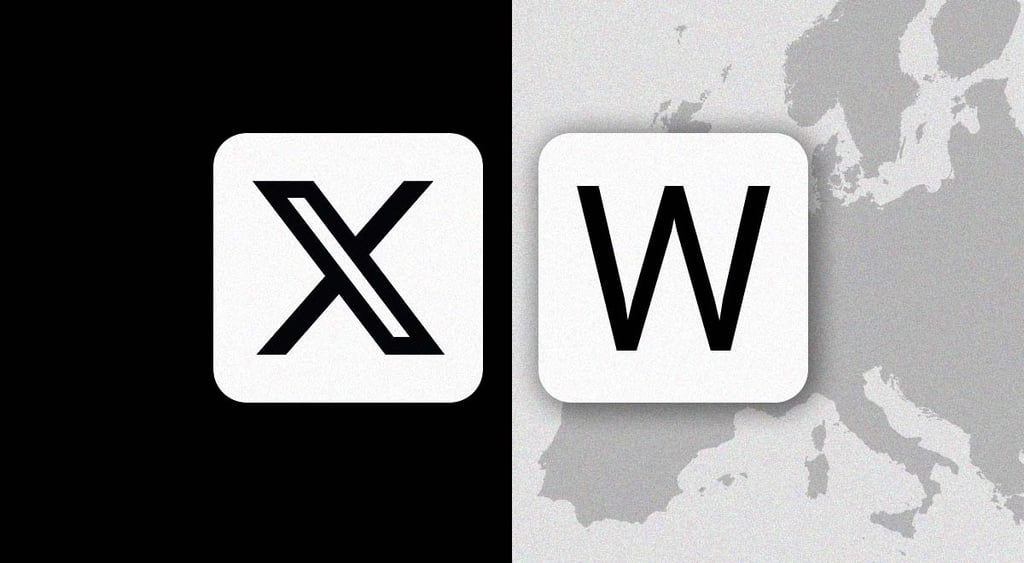
The platform aims to become a better alternative to X. Its name, W, stands for “We,” as well as “Values” and “Verify,” which can be seen as a snub to Musk’s social network.





“The fact that W comes before X in the alphabet is certainly also a welcome coincidence,” Zeiter told Bilanz.ch.






The X user exodus has had limited success
Cory Doctorow, an author who coined the term “enshittification” to describe the decay of online platforms that were initially user-friendly, argues that social media networks are designed to prevent users from leaving due to high switching costs.
The systems of these platforms block “interoperability,” the ability to plug rival services into their networks. In other words, once you leave Facebook or X, you may realize you have no other convenient way to connect with your friends and followers.
Musk’s takeover of then-Twitter, now called X, caused a mass exodus to other social media platforms like Mastodon, with academics among the most enthusiastic quitters.
However, an analysis reveals that after an initial surge of enthusiasm, many academics on Mastodon did not maintain their activity levels, while those who did experienced lower engagement.
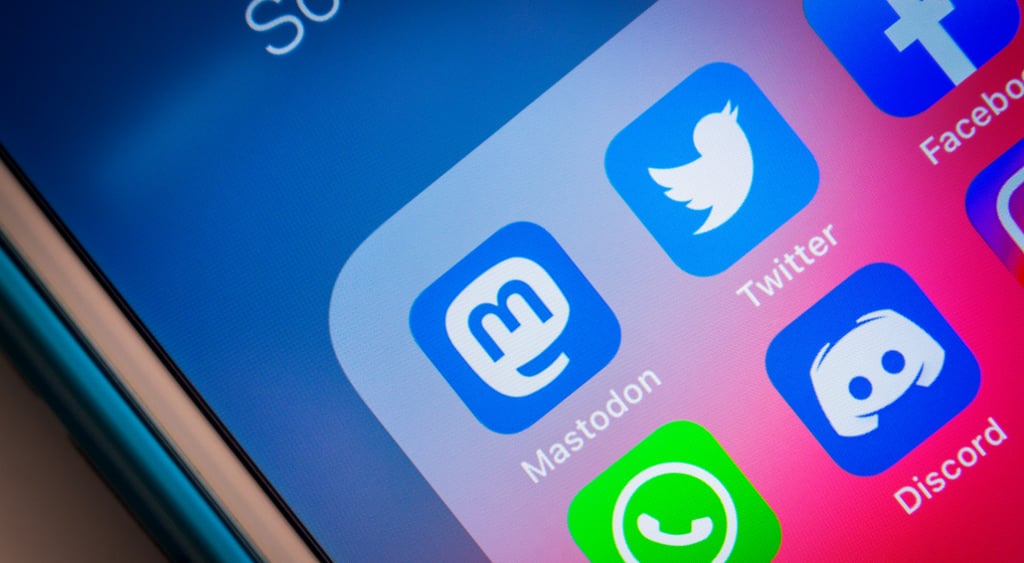
The failed migration was explained by “the level of established history, as well as the strong communities established on Twitter, with some over a decade, proved too significant to overcome.”
Switching costs are high for individuals, but they may be even higher for businesses and organizations with an established followers’ base and years of posting history.
Amid rising tensions between the US and Europe, staying on X may be especially important to Europeans who want to reach different-minded Americans and combat misinformation at its source, despite studies showing it is mostly ineffective.
After all, many European leaders and institutions are still on X, despite Musk’s open hostility towards the bloc and its tech regulations. Nor were thousands of Grok-generated nudes of women and children a sufficient reason for them to quit the platform.
Europeans have been leaving X in droves after it was acquired by Musk, yet it still has up to 102 million active users in the European Union (EU) as of October 2025. This means nearly one in four Europeans uses the platform.
Luxembourg-based Monnet app, introduced in 2025 and often called a European Instagram, is focused on privacy and human-driven content. However, it has yet to gain traction, as it has just over 10,000 active users.
The Bluesky case: users switch networks, not apps
Developments on Musk-owned X have also sparked user migration to Bluesky, which started as a project within Twitter led by then-CEO Jack Dorsey.
The exodus was driven by those who opposed Musk’s views, his alliance with Donald Trump, and changes in content moderation rules. The Bluesky user base grew to 20 million by November 2024 and reached 40 million in 2025, though growth has slowed since then.
Prashant Garg, a PhD student and researcher at Imperial College Business School, says the hardest part for any new “X replacement” is that people don’t switch apps, but they switch networks.
“A new platform can look great, but it only feels ‘alive’ once users quickly find the same people they already talk to,” he tells Cybernews.
A study co-authored by Garg found that seeing friends and colleagues move and being able to rebuild their follow list fast were the most important factors to users migrating from X, determining whether they will stick around at Bluesky.
A new platform can look great, but it only feels ‘alive’ once users quickly find the same people they already talk to.Prashant Garg
Despite dramatic growth, Bluesky still lags behind X and other major social media platforms in terms of users. X has about 600 million active users, LinkedIn has over one billion members, and Facebook and Instagram each have over three billion users.
Zeiter has told the media that if political Brussels starts posting on W instead of X, it will mean that a great deal has been achieved. However, the Bluesky example suggests that it is easier said than done.
The European institutions and politicians have accounts on Bluesky, but their reach appears to be far smaller. The Commission president, Ursula von der Leyen, for example, has 1.6 million followers on X, compared to 120,600 followers on Bluesky.
Will users provide their IDs?
Few details are known about W, but it is understood that it may require an ID for user verification. While it can be an effective way to fight bots, some users may resist disclosing their identities to a digital platform.
A 2025 survey from Australia found that 10% of social media users said they would abandon every platform that requires age verification, which involves providing a government ID. Gen Z users are the most antagonistic, with 45% willing to quit rather than verify.
Europeans, however, seem to be more open to revealing their identities. Nearly half (47%) agree that social networks should only be allowed to be used with real names and proof of identity, according to a 2025 survey.
The commonly cited concerns against such a requirement include an intrusion into anonymity and risks to data protection and privacy.
The leak of IDs would have dire consequences for users, such as identity theft, which could result in financial loss and a damaged credit score.
LinkedIn, a Microsoft-owned professional platform, started an optional user verification requiring a government-issued ID in 2023. Over 100 million users have used the feature, accounting for about one in ten users.
Thus far, no ID leaks affecting LinkedIn or third-party identity verification company Persona have been reported, suggesting that there may be a safe way for platforms to conduct user verification.
Politics may be a deciding factor
While the existing social media ecosystem may hinder the migration from X to W, politics may be the deciding factor in the European exodus from the controversial American platform.
If Trump decides to move forward with his plan to seize Greenland by military force, it will send shockwaves across Europe. In this case, it cannot be ruled out that European governments would ban X altogether or that users would ditch it on their own.
Sales of Musk-owned Tesla vehicles plummeted in major European markets after he joined the Trump administration. While the drop is partly attributed to fierce competition from Chinese electric car makers, it reflects the general mood on the old continent.
Europeans are wary of Musk and his interference in politics, such as his support for far-right parties and his attacks on Brussels for its stringent regulations of digital platforms.
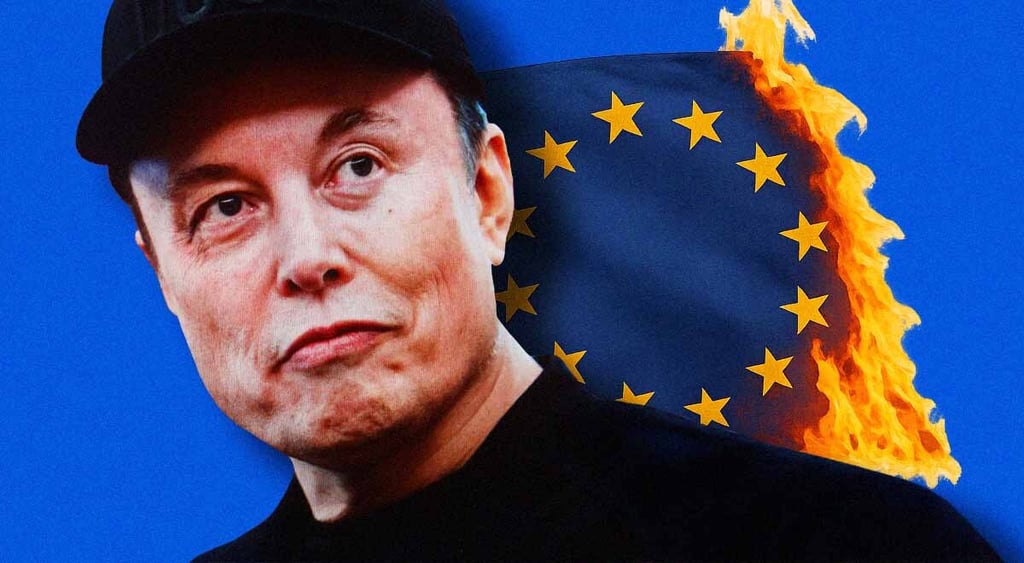
As many as 71% of Germans and Britons hold an unfavorable view of Musk, a 2025 survey reveals. Over six in ten (63%) say the tech leader has little or no knowledge of major political issues in these countries.
The precedent of blocking X altogether was set by Malaysia and Indonesia, who restricted access to the platform following the Grok nudity scandal. The Philippines joined the ranks, but its ban was short-lived.
It remains to be seen whether Zeiter’s optimism will come to fruition, as there are many forces beyond W’s control that will determine the new platform’s success. However, Garg says there’s something to be learned from Bluesky.
He tells Cybernews, “Make it effortless to find your community on day one, such as having good recommendations, contact discovery, and easy onboarding. Don’t demand an all-or-nothing switch, as most people will test it alongside X before committing.”
Unlock more exclusive Cybernews content on YouTube.