Microsoft Teams' employee tracking feature is delayed, but managers are still looking forward to it
Microsoft has delayed the launch of a new Teams feature that automatically shares employees’ locations with their bosses. While it’s been called a "snitching tool" and has received significant criticism for potential privacy violations, some managers see the benefits of tracking subordinates. Could they actually be making a point?
Image by Cybernews.com

 Follow us
Microsoft has delayed the launch of a new Teams feature that automatically shares employees’ locations with their bosses. While it’s been called a "snitching tool" and has received significant criticism for potential privacy violations, some managers see the benefits of tracking subordinates. Could they actually be making a point?
- Microsoft has postponed its Teams location-tracking feature multiple times, now targeting a mid-March 2026 release amid significant backlash.
- Critics label it a "snitching tool" that could undermine hybrid work culture, especially since companies might mandate employee participation without requiring the same from management.
- Some business leaders argue the feature could help during crisis situations and time-sensitive decisions, claiming it reduces operational friction when speed matters.
Key Takeaways by nexos.ai, reviewed by Cybernews staff.
The new feature is rather simple – anyone who agrees to it will have their location reported to their managers if they’re connected to the company’s WiFi.
“This opt-in feature improves location accuracy, requires admin configuration, respects working hours, and applies to Teams on Windows and Mac desktops,” claims the company.
Microsoft has also stated that opting in to this feature will reflect the building where people are working.





If a user is not connected to the company's WiFi, it may indicate they are working remotely.
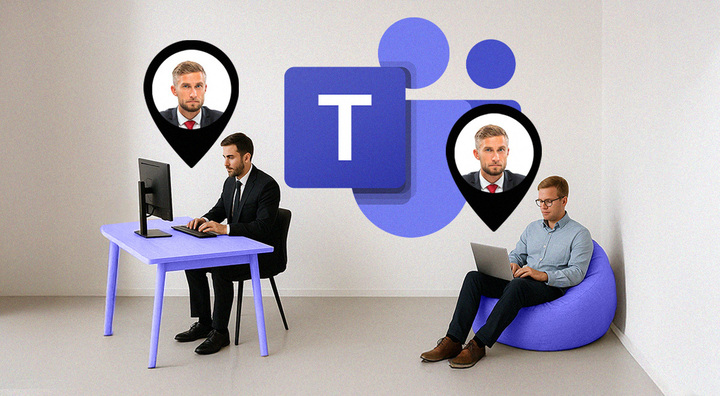
While employees can control whether their colleagues can see their location, there’s no function that forces others to share their location. This means a company could adopt new rules that compel employees to opt in to the new feature without requiring bosses or managers to do the same.
Microsoft claims that the new tool will make it “easier for users to coordinate work with their coworkers and connect in person.”






However, critics disagree, claiming that Teams is undermining the trust needed to maintain a successful hybrid work culture.
“On paper, auto-setting work location sounds like straightforward UX housekeeping. It’s one less field for users to maintain manually, one less friction point for already overloaded employees. In practice, it sits squarely on a fault line that tech buyers increasingly recognize: hybrid work is governed as much by trust as by tooling,” UC Today raises the question.
Curious what others think about this story? Contribute your thoughts to the debate below.
Although the feature was originally intended to go live in January 2026, it was later delayed to February, and now a full release is expected by mid-March.
Cybernews has previously reported on experts claiming that tracking employees’ location poses security threats and harms to mental health.
However, some managers and bosses claim to understand the logic behind Microsoft’s move.
Is it stalking if the location info helps to prevent a crisis?
The internet wasn’t excited to hear about the upcoming rollout of this feature, to say the least. Some accused Microsoft of creating a “snitch” tool for stalking employees, while others were thinking of asking for a raise if their boss decided to use the feature on their personal phone.
“Hell no,” said one netizen.
However, managers who lead teams claim to understand Microsoft’s logic in developing such a tool. Some reasons include managing crisis situations, such as a fire or mass shooting, or handling time-sensitive matters.
Take Camern Kolb, owner of ExitPros. He assists business owners in valuing their businesses and minimizing risk. A big part is developing operational examples.
Kolbs says the criticism of Microsoft and its new Teams location feature is valid, but he argues that the value the new tools would create “isn’t oversight, it’s reducing friction when speed matters.”
For example, he recalls one example where there was a time-sensitive issue with a contract amendment “that warranted an on-the-spot approval on the same day before a counterparty deadline.”
The good part is that all the decision makers: the CFO, legal counsel, and operations lead were all on the premises that day, but nobody knew where each person was.
“At the end of the day, there were 20-30 minutes wasted trying to figure each person out through phone calls, Slack messages, and walking around trying to find the decision maker. In this particular situation, an updated Teams software that includes location functionality could have shown, in an instant, the decision-makers’ locations and their current status, and this would have enabled direct focus to be decision so that they could avoid unnecessary escalation,” explains Kolbs.
Another example comes from Cali Williams Yost, founder and CEO at Flex + Strategy. She introduces herself as an advocate of high-performance workplace flexibility and believes that tracking employee location comes back to intention. If the intention is to easily locate employees in an emergency, the Teams feature could be beneficial. But if it’s to “track” compliance with mandated days in office, that undermines trust and coordination.
“Optimally, in a high-performance flexible work model, where work happens best flexibly shifts based on the work to be done. What that looks like has been determined in advance so that everyone is on the same page. As a result, tracking location for compliance isn’t necessary. But even in that case, it could be helpful in a crisis to get a quick snapshot of where everyone is. Sadly, something that’s needed in today’s world,” Williams Yost explains.
Unlock more exclusive Cybernews content on YouTube.