Microsoft Teams to auto-update work location via Wi-Fi starting March 2026
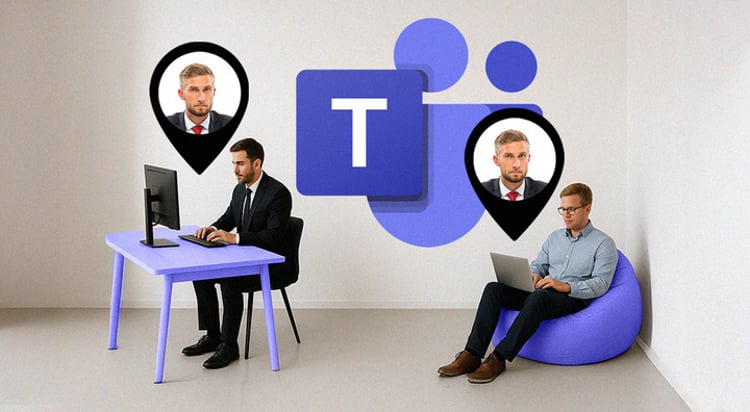
We’ve all been there – changing your workplace to somewhere quieter in the office to get more work done. But if you’re logged in to the company’s WiFi, Microsoft Teams will be able to locate you and inform your boss about it.

 Follow us
We’ve all been there – changing your workplace to somewhere quieter in the office to get more work done. But if you’re logged in to the company’s WiFi, Microsoft Teams will be able to locate you and inform your boss about it. It will also show when you’re working from home or elsewhere.
- Teams will soon track employee location via company WiFi, launching December 2025.
- Users are able to control whether their location is shared with colleagues.
- Microsoft positions this as helping coworkers coordinate and connect in person.
- Teams will also show your work location even if you're working remotely, indicating where you are or aren’t.
Key Takeaways by nexos.ai, reviewed by Cybernews staff.
The company has revealed that a new feature is currently in the works. Once done, it should automatically update an employee’s location if they’re connected to the company’s WiFi.
The news was announced in an updated Microsoft 365 roadmap, where Microsoft Teams claims that "When users connect to their organization's WiFi, Teams can automatically set their work location to reflect the building they’re working in.”
According to the same roadmap, this new feature “makes it easier for users to coordinate work with their coworkers and connect in person.”



However, surveilling employees after possibly introducing new rules to come back to the office does not make a whole lot of sense, says Doug Dennerline, CEO of Betterworks, a performance enablement platform. According to him, many companies are overlooking “a critical reality,” where flexibility, autonomy, and trust are now the biggest drivers of employee productivity and retention, not physical presence.
“Forcing employees back into the office or tracking their every move sends a clear and damaging message: We don’t trust you. The result? High-performing talent leaves, productivity dips, and organizational culture suffers. If the goal is to encourage higher productivity, leaders need to adapt to the realities of the workplace today and trust their employees to get the work done," says Dennerline.
The feature is opt-in and requires users to take extra action to activate it. It will be available for those who use Teams for Windows or Teams for Mac desktop applications.






“After you turn it on, end-users remain in control and can choose whether to share their work location with their coworkers,” explains Microsoft.
Previously expected in December 2025, the official rollout was moved to February 2026. Now it's been delayed again and is expected to launch mid-March.
According to TechCrunch, this launch will further boost Teams' productivity with features like message saving and customizable keyboard shortcuts.
The new update also extends Teams’ location reporting beyond the office – if you’re working from home or elsewhere and not connected to the company Wi-Fi, Teams will reflect that too, effectively telling your boss where you’re not.
This new feature can pose a security threat
Teams’ idea to track people within a building may come with certain security challenges. According to Nik Kale, principal engineer and product architect from Cisco Systems, location signals seem simple, but in a corporate environment, they become powerful metadata.
“When combined with other activity patterns, they can reveal working habits, interpersonal interactions, and even inferred performance signals. That is why employees often experience these capabilities as monitoring rather than coordination,” he explains.

Kale claims to believe that employees rarely benefit directly from granular location tracking and that they bring much more value to management and operations teams who want to optimize worklife elements such as space usage, onsite coordination, or hybrid scheduling.
However, when no clear boundaries are in place, “features like this create uncertainty about how the data will be used, how long it will be stored, and who can access it.”
And what about employees’ mental health?
Being monitored and having no reassurance on how that information can be used or stored may result in higher levels of stress and worsened performance.
In 2024, a peer-reviewed study titled “Private Eyes, They See Your Every Move: Workplace Surveillance and Worker Well‑Being” found that the way employees understand their surveillance is associated with higher psychological distress and lower job satisfaction “through stress proliferation.”
“The negative consequences of surveillance are explained by its positive association with three secondary work stressors: job pressures, reduced autonomy, and privacy violations,” the report states.

According to Dawn M. Hunter, public health lawyer and certified wellness practitioner, organizations must be transparent about what’s monitored and clearly lay out “the how, the when, and the why.”
“They should create a clear policy that welcomes employee input and is responsive to ethical concerns, privacy rights, and well-being, and use surveillance only when necessary. A human-centered workplace is one that balances reasonable business needs grounded in data with policies and systems that support healthy, thriving employees,” Hunter says.
She claims to believe the location-tracking features serve the employer more than the employee, and the consequences outweigh the benefits. According to her, location-tracking can be useful for monitoring how physical equipment “moves,” but this tracking is unnecessary when people change their workplace in order to collaborate with each other – it’s possible without tracking features being enabled.
“People have been using Teams for years to collaborate, where is the evidence that collaboration can or needs to be improved? Let's start there,” Hunter claims.
Unlock more exclusive Cybernews content on YouTube.