Monnett: European social media without the dictatorship of foreign algorithms
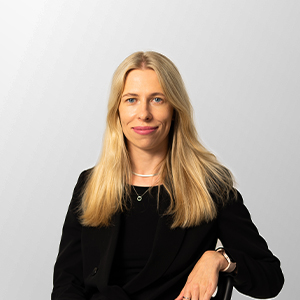
Christos Floros, the founder of Monnett Social, says Europe needs a social media network where opinions aren’t dictated by foreign algorithms, and the feed prioritizes friends’ content.

Image by Luca Emering/Cybernews

 Follow us
Christos Floros, the founder of Monnett Social, says Europe needs a social media network where opinions aren’t dictated by foreign algorithms, and the feed prioritizes friends’ content.
With major social media platforms increasingly accused of addictive designs and harmful content, the Luxembourg-based app Monnett comes with big promises: no artificial intelligence (AI), no surveillance, and no algorithms.
With a slogan “Made for humans,” the platform’s alpha version, released in 2025, has already attracted over 50,000 users.
“We really care about ensuring that people see their friends on social networks. There is no forced habit creation. We're not trying to keep people engaged forever on the platform to sell ads,” Floros tells Cybernews.











“Algorithms have become dictators”
Monnett, which is hosted on European servers, emerges as the continent is seeking digital independence, primarily from the United States.
Floros says European citizens should “wake up and realize” the extent of the influence that foreign platforms have over their daily lives in Europe. He argues that algorithms dictate what we see and shape our opinions on issues like immigration and women’s rights.
These machines have become dictators who determine how we feel, Floros adds.
While American social networks continue to use algorithms, the US government is deeply wary of foreign platforms based on the same mechanisms.
“With the acquisition of TikTok, they clearly demonstrated that they will not allow foreign algorithms to determine what their citizens see,” he tells Cybernews.
Washington pressured China’s ByteDance to sell TikTok, a popular social media app used by nearly four in ten US adults, citing national security concerns, such as the potential for using Americans’ data for surveillance or manipulating algorithms to influence US society.
At the same time, American social media is one of the major sources of information on political and social issues in Europe. Data suggests that platforms like Instagram and X pushes content prioritizing right-wing political views for European users, while the CEOs of these companies are often vocal about affairs across the ocean.
With the acquisition of TikTok, they clearly demonstrated that they will not allow foreign algorithms to determine what their citizens see.Christos Floros
X’s Elon Musk has publicly endorsed far-right parties in Europe. Along with Meta’s CEO Mark Zuckerberg, he has pushed back against European Union tech regulations, accusing the bloc of imposing censorship and hindering innovation.
Europeans appear to be “waking up,” as Floros puts it. In Germany, 68% say it’s a good idea to replace US technology, with 67% of Italians and 65% of Spaniards sharing the same sentiment, according to a recent YouGov poll.
The change, however, is still slow, as European providers are not yet fully capable of offering alternatives to US cloud infrastructure services or payment systems.
It’s yet to be seen if Monnett and other emerging European social media platforms, such as upcoming W, will survive past the initial excitement. Germany’s Mastodon didn’t manage to retain users looking for an alternative to X, while France’s BeReal is now largely forgotten.
However, a 2024 poll found that 61% of EU residents want social media platforms to stop “using behavioral profiling by default” and instead be based on the content users themselves decide they want to see.

In addition, major US platforms face mounting legal troubles. Meta was recently found negligent for designing social media platforms that are harmful to young people.
Lawyers argued that features like “infinite scroll” and algorithmic recommendations were deliberately engineered to keep users hooked.
Monnett aims to stand out from major platforms by removing algorithms altogether. The feed is chronological, it prioritizes content from friends and followed accounts, and it is up to a user to decide what content categories they want to see.
“Too expensive to run a troll farm”
Monnett claims it doesn’t create psychological profiles based on users’ activity to serve targeted ads, the business model major social media companies employ.
To avoid user profiling for advertising, Monnett proposes a paid subscription option starting at €2.99 ($3.45), although the platform also offers a free tier.
Floros says that when the platform is mature enough, it will require a membership to post publicly, which he hopes will help to ensure the elimination of bots.
“It would be too expensive to run a troll farm,” he explains.

Bots, or automated social media accounts, are a growing concern in Europe and elsewhere, but their exact numbers are hard to determine.
A 2025 study suggests that chatter on social media about global events comes from 20% bots and 80% humans, which may be just enough to wreak havoc.
For instance, before the German general election in 2025, a coordinated bot network on X spread disinformation about election-related terror threats and false claims about German politicians, accusing them of corruption and pedophilia.
The success of convincing users to pay for a subscription varies greatly across social media platforms. Snapchat has 24 million paying users, accounting for fewer than 3% of all Snapchatters, while LinkedIn’s 175 million Premium subscribers account for nearly 15%.
Taking responsibility for the platform’s content
As more countries impose social media bans for children under 16, Monnett is currently available only to adults 18 and older.
“We look forward to one day being able to serve people over the age of 16, but only if we know that we can guarantee the safety of children, because a 16-year-old is still a child,” Floros says.
While the platform is currently focusing on creating “a healthier and safer place to be online” for Europeans, Monnett will welcome people from elsewhere.
Thus far, women comprise the majority of the platform’s users. Floros says it is because they’re looking for “an alternative space where they are safer and not targeted by spammers or by hate speech.”
He tells Cybernews, “We actually take responsibility for what’s on the platform.”
Unlock more exclusive Cybernews content on YouTube.