Is Wero a viable European alternative to Visa and Mastercard?
Wero is emerging as a European alternative to American payment networks Visa and Mastercard, but will merchants and consumers stick to it long-term?

Image by Cybernews

 Follow us
Wero is emerging as a European alternative to American payment networks Visa and Mastercard, but will merchants and consumers stick to it long-term?
- Wero is an account-to-account (A2A) payment solution, supported by most banks in Germany, France, and Belgium, and coming to the Netherlands and Luxembourg.
- The service allows sending and receiving money directly into a bank account in under 10 seconds.
- Experts say Wero could become a viable European alternative to US Visa and Mastercard if it can ensure consumer protection and lower costs for merchants.
- Wero may solve the European fragmentation problem, as it puts banks, payment services, merchants, and domestic schemes under a single brand.
A 2025 study, conducted at the request of the European Parliament, concluded that it is possible to imagine scenarios in which the US could restrict the operation of payment networks, such as Visa and Mastercard, on which the European Union (EU) banks depend.
International card schemes accounted for over 60% of card transactions in the EU in 2022, according to the European Central Bank data, meaning that most European payments are processed through American infrastructure.
This has led to concerns about Europe’s technological dependence on the US, which has reached new heights under the Donald Trump presidency.











Wero, a unified digital payment system launched in 2024 by the European Payments Initiative (EPI), may act as a potential solution to the sovereignty problem.
In April 2026, the EPI Company announced what it called a major milestone. Together with local Italian and Portuguese mobile payment apps, it demonstrated successful cross-border payments at merchants of the other solutions.
“This confirms the feasibility of a common central interoperability model enabling mobile payment solutions from different European countries to function across borders,” the company’s press release reads.
Luca Russignan, a global head of Capgemini Research Institute for Financial Services, says Wero currently has the institutional backing and political will, and reflects a significant shift in how Europe thinks about financial sovereignty.
“Even partial success in capturing domestic European transactions could effectively increase the negotiating leverage of domestic institutions with global card networks, placing a structural ceiling on future scheme fee increases,” Russignan tells Cybernews.
What is Wero?
Wero is an account-to-account (A2A) payment solution supported by most banks in Germany, France, and Belgium and used by more than 50 million Europeans.
In 2026, Wero is coming to the Netherlands, where it will replace iDEAL, a local system launched by major Dutch banks in 2005, and Luxembourg.
The system, available in regular partner banking apps or the Wero app, allows sending and receiving money in less than 10 seconds directly to the user’s bank account.
It doesn’t require an IBAN – just a phone number and the app – to make payments between users for free.
The company says Wero plans to expand the functions of its digital wallet, allowing customers to pay for goods, services, and subscriptions, both online and in-store.
What will make Wero succeed?
Wero has sparked great enthusiasm in Europe, but four structural conditions will determine whether European A2A initiatives can achieve payment sovereignty, according to Judith Arnal, a senior research fellow at CEPS and Elcano Royal Institute.
First, Arnal says, they must offer merchants a total cost of acceptance that matches or beats that of cards. While A2A avoids interchange and scheme fees, it has its own processing costs, and acquirers need margins to invest.
Wero retail payments went live in Germany in late 2025, with merchants like Lidl, Decathlon, Rossmann, and Air Europa among the first adopters.
The European Business Magazine notes that Visa and Mastercard typically charge interchange fees of 0.3% to 1.5% in Europe, while Wero bypasses them by using the Single Euro Payments Area (SEPA) instant infrastructure.
Any friction in enrollment, authentication, or checkout will limit adoption, especially in e-commerce, where cards already offer one-click purchasing.Judith Arnal
For retailers processing millions of daily transactions, even a 0.5% reduction in processing costs could generate massive material savings.
Arnal argues that a seamless consumer experience is also a determining factor, because consumers choose payment methods based on convenience, speed, and reliability rather than sovereignty.
“Any friction in enrollment, authentication, or checkout will limit adoption, especially in e-commerce, where cards already offer one-click purchasing,” she explains.
European payment systems must also ensure consumer protection, including chargebacks, zero-liability fraud frameworks, and structured dispute resolution, which remains a significant technical and legal challenge within an A2A architecture, where transfers are irrevocable by design.
Russignan says that while A2A payments have dispute mechanisms and contested payments can be reversed, invoking those protections typically requires more effort and reliance on bank processes than the near-instant, zero-liability experience with card schemes.
“Add in the absence of established loyalty programs and rewards, and most people won't make the switch unless the experience is demonstrably better, not just cheaper for someone else in the chain. Until that gap closes, mass adoption remains a slow burn,” he says.
Eventually, Arnal says, the system must generate enough revenue to fund ongoing investment in innovation, fraud prevention, and network maintenance. Cheaper for merchants but financially impractical for operators isn’t a workable equation.
She tells Cybernews, “Technical capability alone isn’t enough. Wero needs to compete simultaneously on cost, user experience, consumer protection, and economic sustainability.”
Questions over US technology use
Wero is gaining momentum as around two-thirds of Europeans are increasingly wary of American technologies. A recent poll found that 68% of Italians and 66% of Germans support European tech alternatives for US payment systems.
Europeans share similar concerns about dependence on US servers and data storage. However, German media reports that Wero uses services from the US company Amazon Web Services (AWS), among other providers.
The EPI Company says it has full control over Wero’s architecture, security model, and operation. In addition, it has employed multi-layered security measures, including encryption of data during transmission and at rest.
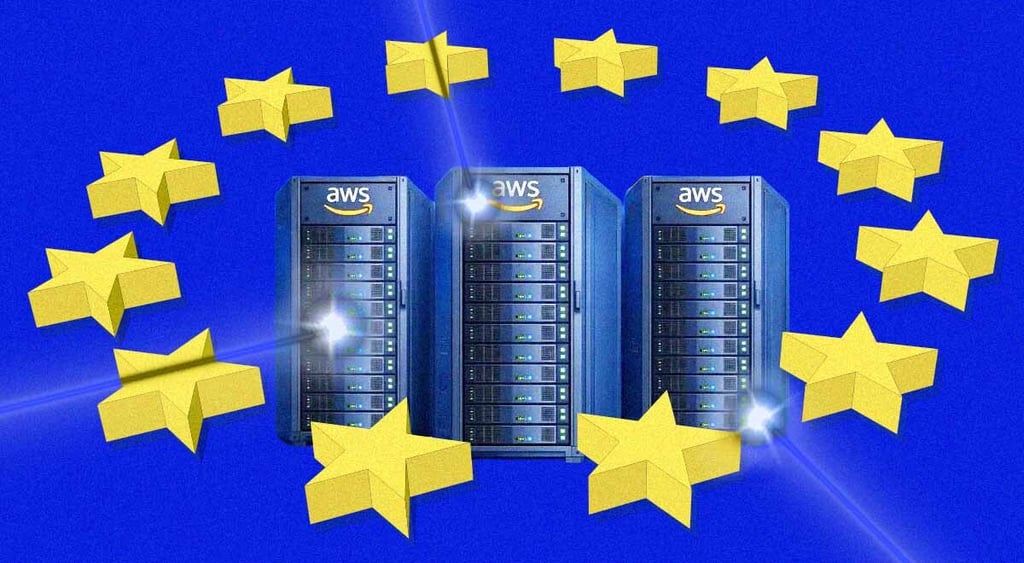
Theoretically, the US could still access the data processed on Wero. A 2018 Cloud Act compels US companies to provide data requested by American law enforcement agencies regardless of where it is stored.
AWS, however, says it hasn’t disclosed any data stored outside the US to the American government since 2020, when it began collecting statistics.
Can Wero replace Visa and Mastercard?
Jakub Górka, an associate professor at the University of Warsaw, says Wero can become a viable alternative to Visa and Mastercard in Europe, but not as a simple one-for-one replacement of the global card model.
Instead, it could emerge first as a European payment layer for selected retail use cases, and only later as a broader competitive counterweight to the international card networks.
“Wero matters because it could reduce structural dependence on non-European rails and introduce a ‘safety valve’ into a market that has become too concentrated and too exposed to external infrastructures,” Górka tells Cybernews.
Because Wero is built on instant A2A logic rather than the classic card model, Górka explains, this gives a chance to ride the EU push towards instant payments rather than replicate the entire legacy card stack.
Wero matters because it could reduce structural dependence on non-European rails and introduce a ‘safety valve’ into a market that has become too concentrated and too exposed to external infrastructures.Jakub Górka
Moreover, Wero is trying to solve the European fragmentation problem by stitching together banks, payment service providers, merchants, and domestic schemes into a single brand and user experience.
Górka argues that migration from local solutions, such as iDEAL in the Netherlands, is important because Europe does not need to build usage from zero if it can absorb or connect existing user bases.
For example, iDEAL processes over 1.3 billion transactions annually, accounting for 73% of all Dutch online purchases.
Wero will partner with the digital bank Revolut, making the payment system available in all EU countries and opening access to approximately 40 million of Revolut’s European customers.
Unlock more exclusive Cybernews content on YouTube.